
The Thinking Practitioner Podcast
w/ Til Luchau & Whitney Lowe
Episode 165: Multi-State Massage License: Coming Soon? (with Deborah Persinger)
Transcript | Subscribe | Comments | ⭑⭑⭑⭑⭑
Or, listen and subscribe on Apple Podcasts, Spotify, wherever you get your podcasts!
🎁 Scroll down for the full video and transcript!
🎙 The Interstate Massage Compact (with Deborah Persinger)
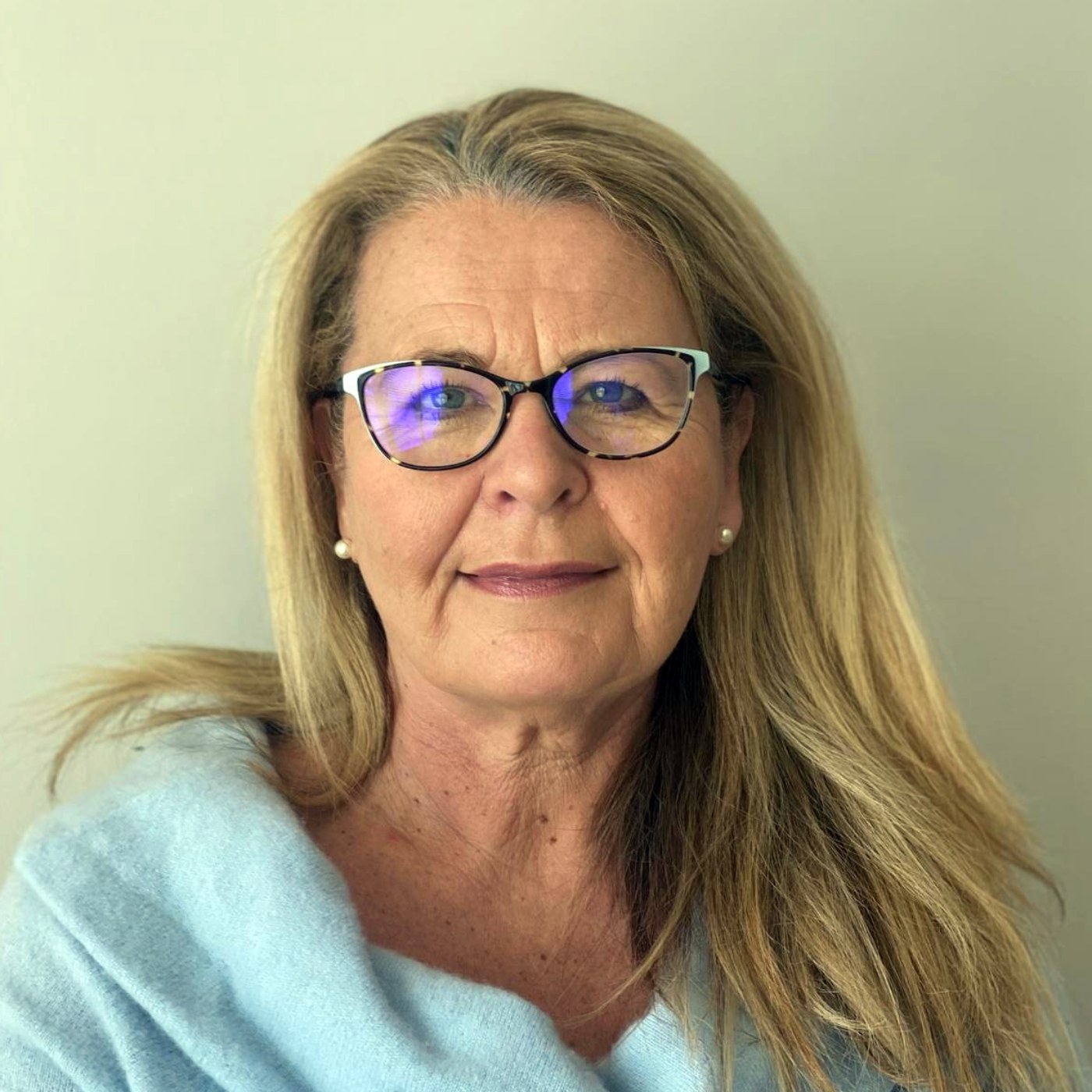
Deborah Persinger is the Executive Director of the Federation of State Massage Therapy Boards (FSMTB), and she joins Whitney on The Thinking Practitioner to break down one of the most significant regulatory developments in our profession’s history: the Interstate Massage Compact.
If you’ve ever moved to a new state and had to navigate a whole new set of licensing requirements — or if you live near a state border and can’t legally work on the other side — this episode is for you. The compact would create a multi-state license allowing eligible massage therapists to practice across state lines without meeting separate requirements in each state. It’s already been adopted by five states, with two more needed to stand up the commission and make the license a reality.
But there’s more at stake than portability. Deborah explains how the compact was carefully designed to address human trafficking in the massage profession — a daily reality for regulatory boards — and why the details of how the compact is written matter enormously for keeping bad actors out while making life easier for legitimate practitioners.
✨ Topics discussed include: Whitney and Deborah walk through the compact’s origins, the 625-hour education standard, the role of the Department of Defense, and the current obstacles to getting it across the finish line.
• What the Interstate Massage Compact is — and how multi-state licensing works
• The 625-hour education standard: where it came from and why it was chosen
• Home state vs. remote state — how the compact defines where you practice
• Why the Department of Defense supports the compact (military family portability)
• The five states that have adopted so far: Nevada, Ohio, Arkansas, Virginia, and Montana
• Human trafficking provisions unique to the massage compact
• The national massage therapy licensing database and its role in tracking bad actors
• Over 20,000 illicit massage businesses in the U.S. — and why that matters for compact design
• Rule vs. statute: the key disagreement holding things up
• Why 97–98% of surveyed practitioners support the original compact
• What individual practitioners can do to stay informed and have their voice heard
✨ Resources:
• Interstate Massage Compact: https://www.massagecompact.org
• Federation of State Massage Therapy Boards (FSMTB): https://www.fsmtb.org
• Massage Compact Practitioner Survey: https://www.massagecompact.org
🌱 Sponsor Offers:
• Jane – Practice management for health and wellness practitioners. Try it free for one month with code THINKING1MO at https://a-t.tv/jane
• ABMP – Save $24 on new membership at https://abmp.com/thinking
• Books of Discovery – Save 15% with code thinking at https://booksofdiscovery.com/
• Advanced-Trainings – Try one month free of the A-T Subscription at https://a-t.tv/subscriptions/ with code thinking
• Academy of Clinical Massage – Grab Whitney’s free Assessment Cheat Sheet at https://academyofclinicalmassage.com/cheatsheet
✨ Watch the video / connect with us:
• YouTube: https://www.youtube.com/@AdvancedTrainings/podcasts
• Til Luchau – https://advanced-trainings.com | https://facebook.com/advancedtrainings | https://instagram.com/til.luchau
📧 Email us: info@thethinkingpractitioner.com
The Thinking Practitioner Podcast is intended for professional practitioners of manual and movement therapies — bodywork, massage therapy, structural integration, physical therapy, osteopathy, and similar professions. It is not medical or treatment advice.


Full Transcript (click me!)
The Thinking Practitioner Podcast:
Episode 165: Multi-State Massage License: Coming Soon? (with Deborah Persinger)
Til Luchau 00:01
Welcome to the Thinking Practitioner podcast, a podcast where we dig into the fascinating issues, conditions and quandaries in the massage and manual therapy world today. I’m Whitney Lowe and I’m Til Luchau. Welcome to the Thinking Practitioner
Whitney Lowe 00:18
Welcome everyone. the Thinking Practitioner podcast is proudly supported by ABMP, the Associated Bodywork and Massage Professionals, the premier association for dedicated massage and bodywork professionals like you. When you join ABMP, you not just getting industry leading liability insurance, but you’re getting practical resources designed to support your career, from free, top tier continuing education and quick reference apps like Pocket Pathology and 5-Minute Muscles. ABMP equips you with the tools you need to succeed and grow your practice, and ABMP is committed to elevating the profession with expert voices, fresh perspectives and invaluable insights through their CE courses, the ABMP podcast, and Massage and Bodywork magazine, featuring industry leaders like my co host Til Luchau and myself and Thinking Practitioner listeners like you can get exclusive savings on ABMP membership at abmp.com/thinking. So join the best and expect more from your professional association. Welcome everyone again to the Thinking Practitioner podcast. I’m delighted to have with me today, the executive director of the Federation of State Massage Therapy boards. Deborah Persinger, Deborah, welcome to the ThinkingPractitioner.
Deborah Persinger 01:29
Thank you, Whitney, glad to be here.
Whitney Lowe 01:32
We’ve got all kinds of things. Deborah and I, you and I have known each other for quite a number of years and done stuff together over the years in that time, but I wanted to bring you on today to talk specifically about something that the FSMTB has been spearheading, which is the interstate massage compact, which is a big deal of potentially affecting lots of people in their attempts at portability and
moving around the United States with their licensing issues. So thank you again, very much for coming in to talk about it today. And I know the Federation’s been, as I said, kind of spearheading this process for those people who may not be kind of aware of this or know much about what’s going on with it. Can you give us kind of a brief overview? What is the Interstate Massage Compact? And why is this? Why is this important for everybody?
Speaker 1 02:19
Yes, so essentially, a compact, this is for professional licensing, is an agreement, a legal agreement between states and or territories in the United States that practitioners who are eligible to practice in one state under their license can also practice in multiple other states. So a compact license would be legal permission for a licensed massage therapist to practice in multiple states. Hence the multi-state license, and it would prevent therapists from having to, if they’re on the move, having to buy and meet the requirements for a license, and, you know, four other states this way, they can just do the one.
Whitney Lowe 03:00
Yeah, I know one of the things that I hear most often is, you know, we have such a patchwork of state requirement hours in all these different states. How does that work with, you know, one state requiring 1000 hours in the next door neighbor, state requiring 600 or something like that.
Deborah Persinger 03:17
You know, patchwork is a really good description. And so what the compact does is address that lack of uniformity by getting states to agree to at least one standard or compromise, if you will. So for example, if a state at 500 hours joins the compact and a state that has 750 hours of education, for example, for their license, if they join the interstate massage compact, they would both agree that the therapist would have at least 625 hours. So the higher our states are compromising to accept an individual with less education, and the lower states are agreeing that they can still keep their 500 hour minimum, but the actual therapist would need 625 hours of education. So that’s where the uniformity comes into the picture, and the compact solves that.
Whitney Lowe 04:16
Yeah, so in the additional hours that somebody, let’s say they went to a state with school training program where the requirement is 500 hours when they would need to get an additional 125 hours for the compact. Is that done through enrolling in another entry level school, or is this done through continuing education courses? Or how do they get those extra hours?
Deborah Persinger 04:37
So it’s not delineated, but the intention is that continuing education would qualify. So if somebody truly did only have 500 hours of education, they could take continuing 100 next 125 of that, they certainly do not need to go back and find a school that’s a 625, hour program. But Whitney, what we know is that even though the regularly minimum standard is 500 hours of education. About 80% of the schools are teaching way more than the 500 hours. So that’s a minimum, but for the vast mature majority of massage therapy schools are already teaching exceeding that that minimum.
Whitney Lowe 05:18
Anyway, I know there’s been a lot of kind of debate back and forth across the profession with this issue around the number of hours. How did the compact kind of settle in on that 625, number?
Deborah Persinger 05:30
So really, it’s the only empirically-based evidence that this profession has, and it originated from people may be familiar with what’s referred to as the elap, which is the acronym for entry level analysis project, and that was a project undertaken by the seven national massage organizations to establish what actually constitutes a baseline entry level massage therapy education. So it was both quantitative and quantitative data, and the consensus was reached through through a really hard working, diligent task force that included public comment or feedback from the profession. And that’s where the 625, hour recommendation came from, again, as a minimum number of hours for entry level education.
Whitney Lowe 06:23
I know. I want to also backtrack a little bit in terms of the sort of development process of the of the Compact from the very beginning. I know the first, the first time that I heard about the compact, and I heard about some initiatives partially being encouraged by the Department of Defense. I was like, what is the Department of Defence have to do with it? So I can you explain that a little bit in terms of their role in relationship to this?
Deborah Persinger 06:48
Yes, so that is because the Department of Defense support has a whole sub department that supports military families, and so when a soldier is transferred to another location, their spouse, or, you know, maybe even 18-year old dependents, because they also are eligible for massage therapy licensure, or sometimes having to wait, you know, months and months, up to a year, to get a license in a new state, some states, they would have to go back to school and a formal massage program to get the number of hours. For example, Puerto Rico is 1000 hours. So if they came from a 500 hour state, they couldn’t just immediately work and help their family, you know, get fed and pay the rent and so forth. So the military has an interest in supporting their families get to work expeditiously, or, you know, swiftly. And so that’s why a compact is, is, you know, the gold standard to be able to do that. So if somebody holds the multi-state license, they can literally step off the plane, or, you know, out of their moving vehicle and and practice the next day.
Whitney Lowe 08:00
So how has the you know, in terms of, like, I know there are still, we have just a small handful of states without licensure. Now we’ve gotten most of the 50 states in the United States to have licensure. What happens in those states that don’t have licensure? If you decide to move, for example, to a state that does have licensure? Is there anything the massage compact can do to help you, or do you still have to go through regular processes there?
Deborah Persinger 08:23
Yeah, no, the compact, it really is for licensed massage therapists. I mean, for example, Vermont is a registration state, so you just let somebody know that you’re practicing there. There are no standards or other qualifications, and so that that individual would not be eligible or desirable to be on the move, holding themselves out as a as a massage therapist. So it truly is for states with licensure. And we’ve
got, let’s see three, Kansas, Wyoming, Minnesota, and then California does not have licensing. They have the voluntary certification, and then Vermont with the registration.
Whitney Lowe 09:07
I would imagine, too, that I hadn’t really thought about this a great deal, but you know, people who are in cities or locales that are in border regions, like, maybe you live, you are from Kansas and like, there’s Kansas City right on the border, and so you might have an issue living in one state and working in another, or something like that, where that might be a license ratio. I’m assuming that’s something else the compact would be very helpful in addressing.
Deborah Persinger 09:33
Yes, it’s not just for people who want to move across the country or, you know, follow triathletes around all 50 states. It can be for people who reside in one state and work across the state line.
Whitney Lowe 09:47
So this is when I was reading some of the stuff on the compact there is sort of a designation between a home state and a remote state. Is that right? Is that how that sort of is designated? So your home state would be where you did. Your initial training
Deborah Persinger 10:02
or not, no. So that the home state is where you would currently reside, where you call your home, the place of residence, the and that’s where you would be licensed. And so the remote state would be any other state in the compact that isn’t where you call your home, where you have your the license that you have right now would be your home state. Yeah, if you move across the nation and, you know, buy a house there, you can re declare where your home is, but you need that initial licensing as a massage therapist in order to be eligible to apply for the multi state, yeah? Okay, yeah. It’s not one or the other. It’ll be your home state license of origin plus a multi-state if you choose to get it. A multi state license is not for everybody.
Whitney Lowe 10:56
So this would, this would be a volunteer program, obviously,
Deborah Persinger 11:01
yeah, it’s kind of like, you know, for those who travel like the TSA Pre check, everybody can still get to the destination, going through whatever line they want to and take their shoes off. But this is like a fast track. You’re a healthy license. You meet the requirements. You don’t need to meet requirements for 5,10, 15 other states. You’ve got the multi state, you’re good to go.
Whitney Lowe 11:24
So would this be something that would be implemented at the time of initial licensure, or would this still be something like a separate process, like, I just got my license, but I’m also possibly going to be moving so then I apply it to get the compact or the interstate license?
Deborah Persinger 11:42
You know, it’s hard to say, because our compact is not in existence yet, so the commission hasn’t, you know, given timelines, but based on other professional compact, professional licensing compacts, people could apply for them at the same time. I know more than 30% of licenses in medicine now are just the multi state.
Whitney Lowe 12:06
You and I have had long discussions about this, so just the incredible difficulty of trying to get some degree of standardization across educational requirements in this field for decades now. I mean this, this could really be a big move in that direction. I am curious to hear how has the reception been from different states who would have to change their sort of perception about the necessary hours, like, if you’ve got a state where they have a, you know, a mandated 750 hours, what’s been the feedback in terms of them feeling okay about going to 625 for the multistate compact license,
Deborah Persinger 12:44
so the states themselves would not have to change their hourly requirement. They can stay at 500 if they want to be at 500 they can move to 625 or they can even be, you know, 800 if they want to. It’s the hourly educational minimum is for the therapist. So even though the state minimum may be a certain number, it’s the therapist who needs at least the 625, so now they’d be welcoming in people who may have less education than the home state, people in their state. But that’s that’s the compromise piece for the uniformity to get the American workforce, you know, mobile.
Whitney Lowe 13:26
That makes sense. That makes sense. One of the other things I want to touch base on here, I know, you know, the Federation has been doing some, some extensive work on the issues around human trafficking, and I’ve also heard some things about the compact being a piece of helping to address some of that issue. How do those two things fit together?
Deborah Persinger 13:50
Well, I mean, independent of any you know, compact this profession, the massage therapy profession, is under siege. I mean, it’s being or trying to be hijacked by organized criminal enterprises in the human trafficking arena, and that’s the lived daily reality of the regulatory boards and agencies. So in introducing a compact with the pure benefit for the legitimate, licensed massage the professionals, we had to make provisions in our compact language so as not to facilitate the human trafficking, because, of course, they will love the fact they can just get one multi state and right be on the move. And so we have several provisions in our compact, for example, that other professional licensing compacts did not have to take into account. So, for example, the we have, I’ll call them deal breakers, but there are certain disciplinary actions or you. A background that that are just absolutely no, you would not get the multi state. So they’re quite egregious things. But it’s, you know, crimes against another. It’s you didn’t kidnap somebody. There are no sexual crimes, no violent crimes. They’re out for us. Or you’ve been convicted of sex crimes, prostitution, or human trafficking. You won’t see language about human trafficking in any other professional compact. So we addressed it that way. Another provision in the massage therapy compact is that there’s a uniform database, and so that is so because you know, the people who commit crimes or are fraudulent, they don’t have a propensity to apply for a license and be honest on that application and say, No, I’ve never been disciplined. They’re they’re going to continue
their path of, you know, lies and deceit. So the database would allow the regulators to go in and actually see that in real time, like, oh, you said you were never disciplined, but I see you lost a license in Missouri. And, aha, yeah. So whereas right now, with a home state license, they have one state licensing board overseeing their conduct, then there’ll be at least seven, because you need a minimum of seven for the compact, at least seven, and then ultimately, hopefully, the whole nation overseeing these individuals and having access. I remember back, you know, probably when we first met, somebody would lose their license in Arkansas, and the individual would say, well, I’ll just go to Texas and practice. And I remember sitting there thinking, how are we, you know, five years into the 21st century, and we’re picking up a phone to call a state to warn them, there has to be a better way. And so the Federation has had has been developing this massage therapy licensing database for some time with that intent in mind, to leverage technology to keep the bad actors out, or at least monitored.
Whitney Lowe 17:04
So, yeah, so is that, is that database currently operational, or is that still in the works as part of this?
Deborah Persinger 17:09
Yeah, it’s been a long time because we worked with all the state boards, you know, for programming and what their needs are. So we’re currently in the process of popular or some states populating it, not not all 50 states, but as you can imagine, every state has different, you know, data fields and platforms and right, yeah, of course, yeah, yeah. So anyway, but it is available and ready, and was primed to be ready for the compact. Should the should the commission opt to use the national massage therapy licensing database?
Whitney Lowe 17:40
Well, I mean, that sounds like something that would be really important for us to have, regardless of what happens with the compact of a way to have some kind of communication there. But I don’t envy you an alternate 50 state bureaucracies to talk to each other, you know, and get their software assessments to talk to each other, not an easy task at all. So, yeah, so I want to go to a little bit about the compact itself, getting a little bit more into the details of understanding truly how this work. You mentioned a moment ago something about seven states on board, and I’ve heard that’s sort of the breakwater point of being able to get it. Can you explain a little bit about the process of the adoption, what is the seven state designation and everything.
Deborah Persinger 18:26
So, I mean, I guess maybe technically, you just need two states for people to or two states to have an agreement. But seven was a minimum out of 50 plus the territories in the District of Columbia that this profession decided was the minimum needed to stand up the compact. And then, you know, some states are just late adopters, so they can certainly join at any time thereafter. But in order to form the commission, they wanted seven commissioners, and that would be one representative from each of the states that adopted the compact. So at this moment, at this time, we have five states that have adopted and we need two more, and then we’ll be underway, and the licensees in those five states will be able to be eligible. They can apply then for those five states, and then as more states are added on, and they’ll be eligible to work in those additional states.
Whitney Lowe 19:19
Out of curiosity, what are the five that I have signed on so far?
Deborah Persinger 19:24
Oh, my goodness, I should have known you might ask me this. I should have shot Nevada was state number one. We’ve got Nevada, Ohio, Arkansas, Virginia, and…it’s gonna come to me…
Whitney Lowe 19:39
Yeah, that’s, that’s right, we can look it up. I’m sure.
Deborah Persinger 19:43
Yeah, I shouldn’t know this. It’ll probably come to me at two o’clock in the morning, right?
Whitney Lowe 19:46
Okay. But I want to also, kind of like, you know, go into, oh, wait, I think I’ve got a note here, Nevada, Ohio, Arkansas, Virginia, Montana. Is that?
Speaker 1 19:59
Right? Montana? Yeah, of course, yeah. Thank you. I apologize.
Whitney Lowe 20:02
Okay, Montana, yeah, all right, way to be proactive there. Montana, yeah. So what have you found? Like, you know, I mean this to me, sounds like a great idea. So, like, I guess this is kind of a silly question to say, what’s the holdup in bureaucracy? But what are the big hurdles or obstacles right now that are keeping this from from happening?
Deborah Persinger 20:28
Yes, so, oh my goodness, it’s such a gift to the profession to make life easier for the good guys, you know, for the legitimate professionals with with stipulations in place to keep the bad actors out or to not facilitate their enterprises. It’s such a good question, and you wonder why we even have to ask ourselves, I need to backtrack to give context, is that, of course, yeah, when the compact was developed. We there was a technical advisory group convened, and that had representatives from all stakeholder groups. So we had obviously regulators at the table. We had educators. I mean, you know, comp to was there, but there were also individual school directors and educators. We had both professional or the two main professional associations, ABMP and AMTA. We had actual legislators at the table as well. We had individual licensed massage therapists, seasoned professionals, newer professionals. So these people gave a technical advice to to get the skeleton, or the framework, of what we thought a compact would look like for this profession, and then that went out for public comment for three months so that we could get the feedback from the profession. Hey, are they on track here? Or, you know, what do you suggest? So fast forward to that that was all taken into consideration. We worked with Council of State Governments on that, because they’ve guided other professional compacts through the process. So we followed their best practices as well. We were able to reach consensus. We explored, you know, every angle, every which way, upside down. We adjudicated ethically like which populations might be disadvantaged by these decisions which would be
advantaged. It was really thoroughly vetted, and so consensus was reached, and that’s the model language that was put out and has been adopted by the five states going for and, of course, a reaching consensus is an exercise in compromise, right? Nobody always gives thumbs up to every single aspect, but we end up with the I can, I can live with it. I understand the rationale So, but AMTA has so subsequent to that, consensus has different opinions and they want different language in the compact. And so, for example, the compact intentionally does not name an exam people need to have passed a licensing exam or some kind of assessment to show that they’re competent to practice. It’s not named because this compact is designed for the future. It’s even the next 75 years right to take us to the year 2100 and so who knows what will be in place at that time, but there is a descriptive or an exam requirement that it has to be psychometrically sound, it has to meet certain parameters. And I don’t want to speak for AMTA there. Their material is out there for folks to see, but that’s, that’s one of the hiccups they wanted the NCB exam to be named. The Federation has no qualms or complaints about that. We know that will be the case. The state boards right now accept the certification exam because there are therapists still practicing now that when the MBLEX wasn’t around, so it’s like, a no brainer, but
Whitney Lowe 24:19
Yeah, just out of curiosity, do you remember or, like, I don’t know what the number is now of the states that are still using the national certification exam as a licensure exam?
Deborah Persinger 24:29
Well, it’s, it’s a historical acceptance, yeah. So, I mean, all the ones that did before still do today. Nobody’s not accepting it. But I mean, we’ve, there’s been over 260,000 people who have taken the MBLEX. So the majority of LM Ts in this country have the MBLEX. And so that’s why there’s a provision, or substantially equivalent, so that anybody prior to, I think it was 2014 that NCBTMB stopped, or got out of the licensing area to focus on certification, and that we’re grateful for that foresight and wisdom that they had. But of course, all those therapists prior to NCB stopping giving that exam would be accommodated. They can get a license right now, but the commission doesn’t exist to validate that, but that will be accommodated and ruled. So that’s one, and AMTA and FSMTB came out with a public statement saying that’s, that’s what the intention is. But we, we’re not the commission, so we can’t make premature pronouncements. Another sticking point is that they want anybody who’s held a license for two years be eligible for the multi state well under otherwise ordinary circumstances. That would be okay. But again, what we know is that there are many, many illegal people with a license. There’s more than 20,000 illicit massage businesses in the United States, and so this is not even practicing, but just holding a license, even if there are five people at each of those 20,000 illicit massage businesses, that would be 100,000 people that would then be eligible to hold a multi state license. And we are not trying to facilitate human trafficking. I don’t think anybody’s had the intention to facilitate it, but that’s the consequence. We keep trying to say, if you have an statute that somebody with a license for two years is eligible for a compact license, then the boards, the commission would be forced to give them the multi state. If you have it in rule, the commission could say, oh, you know, Jane Doe went to a legitimate school, you know, as a real massage therapist, you’re green lighted for the multi state, but in rule, they could say, Oh, you went to a fraudulent diploma mill. You know, you you’ve been arrested. No, you don’t get it. And that’s the difference between the flexibility of rule versus mandating in statute where the hands are tied of the regulatory community. So, so some revisions have been proposed. AMTA is, you know, lobbying for them right now, actually, and the Federation has stated the reasons why. I think you know it could be a law of unintended consequences, but it’s just, you know, it’s a little distressing for us, because we can predict how this is going to go.
Whitney Lowe 27:49
You know, I’m kind of curious. Like, how do we get 20,000 illegally, like, massage therapists? Like, how did that happen?
Deborah Persinger 27:59
Yeah, it’s, I mean, it’s, it’s many, many factors. Whitney, honestly. I mean, I probably spend more time working with law enforcement. This is not the day job I signed up for initially, but they, they get a massage license, even though they’re not doing massage, and this is a $5 billion industry in the United States. So money speaks, we federally protect or copyright our exam, the content but because it’s a barrier to them getting a license, they constantly try and steal our exam questions. I mean, we pursue legal action and go to court, but I mean, that’s not really the solution. It’s some state laws are more lax than others. I mean, we call to report a diploma mill a fraudulent educational building, and I’ve been told by the people that oversee schools in a particular state, we don’t want to restrain trade in our state. So, you know, not,
Whitney Lowe 29:15
you’d think that, even if it’s a diploma mill, they don’t,
Deborah Persinger 29:17
yeah, even though we have evidence, and I know it’s about commerce, money talk. So, you know, I mean, we’re getting better, and the Federation has helped network this information so states understand the extent of it. We work with federal, state and local law enforcement to try and educate them. Because, of course, the women getting these licenses are also victims. I mean, they have handlers that do all the talking for them, so there’s a lot of work going on behind the scenes. But, yeah, we’re certainly not trying to we’re while we’re trying to diminish the problem by raising awareness. We’re certainly not trying to facilitate or amplify the problem by saying, Here’s a multi state for you.
Whitney Lowe 30:03
Wow, yeah, because that could, yeah, easily be misused for that, yeah,
Deborah Persinger 30:07
In all of the revisions the Federation the licensing boards are not opposed to it’s just that they belong in rule to give them the authority to screen out the bad actors by putting it in statute you don’t have that.
Whitney Lowe 30:22
So is there an opposition to that, getting in rule as opposed to statute? Is there,
Deborah Persinger 30:30
apparently, because aim AMTA still thanks their waves, the best way now, so,
Whitney Lowe 30:37
so are we at kind of a loggerheads, or do you see this as a as there is a potential kind of breakthrough process that we can get past to move ahead? Where are we currently?
Deborah Persinger 30:49
I mean, the Federation is just continuing to do what we believe is the right thing and fight, not just for the public protection aspect, but honestly for the profession, so that you don’t get absorbed or overridden by these bad actors. I mean, we have a method. We have a way. You know, I’m a naive optimist, and so I continue to keep trying to educate and inform and help the profession understand what’s at stake here, and hope that, you know, the leadership will come to terms and see each other’s viewpoint and and not really have the profession be the collateral damage.
Whitney Lowe 31:27
But, yeah, right. So what would be sort of like the ideal next step process is that we would get some kind of agreement on, you know, what language gets changed in which portions of of the agreement or where what would be, sort of like the ideal scenario.
Deborah Persinger 31:43
I mean, the ideal scenario we already have no language needs to be changed. Like I say, the existing compact that’s already been adopted has the desirable language to help the regulators and help the profession and keep the bad actors out. So language doesn’t need to be changed. All the concerns or issues absolutely will be addressed in rule on that we’re on the same page. We all have the same goal, yeah. And our hope is that, I mean, if you end up with two competing compacts, you don’t have a compact, yes, or professionals will be, well, did you pick compact A or B and then they can only move around in the A states or…
Whitney Lowe 32:28
That seems to be like part of our, you know, grappling with the issues around the potential, around dual licensure in our field too, is just like, you know, is yes, it’s super, super murky about trying to do something like that. Yeah, so what can, what can the individual practitioner do, who’s maybe, like, I think this is a good idea. I think we should do this. What kind of things can they do? Is there somebody they can contact, write to, or or encourage to, you know, to get this thing moving forward?
Deborah Persinger 32:59
I mean, there’s several things, and many, many LMTs are already doing it. There’s a survey of the profession they can participate in to have their voice heard if they go the website is massagecompact.org and there, there’s a survey when, where the LMTs can just tell us what they what they think, like, do they need a license? Who are they affiliated with? We’ve had about 1800 people respond, which is really fabulous in terms of survey responsiveness. And 98% of the profession agree with the original compact. And interestingly, it’s, it’s a, it’s, I think it’s 98% of sorry, 97% of ABMP members, and 97 – 1% less of AMTA members agree with the compact. So the profession itself is, is on board. It just seems to be. You know, at the national level, there’s some, I think it’s just lack of information. I don’t think there’s intention to rip the profession, yeah, um, so they can do that. If they’re interested, they can also sign up. I mean, we can help them get access or the information for their legislators or regulators. But the most important thing, I would say, is just to just stay informed, like get factual information, not these, like AI-generated nonsense things on social media that some people are latching on to. And we have dedicated staff, Patty Glenn at the Federation, people, she’d be happy to talk to anybody.
Whitney Lowe 34:40
So where, where do people, you know? Where do you get that factual information, as opposed to the less accurate stuff?
Deborah Persinger 34:47
Yeah? I mean, I know, you know. I’m not saying everybody on social media is making things up, but,
Whitney Lowe 34:53
oh yes, they are. Everybody.
Deborah Persinger 34:57
Okay? I Yeah, for mental wellness. I. Don’t participate, but the massage compact, www.massagecompact.org, is the home of the Interstate Massage Compact, so that would be their primary source of information.
Whitney Lowe 35:17
And in terms of, like, getting information. Is there anything from their individual state boards that would be helpful as well, or information coming directly from the Federation as well?
Deborah Persinger 35:30
I mean, at this juncture, because the Commission, the Compact Commission, does not yet exist, I would say the state boards may not have a whole lot of information, like even Well, the first state, Nevada, they could certainly call, but there wouldn’t be information to provide. Like, how do you get the multi state? It’s not in existence yet, so that’s a little bit premature.
Whitney Lowe 35:52
Yeah. So are we kind of at, I’m still trying to kind of wrap my head around understanding like, what, what are the logistical steps, and where are the stopping points? Are we? Are we at a stuck in the mud point now, because of this lack of agreement on things that that new states won’t come on board at this point, until this thing is sort of ironed out, is that sort of where we are?
Deborah Persinger 36:19
I can say, I mean, the Federation’s still moving ahead like, you know, it’s never the wrong time to do the right thing, and so we’re still advocating on behalf of the regulatory community, the public that we serve and the profession, for many of the reasons that you know I’ve given examples about so, you know, I mean, that that’s all we’re doing. We’re not stopping and saying, Oh, we have now another player trying to disrupt the process. I mean, we’re very confident and grateful for the process we went through, which had all stakeholder representation, it had public input. There’s nothing more we could have done in that regard. So it’s not like we had a bad process and we had an oops moment and should go back. So, yeah, but I, you know, can’t speak for AMTA, yeah.
Whitney Lowe 37:19
Well, again, I think this is a wonderful project. I think it’s something that we our profession, has needed so badly, and I appreciate you giving us background. And you know, good throw information, anything that we missed in terms of helping people have a good understanding of the Compact, what it is, why it’s important, or how to how to see it move forward.
Deborah Persinger 37:44
I don’t think so. I mean the participation in the survey educating themselves. You know, we’re always here to explain and help people understand. It is an amazing, wonderful thing for the profession. You know, we, we hope that it will go through. But I understand hope is not a strategy. So, yeah, it’s really a thing at the leadership level. So, yeah, you know, we’ve reached out, we’ve made ourselves available.
Whitney Lowe 38:17
So Well, it sure sounds like, from what you’re speaking about with the survey results that there’s, it’s not just like a 5050, kind of split opinion about this. It sounds like a pretty darn overwhelming opinion on that.
Deborah Persinger 38:31
So 97%, 98% that that’s remarkable, yeah, we’re on the right path.
Whitney Lowe 38:37
Don’t kind of get that kind of statistical split on something that’s not a pretty strong feeling for something.
Deborah Persinger 38:44
So Exactly, yeah, and will, de, you’re always so progressive. I remember working with you back in the day about online education, and people were fearful and saying, Oh, this is a travesty. And, and now look where we are and everything that’s happened in between. So, yeah, yeah, there’s main optimistic,
Whitney Lowe 39:01
We gotta, well, yeah, I agree. Like, we gotta hold out hope for good things to happen here. So well. Deborah, thank you so much for taking some time to talk with us today and explain some things about the combat. Because I know it’s, you know, I read some stuff on social media, some people not thoroughly understanding what’s going on, and certainly not understanding, like, why there are things being held up and that sort of thing. So that helps us get a bigger sort of picture of what’s going on here. So my encouragement to everybody is, go take a look over on that website. And can you just tell us one more time that website? We’ll make sure that gets into the show notes, where people can go to get additional information.
Deborah Persinger 39:38
Certainly it’s www.massagecompact.org
Whitney Lowe 39:45
Okay, wonderful. All right. Deborah, thank you again for joining us here on the Thinking Practitioner podcast today. It’s great having you.
Deborah Persinger 39:52
My pleasure. Appreciate the opportunity. Thanks, Whitney,
Whitney Lowe 39:55
and thank you to all our listeners. Everybody hang out here, and we’d like to thank our sponsors, Books of Discovery. Who’s been part of the massage therapy and body work world for over 25 years, nearly 3000 schools around the globe teach with their textbooks, e textbooks and digital resources, books of discovery. Likes to say that Learning Adventures start here, and they find that same spirit here on the Thinking Practitioner podcast, and are proud to support our work, knowing that we share the mission to bring the massage and bodywork community thought provoking and enlivening content that advances our profession, instructors of manual therapy education programs can request complimentary copies of books of discoveries, textbooks to review for use in their programs. And listeners can explore their collection of learning resources for anatomy, pathology, kinesiology, physiology, ethics and business mastery at booksofdiscovery.com where you as a Thinking Practitioner, listener, can save 15% by entering thinking at checkout. Thanks again one last time to all of our listeners. We appreciate you hanging out with us here today and to our sponsors, you can stop by our sites for the video, show notes, transcripts and any extras. You can find that over on my site at academyofclinicalmassage.com and also over on Til’s site at advanced-trainings.com. Til is off around the country doing some teaching. He’ll be back with us here shortly, but in the meantime, we do want to hear from you with ideas or input about the show, so please email us at info@thinkingpractitioner.com or look for us on our social media channels, YouTube, etc. You can find til over on his at Til Luchau and mine, over on my name Whitney Lowe as well. So we really appreciate it if you would just take a moment to rate us on Spotify or Apple podcast. It does help us keep the show going as it helps other people find that, how they’re able to locate us as well. So please take a few seconds to do that. Thanks again, as always, and we look forward to seeing you and we’ll talk to you the next time you.
Huge thanks to our founding sponsors:
Live Workshop Schedule
Stay Up to Date
…with the Latest Episode, News & Updates
Get our free Techniques e-Letter
You’ll occasionally receive the latest schedule updates, tips, secrets, offers, resources, and more. Check out our ironclad privacy and SMS policies. You can unsubscribe/stop at any time.
This Month’s Free Online Course
Our gift to you. Includes CE, Certificate, and Extras.
Follow Us
Join us on FaceBook, Instagram, Twitter and YouTube for information, resources, videos, and upcoming courses!
1 Comment
Submit a Comment
You must be logged in to post a comment.
The interstate massage compact language (referred to in the podcast as revised compact or AMTA’s compact) put forward by the Council of State Governments and the Department of War can be found at the following link: https://massagecompact.csg.org/