
The Thinking Practitioner Podcast
w/ Til Luchau & Whitney Lowe
Episode 164: Dizziness Roundtable (with Ruth Werner, Til Luchau & Whitney Lowe)
Transcript | Subscribe | Comments | ⭑⭑⭑⭑⭑
Or, listen and subscribe on Apple Podcasts, Spotify, wherever you get your podcasts!
🎁 Scroll down for the full video and transcript!
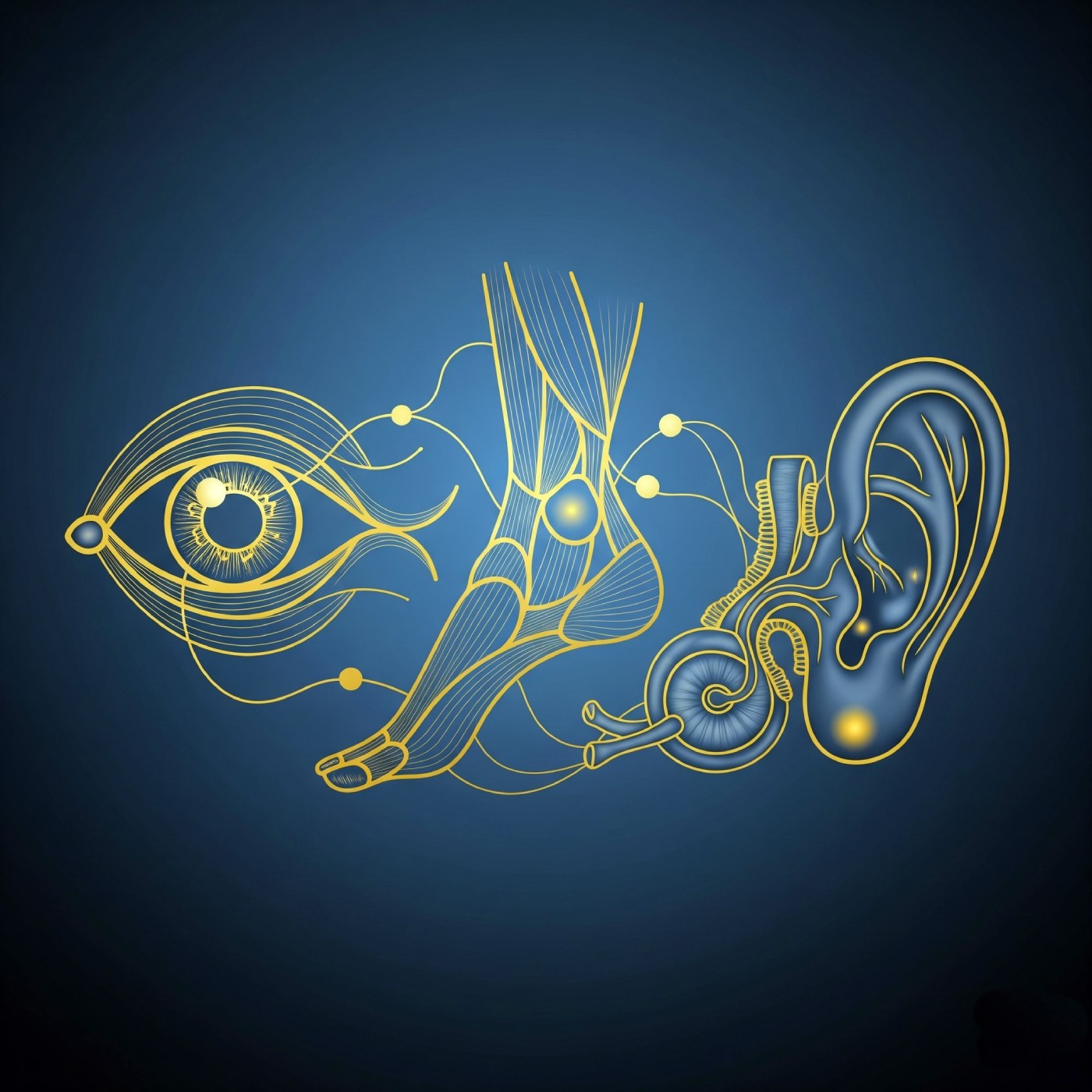
🎙 Dizziness Roundtable (with Ruth Werner)
Ruth Werner returns to The Thinking Practitioner for a roundtable discussion with Til and Whitney on one of the most overlooked topics in manual therapy: balance challenges. Ruth is the author of A Massage Therapist’s Guide to Pathology (now in its 7th edition), a long-time educator, and host of the podcast I Have a Client Who. In this wide-ranging conversation with Til and Whitney, Ruth brings her characteristic clarity to a complex subject — helping us understand what’s really happening when clients feel dizzy, wobbly, or unsteady.
Balance difficulties show up constantly in clinical practice, yet most of us never learned how to think about them. Clients get dizzy turning over on the table. They feel lightheaded sitting up from prone. They mention casually that they’re “always a little unsteady” after sessions — and we realize we’ve never asked the right questions. This episode gives MTs a framework for understanding, responding to, and even helping with balance challenges — while knowing when to refer out.
✨ Topics discussed include: Ruth, Til, and Whitney unpack the sensory triad behind balance (vision, proprioception, and the vestibular system), explore common conditions like BPPV and POTS, and discuss what the research actually shows about massage and balance — including some encouraging findings about foot work and gait in older adults.
• What we really mean by “balance” — and why Ruth finds the word frustratingly vague
• The difference between vertigo (spinning) and dizziness (lightheadedness)
• Why position changes on the table can trigger symptoms — and what to do about it
• BPPV, the Epley maneuver, and “rocks in our head” (otoliths)
• POTS, blood pressure medications, and the challenge of sitting up
• Hypermobility, Ehlers-Danlos syndrome, and their links to balance issues
• Red flags: progressive changes, asymmetry, and when to refer
• Research on massage, foot work, and balance in older adults
• Why there’s no “dizziness muscle” — and what we can do instead
• Fall risk, deconditioning, and the cascade of consequences
• Vestibular physical therapy and other referral options
✨ Resources:
• Ruth Werner’s website: https://ruthwerner.com/
• Ruth’s podcast I Have a Client Who: https://www.abmp.com/podcasts?defined_term=353
• A Massage Therapist’s Guide to Pathology, 7th Edition: https://booksofdiscovery.com/
• Sefton et al. (2012) – Six weeks of massage therapy produces changes in balance: https://pmc.ncbi.nlm.nih.gov/articles/PMC3457720/
• Tarkhasi et al. (2025) – Corrective exercises with massage improve balance and gait: https://pubmed.ncbi.nlm.nih.gov/39550789/
🌱 Sponsor Offers:
• Jane – Practice management for health and wellness practitioners. Try one month free with code THINKING1MO at https://a-t.tv/jane
• ABMP – Save $24 on new membership at https://abmp.com/thinking
• Books of Discovery – Save 15% with code thinking at https://booksofdiscovery.com/
• Advanced-Trainings – Try one month free of the A-T Subscription with code thinking at https://a-t.tv/subscriptions/
• Academy of Clinical Massage – Grab Whitney’s free Assessment Cheat Sheet at https://academyofclinicalmassage.com/cheatsheet
✨ Watch the video / connect with us:
• YouTube: https://www.youtube.com/@AdvancedTrainings/podcasts
• Til Luchau – https://advanced-trainings.com | https://facebook.com/advancedtrainings | https://instagram.com/til.luchau
📧 Email us: info@thethinkingpractitioner.com
The Thinking Practitioner Podcast is intended for professional practitioners of manual and movement therapies — bodywork, massage therapy, structural integration, physical therapy, osteopathy, and similar professions. It is not medical or treatment advice.


Full Transcript (click me!)
The Thinking Practitioner Podcast:
Episode 164: Dizziness Roundtable (with Ruth Werner, Til Luchau & Whitney Lowe)
Til Luchau 00:01
Welcome to the Thinking Practitioner podcast, a podcast where we dig into the fascinating issues, conditions and quandaries in the massage and manual therapy world today.
Whitney Lowe 00:10
I’m Whitney Lowe.
Til Luchau 00:11
and I’m Til Luchau.
Whitney Lowe 00:12
Welcome to the Thinking Practitioner. Hello everyone, and we are excited to welcome Jane as a new sponsor of the Thinking Practitioner. If you know us, you know we’re selective about who we partner with. We want sponsors whose values align with ours and who genuinely serve the community. Jane fits that bill. They’re a practice management platform built specifically for health and wellness practitioners, simple enough for the solo practitioner, but powerful enough for clinics and groups.
Til Luchau 00:41
What really caught our attention is Jane’s reputation for customer service, real human beings available by phone, email or chat, even on Saturdays. That’s the kind of support that’s increasingly rare, and it says a lot about a company. If you’re looking to simplify the business side of your practice, check them out at a dash t.tv/jane and thinking practitioner listeners can get a free month by entering the code thinking one Mo, and I’m so pleased to be here with you, Whitney and with you. Ruth Werner, thanks for joining us today, Ruth, you’re back. You’ve been on the podcast at least a couple times we were reminiscing about one that we recorded in my camper out in your driveway 10 years ago, and I have been on a balance kick this last six months or so, getting ready for a couple events. One is an event on a floating raft house in Thailand, where we’re working with balance for 10 days on a moving environment, which should be really fun, and then a couple of classes around the country, where I’m
going to try to summarize what I’m learning for hands on practitioners. Whitney, you indulged me in a conversation about balance a couple of episodes ago.
Whitney Lowe 01:58
Yes, I remember that.
Til Luchau 01:59
but I wanted to get you, Ruth back with us, because you always make me think in different ways. You and your your wealth of knowledge and research is just inspiring, and what a resource to be able to pull in. I’ll say a little about you. You’re the author of a massage therapist, Guide to pathology, a longtime educator and host of the podcast, I Have a Client Who, yeah, say something Ruth, and then we’ll be able to the camera will switch and we can see that beautiful book you’re holding up.
Ruth Werner 02:28
Oh, all right, yeah, I’m just holding up the seventh edition of A Massage Therapist’s Guide to Pathology,
Til Luchau 02:33
seventh edition. Wow, right. Okay, so we’re doing this as a round table discussion. Either any of us, I think, could say a bunch about it. I know, especially Ruth, we could really, like I said, take advantage of you being here, but in this round table format, I just want to unpack the idea of balance difficulties and challenges that show up in our actual practices. Maybe we’ll get to talk about vestibular, proprioceptive contributors, maybe we’ll talk about aging and why balance often gets harder over time. And then I want to finish, as always, with some practical takeaways for manual therapists. Okay, what do we mean? Ruth, if you wouldn’t mind starting us off, what do you think we mean when we say balance challenges in the clinic. What does that let’s define our terms here.
Ruth Werner 03:25
Oh, I love starting with defining terms, and I will share that the word balance is one of my least favorite words in the vocabulary, pardon me, in the vocabulary of manual therapy.
Til Luchau 03:40
Why? Becomes so it comes in handy. We can
Ruth Werner 03:43
it comes in handy because it can mean anything that you want it to mean in the moment. And you know, as as someone who tries to be a really clear educator, words like that drive us, drive me a little nutty. Let’s, for the purposes of this discussion, let’s call balance, the ability to physically move through the world in such a way that we don’t feel dizzy or spinny, and that our feet have a firm connection with what is under whatever is under them, the Earth, the floor, the dog..
Til Luchau 04:21
you have a firm connection with whatever.
Ruth Werner 04:24
Well, I mean, people talk about grounding, and they’re on the 30th floor of a skyscraper, and it just, you know,
Til Luchau 04:30
got you. so does it? Is it relevant to sitting or other positions?
Ruth Werner 04:36
Certainly, it could be okay. So in, in my very reductionist view, because that’s my job, right? I have to break things into tiny little pieces in order to explain them. So one of the ways that I have learned to talk about a sense of equilibrium is by coordinating input. It’s from the eyes that give us information about where the horizon is, yeah, plus our proprioceptors that give us information about sort of the force of gravity or movement, or movement, right, exactly against gravity, for instance, right? And there’s a third one, oh, and what’s happening inside the vestibular branch of the vestibular cochlear nerve, which is the little nerve endings in the middle ear that are suspended in goo.
Til Luchau 05:27
Okay, you named a different triad that I think of. Let’s go through that again.
Ruth Werner 05:32
Well, so visual horizon, it’s visual horizon. It’s this, I think I gave, I told you, the somatosensory system, or something like that. But really what I mean is proprioceptors, right? What our body tells us about where we are in space.
Til Luchau 05:44
And that includes, maybe you’re including this here. Maybe that’s why it’s different. That includes the surface we’re touching, yes, so it’s sternal sensation, joint position, movement, but it’s also the surface that we’re being pressed against by gravity. Exactly, okay, I’m with you. Great. Yeah.
Ruth Werner 05:59
And then let’s expand that to the whole of the somatosensory system got you, plus whatever’s happening in the inner ear. And when those things don’t match, when we’re getting differing information about where we are in space, versus what our eyes tell us, versus what our inner ears are saying, that leads to a bunch of symptoms that could include things like vertigo or dizziness or nausea or sometimes lightheadedness. And, you know, we may want to, it’s, it’s a fairly shallow rabbit hole the difference between dizziness and vertigo. So I don’t know if that it suits the purposes of this conversation, but we could try to,
Whitney Lowe 06:41
Can you unpack that? Because we hear those terms bandied about a lot, sort of interchangeably. I’d like to get clear on the distinctions there.
Ruth Werner 06:49
Sure, and this is just me repeating what I have read other people write about these things. Okay, this I, you know, I’m not trying to present myself as an authority. Certainly, I’m not a neuroscientist. What I can
tell you is, in the medical literature, the word Vertigo is used to refer to a sensation of spinning, and the word dizziness is used to refer to a sensation of lightheadedness, faintness, disorientation in the in the space. So those two things have a lot of overlap, but they’re not exactly the same thing. And if I understand correctly, and I certainly could be wrong about this, but my understanding is that Vertigo is more often than dizziness related to a neurological problem. Dizziness could be low blood sugar, it could be low oxygen, could be hyper oxygen, right? I used to hyperventilate a lot. That’s a great way to get dizzy. It’s not neurological it’s, you know, internal chemistry. So those two words have a lot to do with each other, but they’re not the same thing. People can have aspects of both of those kinds of experiences, and that clarification may help us to progress with this conversation in a way that you know. Vocabulary helps us all have our feet on solid ground, provides us with a sense of position.
Whitney Lowe 08:24
Let me just pick this apart a little bit too. Just for clarification, if a person has, let’s say, proprioceptive difficulties, like maybe, you know, with diabetic neuropathy or something like that, where they don’t have good sensory input in their feet, and they are maybe having some proprioceptive challenges and maybe visions not great for that person as well. And they stumble, they bump into things or something like that. Would that still be categorized as dizziness, since it is sort of inefficient or incorrect movement through space and placing yourself, you know, vertically on the ground,
Ruth Werner 09:04
My guess Whitney is probably not.
Til Luchau 09:07
But I want to talk about that anyway. I want to talk about balance.
Ruth Werner 09:11
I mean, this is where so we’re doing
Til Luchau 09:13
we’re defining our terms here as balance challenges. And I want to talk about the people that are wobbly on their feet, as well as what you described Ruth the proprioceptive mismatch between this triad of different inputs.
Ruth Werner 09:25
When we think about application of manual therapies, I think that population, the people who are not 100% stable on their feet for whatever reason is, is going to benefit from our work, probably more directly than the person who has something going on with their vestibular cochlear nerve.
Til Luchau 09:50
There’s very clear, tangible things we can do when someone’s unsteady for whatever reason, even if it is because their cochlear nerve is funny. So when someone’s unsteady, we can help a lot. Maybe we’re not getting in there and massaging the root cause, but certainly there’s a there’s a lot we can do when there’s is that fear of falling or unsteadiness or even spinning. Yeah. Okay, so why does this say a little more about that? Why does this topic even matter for hands on therapists, I got a list, and I want to hear what you guys think. Why is this even important? Keep in mind, anybody go for it?
Whitney Lowe 10:27
I’ll defer to Whitney on this one. Well, one of the things that I would say is, like, in reading some of this stuff, when we were putting together, you know, I was reading some stuff about, you know, the notes that we had looking into this, there’s a lot of situations where I think things might happen for manual therapists with, for example, clients on the table and changing positions, with things that we would not expect to be our problem, like all of a sudden turning over, and then the person feels like their head is spinning. It’s like, what’s going on here? And these are some things I think lots of practitioners aren’t really prepared for, don’t hear about very much, nothing. There are important things to be to looking into here,
Til Luchau 11:06
or even sitting up too fast after your session. Never mind, whatever. Just getting dizzy from getting up too fast. Great to understand what’s going on there and what we can do to help.
Ruth Werner 11:17
I actually recently had an article in Massage and Bodywork on why people faint,
Whitney Lowe 11:25
and that’s great, yeah, can you kind of summarize, give us the Cliff Notes version on that? I know it’s complex, but that may be helpful.
Ruth Werner 11:35
It is complex. People faint for a whole bunch of reasons. There’s a phenomenon that that is pretty widely recognized, that people getting up from a chair massage, especially if they’re new to massage, tend to often feel unsteady. And there’s a thought that depends on way, on how the the face cradle hits them, and whether their neck ends up being a little bit compressed because of the, oh gosh, the receptors in the carotid arteries, right? And so, you know, that’s a simple, well, I don’t know how simple it is, because I, every time I receive a chair massage, I end up feeling like my neck is compressed. But it is a it is a thing we can anticipate about about that kind of setting and people feeling a little faint. I’ve seen that happen more than once, where people will get off, a person will get off a chair and just topple over. And that can be a combination of the carotid artery thing, plus dehydration and low blood sugar and whatever else. And those are the things that are typically proposed as mechanisms for why that happens.
Whitney Lowe 12:50
If I can pause you for a second, if there is a positional thing about the carotid artery that is most relevant there, because we can’t change a whole lot about dehydration immediately when a person gets off a chair. But is there a thing that people can do, for example, have their clients slowly sit up into a certain position, neutral, first, with their head not being compressed, and then get up off the chair. What are they like recommendations to keep that from being an issue?
Ruth Werner 13:16
Well, I think the first recommendation is to adjust the chair so that that happens less often, and then maybe that means, like putting a towel in front of the person’s chest or something like that. And then, yes, being there while the person sits up, and maybe being, you know, something they can fall back against if they need a minute to equalize.
Til Luchau 13:39
And often slowing people down. People are jumping right up off the table, hopping up out of the chair, and all we need is a little time to adapt. And I just, I want to put that in there as a consideration for all kinds of dizziness, unsteadiness, vertebral to often slowing things down or even backing up a little bit, is a great strategy for helping people find safety Ida
Ruth Werner 14:01
and I’ll add a population to the people who are who might find that this happens for them, especially if they don’t slow down. Is anyone using medication to manage blood pressure? Because, you know, these meds cause our heart to either beat less strongly, or they cause the large and medium sized arteries to expand, or both of those things, and that can all lead to a sense of dizziness and logines, where sitting up suddenly is going to act like pots, right? It’s going to it’s going to be more of a challenge for the body to adapt to, to get the blood pressure pushing back into the head.
Til Luchau 14:38
Did you say POTS?
Ruth Werner 14:40
I did say POTS.
Til Luchau 14:42
You don’t mean the pots we used to use in high school in my
Ruth Werner 14:45
No, that not that kind of pot, nor the pot, nor because in our kitchen.
Whitney Lowe 14:50
..nor the pots that you put plants into,
Ruth Werner 14:51
nor those, but Postural Orthostatic Tachycardia Syndrome.
Whitney Lowe 14:57
Oh my gosh. What is that? I.
Ruth Werner 15:00
Are you serious? You’ve never heard
Whitney Lowe 15:02
No, I’m just that. I’m for our listeners. I’m not playing for our listener. Is it
Ruth Werner 15:07
Postural Orthostatic Tachycardia Syndrome is a situation where a person, for reasons we can get into if you want, has a hard time maintaining appropriate blood pressure to their head when they suddenly change position, especially coming from laying down to sitting or from sitting to standing, and it has to do with an appropriate sort of feedback loop in their autonomic nervous system, plus how their arteries contract. And what people with pots find is when they do this rapid transition without taking time with it, or even, you know, if it’s bad, it doesn’t matter how much time they take with it. Their heart beats very fast. That’s the tachycardia part of lives. And they feel really dizzy and logy and like they’re going to fall down. And this can be a really, I hate to use the word debilitating, but it can be a condition that really interferes with a person’s quality of life. Yeah, right. And it’s often part of, you know, things like hypermobility and Ehlers Danlos Syndrome and and we see this and long covid, we see this with a lot of other things
Til Luchau 16:24
for various reasons, perhaps the difficulty to adapt the changing position, and that’s including, interestingly, the sympathetic or the, I think you mentioned, autonomic regulation of vasodilation. If we’re relaxing people, if we’re getting a lot of parasympathetic tone in the system, then the sympathetic system, which vascular constricts, is going to be less snappy to respond when we stand up. So some of that’s this situation, normal and desirable, but like when it’s a condition, when it’s in someone’s way of something to be aware of. Now my head is spinning a little bit from this round table thing, because I’m trying to get back to, I want to get back to, like, why this matters. I got a list. I’m trying to I’m trying to be linear in this. I’m sorry. No, I went there, and we are all going there. Okay. Why this matters? We can trigger dizziness with position, like what you said. We it matters to us too, because we’re often the first person that they’ll talk to about it, or they’ll mention to or we might notice things that other providers might not notice. I’ve had that a couple times with elderly clients who like, Oh no. I would never tell my doctor, but I can tell you, I’m really dizzy. It’s like, okay, we need to talk about that. Yeah, it bill if I know how to handle it. Here’s some more reasons, if I know how to slow things down, respond. That builds a lot of trust in the relationship, and also it keeps me safer as a practitioner, because that then I’m going to not going to aggravate what they have going on, help be an ally in that, even if I’m not going to again, stick my finger on the dizziness muscle and make a change, I can, I can at least help this be an alliance where we’re dealing with this challenge together.
Whitney Lowe 18:05
And I think too, as you were saying, til when you kind of broke those down at the beginning, and we talked about the categories of, you know, proprioception and vestibular control and vision and things like that, that certainly the ones that are more, maybe manually oriented, like proprioception enhancement is, is definitely something where we’re probably likely have a lot more significant contributions there than maybe in some of the other areas.
Til Luchau 18:31
Why am I hesitating with that phrasing? I agree, which is what you’re saying. I think it’s that that implies a diminishment of our effectiveness in other areas. I think it’s good to think about, like, where we have the levers, which I really are, proprioception, autonomic functioning, some other things, you know, maybe some just appropriate value, you know, find control, fine motor control, maybe. But so I agree with what you’re saying. I agree. Yeah, I just had myself through it.
Whitney Lowe 19:02
Okay, like, Do you have a challenge? Do you have a challenger or the sticking point?
Til Luchau 19:05
Still, I think that is the manifestation of a lot of the other medical issues. Not that, not that we’re going to fix medical issues by just focusing on proprioception. But I think staying in our lane, we can do a lot, and we don’t need to discount anything to say, I think it was just the phrasing you said, we’re more likely here than others. It’s like, that’s relevant to everything in some way, sure, proprioceptive manifestation, yeah, that fair enough. Is that okay? Yeah, yeah. Works for me. All right. There’s one more why this matters. Topic I want to mention, and that’s like, this is a fall risk issue for older clients, and that’s a big deal because that reduces their activity, accelerates their deconditioning, shrinks their confidence, worsens their pain, makes them socially withdraw. There’s this, like, classic cascade of things that come from being afraid of falling.
Ruth Werner 20:01
I want to jump on that and add, add to that, but I want to also go back to the other thing, which is, what, besides proprioception, can we nice? Can we affect so, I mean, there’s a, there’s a evidence base about foot massage and elders and their gait right, not not just their gate right, confidence of their gate, but like how they do on a balance board. And that’s a, that’s a severe test. I mean, that’s a, that’s a challenging test, I should say so and, and if I remember right, it was Dr Monk, is Nikki Monk who did some of this early research, because her specialty was in working with older people. So it might be fun to get her on at some point.
Til Luchau 20:51
Yeah, I get a couple references, but she’s not one, so that’s okay. That’s good to know.
Ruth Werner 20:59
We can say with confidence that a really good foot massage is really good. Foot at lower leg is really good for people who are a little worried about, especially about initiating movement. One of the really common tests for what we’re describing here is called Timed Up and Go. How long does it take for you to get from sitting to walking a tug test? And we, we our work stacks up pretty well compared to other interventions for this and and so I want to really reiterate til what you were saying that when it comes to our older clients, or clients who struggle with movement in general, anything that they can do with us as their helpers, to feel more confident about taking strides is a is a huge huge benefit.
Til Luchau 22:01
Thank you. As looked at my references mine, mine’s Sefton,
Ruth Werner 22:06
Ellen Sefton, yeah, she’s also involved with the foundation and
Til Luchau 22:10
great 2012 six weeks of massage therapy produces changes in balance, neurological, etc. And then another one. Tarkashi, more recently, 2025, corrective exercises with massage have beneficial effects on balance and gait. So there’s those in the
Ruth Werner 22:27
show notes. There are some.. There are some really, there’s some really nice data on our work in that. And I wanted to just go back for a minute, because you were it felt like to me, sort of making a plea for, can we go beyond the proprioception? You know, go ahead. I want to hear all right? Well, I mean, if we think about the three things, right, the three in in in dizziness or vertigo, yeah, eyes to the horizon, somatosensory system and vestibular nerve, or the Yeah, the vestibular cochlear nerve. I’m just I am recalling a time when I had, I had flown to Australia or New Zealand, and I had terrible congestion and my the swelling in my head, plus the disorientation of the long flight, I actually got dizzy enough to have nausea to throw up after that, because of the all of the stresses on my body. And I’m just thinking manual lymphatic drainage of the head could do a lot. So it occurs to me that when people are having people with sinus infections, for instance, are having dizziness, which is really common because of the congestion in the head. That there are things body work could do in the absence of infection that could really solve that. And if you’ve ever been on the table at that moment when the sinus is clear and you can see clearly, again, that’s a that’s a magical moment in body work. Yeah, right. Influence that sense of balance or or disequilibrium, absolutely.
Til Luchau 24:12
Foot adaptability, foot proprioception. We mentioned already. You’re talking about sinus changes and manual lymph drainage might be one way. There’s many ways to influence sinus changes, the ability to position any part of the body over our base of support. So adaptability at the ankles, knees, hips, spine, shoulders, arms, neck, all that’s going to influence people’s balance, their ability to feel comfortable in control and connected to their base of support. And then I’m teaching a workshop tomorrow for dancers, and I’m collaborating with a dance teacher, so it’s fun. I just talk about my stuff, and she riffs it and takes it into these amazing movement exercises. And what I’m learning from her is there’s a whole world of balance that is off vertical, like, what if we’re not just. Stacking things, but we’re actually relating to both the ground and the space around us in a three dimensional way that is dynamic as well as still four dimensional way. If you yeah right, yeah, the time I love that. So I’m really, I’m gonna kick about this.
Ruth Werner 25:19
and, and, for that kind of activity, that’s where the vestibulocochlear nerve is going to be really, really important, right, to help us remember where, where we are, so that we don’t face plant or whack her head or do whatever.
Til Luchau 25:38
Now, vestibular cochlear nerve, you’re talking about the inner ear, yeah, exactly that signals, yeah, my understanding, and I might be oversimplifying, but that is position related, but it senses movement or change more than it does strict position
Ruth Werner 25:57
and my understanding, and again, could be wrong, not a neurologist, is that a lot of what it does is sense where the head is, the tilt, yes, turn of the head in relation, in relation to the horizon, because it’s the little you know, we everybody learn to use this, the little seaweed, little hair cells, the little hair cells that are in this gel-like stuff in the middle of the middle ear, and you’ll enter and and I did not look at this, you know, to prepare for today. I wish I had now, if you picture the cochlea of the middle ear, that’s the part that looks like a snail shell, and then it has these
Til Luchau 26:35
three semi circular canals,
Ruth Werner 26:38
semi-circular, well done. And they are, it’s not random. They are at precise angles, three dimensions and predictable and that basically the same for every person that that will orient us to what feels flat and straight. So for someone who is dancing and moving through space. For someone who’s a gymnast, I’m thinking of what’s Simone Biles, and she had, what does she call it, the twirlies or something, for a while. She had to take a year off because she was not sure of where she was in space so that she could land safely.
Til Luchau 27:19
Yeah, sure. Okay. I’m with you. I’m totally with you now, yeah, and there’s this classic so cool. It is so totally cool. There’s this classic proportion that people use to orient. They say the numbers, I’ve heard visual orientation, whereas the horizon is like 90% of our sense of up. So that’s why it’s so hard to stand on one leg when you close your eyes. Yeah, it is. And then it’s about, I’ve heard 8% inner ear, and the remaining 2% is the surface we’re pressing on.
Ruth Werner 27:51
Oh, interesting I see, and I’ve never heard that breakdown before.
Til Luchau 27:54
I can’t give you a reference. I can’t substantiate that, except that, working with these dancers, what I’m seeing is that, like visual, the visual part of that pie is shrunk down, the inner ear part, and the surface parts have expanded enormously, so they’re much and there’s in this dance form contact improv. There’s a lot of eyes closed time or soft eyes time too. So it is a very proprioceptive, you could say, or vestibular kind of orientation, okay, common. Well, let’s go back to red flags. Are we ready for that? Or do you want to go through any of the disorders at all?
Ruth Werner 28:36
I don’t know. Maybe we could talk for a minute about BPPV.
Til Luchau 28:40
Let’s do that. What is BPPV?
Ruth Werner 28:42
BPPV? Oh, good question, Benign Paroxysmal Positional Vertigo. And I’m really, I’m really proud of the fact that I dug that out. Benign Paroxysmal Positional Vertigo.
Til Luchau 29:00
Benign sounds good. How about the rest of it?
Ruth Werner 29:02
Yeah, it’s possible that I got the 2 p words in reverse order. I’d have to look it up to be sure. The idea is that when someone is having an episode of this type of vertigo, they cannot tell where they are in space, and so this is spinning, and they don’t know if they’re upside down or right side, up or sideways or backwards. And what’s happening is exactly what we’ve been talking about with those hair cells get disrupted because we have we have rocks in our head otoliths, which means ear stones, yeah, are out of the correct position and they are interfering with the function of the hair cells in the inner ear.
Til Luchau 29:46
Okay, can I provide a another possibility that I learned, yes, out of position or not, embedded in that jelly actually tumbling around. So yeah, they stimulate places that they wouldn’t. Normally stimulate Right?
Ruth Werner 30:01
Exactly? Because, yeah, I don’t know that those two things are in opposition to each other,
Til Luchau 30:08
yes, but it’s usually they’re embedded in the jelly. They provide the inertia that wiggles the jelly when we move, the little stalls, yeah. And then, if they’re not embedded in the jelly, and they’re actually are moving, which isn’t a normal situation. They provide lots of stimulus and lots of they’re wiggling the jelly like crazy, all over in the body. Like you said, there’s this mismatch between what we’re getting with one signal, one of the tripod signals, and the others. So that ends up causing the dizziness.
Ruth Werner 30:35
Yeah. And one of the consequences of that is nystagmus, where the eyes are flicking back and forth, but the person is not really seeing much.
Til Luchau 30:42
I wiggle. I wiggle Exactly. Is that you think that’s like an orienting response, or is it just something weird, electrical? Yeah, yeah,
30:53
for sure.
Til Luchau 30:54
Surely that is a red flag.
Ruth Werner 30:59
if the person is reporting that discomfort about it. I mean, I’ve met people with with who are visually impaired, whose eyes seem to move a lot, but it’s not, does not seem to have to do with a sense of spinning. And I have never been on site when someone’s had an episode of the BPPV. So I can’t speak to that from personal experience, I have met people who have described it
Til Luchau 31:22
to me. Yeah, I’ve observed that on my table.
Ruth Werner 31:26
Have you?
Til Luchau 31:27
Oh yeah, totally.
Ruth Werner 31:28
And so that’s a situation where someone turning over my if I stimulate an episode again.
Til Luchau 31:33
This is the eyes shaking back and forth, more than just a little bit of like Nixon, like searching for the next line to say,
Ruth Werner 31:42
Oh no, it’s like, out of control.
Til Luchau 31:44
Yeah, out of control. And I learned it, and I and I know the red flags topic itself is needs to be more nuanced than just a don’t statement. But I learned it as a as a sign to really slow down around if you saw it in positional changes, or saw it with neck work, or saw with changing the head. If you saw that, I wiggle. It’s like, okay, back off. Slow down.
Ruth Werner 32:08
Yeah, back way off. Oh. I have never had someone’s eyes wiggle while I was I have, yeah, I think that’s a good reason to back way the heck off. And if it’s someone who has had experience with this, if this, you know, a repeating episode of something that they have seen before. Conceivably, they will have ideas about how to, how to, how to create some safety, some safety right in that, in terms of, like, where their head needs to hang over the table or whatever. And there are, there’s a there’s a maneuver. It’s called the Epley maneuver, where you can a person, and I’m not saying this is a massage therapist job, but a person can learn how to help position a person’s head.
Til Luchau 32:54
Yeah, it’s this. It’s commonly learnable on YouTube. There’s dozens of Epley maneuver. You self help. You can say, oh, that helps. This is a place where I’ve experimented a lot because I had number clients with vertigo that was helped by an Epley, but also number that have been aggravated by an Epley or its variations. And one of the factors that seemed to be really relevant was the speed at which the thing was done. There’s this idea, I’m going to shake the stones back to where they belong. And so people sometimes it’s done really quickly with some like, even the quick stops and things like that. And I’ve seen people like, completely aggravated or trauma, almost traumatized. Sounds horrible, yeah, yeah, you’re dizzy. And someone’s like, shaking your head, it’s like, yeah, that doesn’t always come out well. So just slowing things down a lot in and maybe going through the self help ethic that people were taught, I’ve seen, have really good results for people with some people, some of my people with BPPV, right?
Whitney Lowe 33:57
Isn’t it also beneficial for them to keep their eyes anchored on something as they’re doing this as well, so they have, like, one degree of sort of stability, of that visual control.
Til Luchau 34:08
Interesting, that’s that that helps a lot of people with dizziness, for sure. That’s interesting. I haven’t heard that in that, but, yeah, I’m not an expert on that. Yeah, Ruth, did you want to say anything more about BPPV? Nope, we got, we covered it,
Ruth Werner 34:20
yeah, I think of the of the the umbrella term is vestibular balance disorders, yeah, that that is really focused on neurological issues, BPPV is probably the most common of those, and lots of our listeners will have seen it or experienced it, had clients with it, Yap family members, or whatever the rest of them are. You know, Myers disease and a few others. They’re rarer and probably not great candidates for massage therapy as a
Til Luchau 34:59
..Primary management strategy, not alone.
Ruth Werner 35:01
Yeah, we can. We can anticipate that people who have these, especially if they’re predictable, that there will be a lot of tension in the neck and shoulders, trying, just trying to control the head to not
Til Luchau 35:15
Yes, thank you. Thank you. That’s that is a lever that we have with all of these things, and it isn’t just about let’s mash them so that their heads floppy, because that doesn’t feel good and doesn’t help. But can we think about refining someone’s ability to move or relax or stabilize? Can we increase the acuity along that spectrum of stability, mobility for people in the head and neck, and that has a big effect on people’s ability to move and function with whatever they have going on. I concur, we haven’t spoken at all about primary or secondary or anything like that or I mean, it’s kind of been implied so far, that there’s so many different possible causes of these things that some might be the result of other things.
Some we don’t even know why they come that they’re just considered to be their own condition. Is that that’s worth noting, but that’s
Ruth Werner 36:09
yeah, they can be free standing. I mean, when we think, when we think about someone who whose proprioception in their feet to return to that picture for a minute is changing over time. It would be useful to know if that’s happening because they have diabetes or peripheral artery disease, or if it’s something that they’ve noticed with changing or maybe there’s a whole neurological thing. This could be something that you might see with MS or something like that. If someone is reporting progressive changes in their sensation in their feet. I think that’s worth referring to a physician.
Til Luchau 36:48
Progressive changes being like,
Ruth Werner 36:51
like I, you know, I had a client who, she was just a neighbor that I used to work with once in a while when I lived in Utah, and I happened to be there once when she was just right up off the table. She had her robe with her, and so she, I was in her house, and she was right up off the table, and she was like, like, a toddle, you know, like a like a baby who was learning how to walk. She was using the table to get herself across the room. And I was like, Tell me about that. And she said, Oh, no, I’m always numb for about five minutes after I get up off the table, and I was like, thanks for letting me know. And that’s you know, that’s a danger with doing that kind of casual work, is I wasn’t there to work with her shoulder and had not done a thorough intake, and she needed it.
Til Luchau 37:40
Okay, this is not a class on everything you need to know to be caution. But let’s go through a couple progressive changes, like things, things getting worse,
Ruth Werner 37:49
asymmetrical changes in the feet, like so one is one is getting worse than the other. Certainly visual disturbances, right? If changes in color, changes in skin texture or health, you know, moving through to other. And if you know, if we, if we go back into the, you know, looking at this as a, as a central nervous system thing, rather than a peripheral nervous system thing. Then if people can predict what kinds of things will will prompt an episode, but they haven’t, you know, looked for care for this, because there are treatment options for these things, sometimes with meds, sometimes with it’s called vestibular physical therapy. Just works on totally
Til Luchau 38:37
a specialty, yeah.
Ruth Werner 38:42
And you know, so there are options available to people who have these that who might not know that there are options available. And you know, as massage therapists, the people, the healthcare, the care providers that people actually tell what’s going on for them, we can be in a position to give, you know, good advice about what to do next.
Whitney Lowe 39:02
Yeah, and are some of these just not curiosity, because I had somebody say this to me too. This is a person who is, you know, mid 60s or so, that was saying, like, Oh, when I first get up in the morning and walk around, you know, my feet feel a little bit numb and a little bit, you know, of a they didn’t say balance challenge, but just like they, you know, not quite fully, you know, feeling comfortable on their feet, but that goes away within a few minutes, and that being possibly a benign, maybe vascular, age related change thing, or something like that, and not something to be serious about. Or is that something that say, like, Hey, you shouldn’t, you should look into this.
Ruth Werner 39:41
Are you asking me? Yeah, I’m curious. Yeah. I think my response would be, track it if it gets worse. Go see your doctor or track it if it makes you unsure or un. You know if it makes you nervous about walking? Hmm? Yeah, that’s worth pursuing.
Til Luchau 40:02
Yeah, that’s good. So watching for the changes,
Whitney Lowe 40:07
Changes over time always key factor there.
Ruth Werner 40:11
yeah, and how much interferes in their quality of life,
Til Luchau 40:15
Right function, yeah, my understanding. And you sent me a great your stat pearls on Vestibular Disorders, great summary of the current state and understanding of treatment options. And one of my takeaways from that was that a lot of central, I mean, a lot of peripheral nervous system causes of dizziness or balance disorders, the treatment is basically management. It’s like, let’s teach them some athletes. Let’s get them moving. Let’s get them doing some, you know, balance boards, whatever, while central nervous system concerns are thought of as medical issues often and what? So what is the underlying medical issues or medication issues that might be there?
Ruth Werner 40:59
Oh, I’m glad you said that, because that made me thank you. Long ago, much earlier in this conversation, you said something about working with an older client who was reporting dizziness, and I don’t remember the things that went into it, but one of the things that that made me think of was it might be time for a medical audit, right? Because people will add to their medications, and it’s not always in coordination with all of their providers. And so a lot of times dizziness, probably dizziness, more than vertigo, that has an onset for an elder, might might be related to a mismatch in their meds. And again, we’re not in a position to untangle that, but we certainly are in a position to recommend that they consult with their providers.
Til Luchau 41:50
Good one, absolutely, yeah. Other practical screening, tips, questions, documentation, anything like that. we want to get our listeners thinking about?
Ruth Werner 42:05
I mean, my perspective always is that the most important question that needs to happen in any massage is, what are you hoping to accomplish with this? I love it, and that’s as you know,
Til Luchau 42:22
as a touchstone, as a context, as an understanding why, their motivation for being here, what they’re going to define as success, all those emotions,
Ruth Werner 42:30
and so you know, if they’re experiencing bouts of dizziness or vertigo that doesn’t particularly bother them or make them nervous or make them concerned, they feel like they’ve got a good handle on it and they’re managing it’s it’s a non issue, except that you want to know how to not exacerbate it, right? Yeah, if they’re having a hard time keeping balance with their feet, and they would like you to help them with that. That opens whole new worlds of strategies and treatment planning, right? And we just need to bear in mind that those goals may change from, you know, one session to the next, but to have the clients concerns be the center of the decision making process because we’re treated, we’re treating the person, not their BPPV or their diabetes, or their one.
Til Luchau 43:25
You mentioned hypermobility. We say a little more about that, and I got something about hypomobility too. But let’s, let’s start with hyper How could that be related? Let’s go. Let’s just repeat what you see.
Ruth Werner 43:39
It is a little bit of a mystery to me, but here’s what I understand. And I actually was talking with someone about this the other day, who has is, has is hyper mobile and struggles with proprioception.
Ruth Werner 43:59
So let’s take a step backwards and talk for a moment about Ehlers Danlos Syndrome. Yes, Ehlers Danlos Syndrome is a genetic disorder. Actually, it’s, I think it’s 19 different that’s not an exaggeration. I think it is actually 19 different genetic disorders that all fit under this umbrella, and the main thing that they have in common is hypermobility. It is a genetic disorder having to do with the construction of connective tissue, okay, and so for some people, the certainly the most common version of this is sometimes called heads, which stands for hypermobility, Ehlers, Danlos Syndrome, right? And this is someone who can, you know, bend their thumb back to touch their forearm. Or they, you know, were in Cirque du Soleil when they were younger. Or they, you know, can do gymnastics, because they can do these back bends. Um. And is it? Is it bad? Is it bad to have hypermobility? It can be because it means the joints might not have as much as support as they need, and that opens the door to a whole bunch of other things. But one of the things that we see, say again?
Til Luchau 45:19
…which might be directly balance related too
Ruth Werner 45:21
..which might be directly balance related because with hypermobility, for reasons that are not entirely clear to me, but I’ll share the leading theory comes problems with proprioception and and the theory is that because many of our proprioceptors, stretch reflexes, reflexes and Golgi tendon, organs or whatever are embedded in connective tissues. Yes, if those connective tissues are looser than normal, or if they’re not functioning the way they do and other people, this can throw our sensory system off.
Til Luchau 45:58
Well, I mean, the simple version of that is that there’s more play in the system, exactly, more movement without stimulating the mechanoreceptors, because the tissue isn’t transmitting it as quickly or as firmly,
Ruth Werner 46:11
yeah, as distinctly. Maybe because, and one of the consequences of this is that people with hypermobility are really tend to be clumsy and whack into things and get injured really easily. Another, another consequence, which is sort of out of our reach, but is important to bear in mind, is that among these versions of of Ehlers Danlos Syndrome, this can affect the connective tissue in our arteries, yeah, and the proprioceptors there are not giving good information about blood pressure, for instance, and that can have a lot of other
Til Luchau 46:45
so it’s harder to regulate our blood pressure normally stand up because there’s not so mechanical resilience of
Ruth Werner 46:51
the tissues themselves. They’re more vulnerable to aneurysm because the connective tissue is is looser, but they’re also more vulnerable to pots, right? Because the feedback system between the tension in their in their the proprioceptors, if you like, their mechanoreceptors in the circulatory system, isn’t working right, right? So all of these things tie together for someone who has hypermobility somewhere on that spectrum of severity, that that is going to go along with having what’s the word I want? Unfocused, proprioception, fuzzy. Fuzzy proprioception,
Til Luchau 47:31
less distinct, perhaps, yeah, potentially less distinct. And I’m glad you reframed it as a continuum, because it’s easy to name as a condition and again, inadvertently pathologize it. But yes, the easier your connective tissue stretches, potentially, the less accurate or quick the signal might be. And so there could be some more likelihood of issues around
Ruth Werner 48:00
that, which is a funny contradiction, yeah, to the stereotype that people who are hypermobile end up in the circus, right? Because they can do these, these contortionist sorts of things. Because for that boy, you better have some fine tuned proprioception, especially in the in the vestibular system. So maybe that’s what is well,
Til Luchau 48:23
let me mention, let me mention the other end of that flexibility bell curve, which would be hypomobility, being really stiff and not being able to move, or just not having the differentiation or adaptability to find find distinctions mechanically in our, let’s say our foot bones. And this could be from tissue qualities like perhaps genetics. It could be from use or lack of use. It could be from aging, because we lose that distinction. Tissues change as we age, as well as our proprioceptive acuity changes with age, so sometimes a lack of mobility or a lack of distinction can really manifest as probe, as a balance issues, balance challenges as well. Man standing on like if you just stand up and put your feet together, you’re going to be more tippy than if your feet are apart. So you’re even the bones within your feet will act like that. If you act, if you use your foot like you got one bone in it, you’re going to be more tippy than if your body can remember and utilize the all 26 whatever bones you got on your feet. Yeah, you know, one other
Whitney Lowe 49:30
thing I just wanted to call back to you for a second when we were talking about the hypermobility and the especially the Ehlers Dan law situation, that there are other things part of this that really kind of creates a perfect storm problem, because that, that loss of proprioception Ruth, which you were speaking about with the clumsiness, leading to people maybe bumping into things more often, and stumbling and doing that kind of thing, and because of the connective tissue, weakness and damage in that condition can lead to increased incidence of breath. Bruising and, you know, other types of capillary damage and things like that. So when clients say something in their discussions with you about, oh, yeah, like a bruise frequently, you know, that’s something to kind of like pick up on. Is that attention? That’s part probably that whole complex is happening there. All right, I’d like to, I’d
Ruth Werner 50:19
like to add one more thing to the proprioception in the feet. Kind of discussion cool, which is that proprioceptors lie. They lie. They lie like a rug right. Proprioceptors will relay information about how tight we are or how much effort it takes to do a thing. And that might not be true,
Til Luchau 50:44
objective sense,
Ruth Werner 50:46
yeah, in an objective sense, you know. And because of this, we see people developing super tense muscles when it’s not necessary, because that’s their normal. That’s their set point, if you like. And you know, the good news about that is that the right kind of manual therapies can begin to unravel some of that. But, um, which you know, opens up some possibilities for, uh, positive outcomes among people who are having mendacious proprioceptors in their feet.
Speaker 1 51:21
Yeah, interesting. Okay, so
Ruth Werner 51:26
mendacious, proprioceptive. I think that’s a title. I think that’s a title.
Til Luchau 51:34
What if, wrapping it up? What’s what’s like? One myth you’d like to retire, or one practical takeaway, or something like that you want to offer. What would you like people to not be assuming about balance? Or what would you like them to think about doing when they’re working? I’ll start, yeah, go ahead. The myth that we cannot help, the myth that if it’s a central nervous system issue, a medication problem or a genetic disorder, in quotes, that we don’t have a role in that. And it is a useful distinction to understand the mechanisms that we can help and what we are more limited in. But there’s almost always a ways that we can be helpful, even if it isn’t trying to change the root cause of whatever’s going on.
Whitney Lowe 52:29
Yeah, and I would just like to encourage people to think about this in in the broader scale, til you had a great quote there a while back when you said something about, like, we’re we don’t have a way to, like, put pressure on the dizziness muscle, you know, and there is a tendency for us to want to look for those kinds of technique based solutions. And a lot of times, I think a much broader kind of whole, sort of holistic approach is really going to get a lot of the best results there, without having to feel like we have to target a specific thing to do something making change.
Ruth Werner 53:04
There are you suggesting a biopsychosocial approach to dealing with
Whitney Lowe 53:10
I don’t believe any of that crap. I don’t believe in that.
Til Luchau 53:17
Nope, yeah, that’s, I mean, that is one of the takeaways, that this is multifactorial, or there’s so many different possible causes. Yap, that any, any approach that just takes one of those avenues is probably going to have some success and a lot of limitations, yeah,
Ruth Werner 53:32
as long as we’re safe, you know, and we want to do that as fully informed as we can be, yep.
Til Luchau 53:39
So these are usually, like we said, a mix of vestibular, visual, proprioceptive, strength, reaction time, confidence, attention, factors in there, chemistry. That’s right. There’s probably a few more that are not occurring to me. So it’s for us, it’s about like holding at least a couple skills at once, one like recognizing the limitations of what we the expectations we create, or red flags, referral options and things like that. So being that kind of cautious, but also knowing that we can support and make a difference for people in their functioning and in their subjective realities through our hands on work and our attention and our slowing things down. Yeah, simple work that we do that is so effective so often,
Ruth Werner 54:30
I concur. All right,
Til Luchau 54:33
thank you guys. Thank you. Ruth, I’ll go ahead and thank our sponsors too. The thinking practitioner podcast is proudly supported by ABMP, associated body work and massage professionals, the premier association for dedicated massage and body work practitioners like you. When you join ABMP, you’re not just getting industry leading liability insurance, you’re getting practical resources designed to support your career from free top tier continuing education. Information and quick reference apps like pocket pathology and five minute muscles. ABMP equipped you with the tools you need to succeed and grow your practice.
Whitney Lowe 55:10
And do remember that ABMP is committed to elevating the profession with expert voices, fresh perspectives and invaluable insights through their CE courses, the ABMP Podcast and Massage and Bodywork Magazine featuring industry leaders like my co host Til and our guest today, Ruth, and also Whitney Lowe, yeah, I’ll do that too. Yeah, Thinking Practitioner listeners like you can save and get exclusive discounts on ABMP membership at abmp.com/thinking. So join the best and expect more from your professional association. And again, we would like to thank everybody for hanging in with us today and learning some more about balance. I hope you left here more balanced than when you came in. You can stop by our sites for the video, show notes, transcripts and any extras. You can find that over on my site at academyofclinicalmassage.com. Til where can I find that for you?
Til Luchau 56:02
My site, advanced-trainings.com, just click on the podcast menu see all that stuff we’ve mentioned. Ruth, if people want to know more about what you offer, including your really cool podcast, etc, your courses, where would they go to find that out?
Speaker 2 56:15
Um, I think the best place to do that would be www.ruthwerner.com,
Til Luchau 56:22
there you go. Well, that’s show notes. And we listeners. We want to hear from you about your ideas, your input, your feedback, your likes, your dislikes. Email us at info@thethinkingpractitioner.com or look for us on social media and YouTube, just under our names. I am Til Luchau Whitney. Who are you?
Whitney Lowe 56:41
And today, I am Whitney lowe you can find us over there, and if you will, please take a moment if you could to rate us on Spotify or Apple podcast. It actually does help other people find the show more effectively. So please take just a few seconds to do that. We really appreciate you listening. We appreciate the support over all the time that we’ve been doing this. And as always, thanks for sharing the word and tell a friend See you next time.
Til Luchau 57:04
Ruth, thanks for taking the time to be with us. Bye for now. Hope to see you again sometime. Sounds good.
Huge thanks to our founding sponsors:


Live Workshop Schedule
Stay Up to Date
…with the Latest Episode, News & Updates
Get our free Techniques e-Letter
You’ll occasionally receive the latest schedule updates, tips, secrets, offers, resources, and more. Check out our ironclad privacy and SMS policies. You can unsubscribe/stop at any time.
This Month’s Free Online Course
Our gift to you. Includes CE, Certificate, and Extras.
Follow Us
Join us on FaceBook, Instagram, Twitter and YouTube for information, resources, videos, and upcoming courses!
0 Comments