
The Thinking Practitioner Podcast
w/ Til Luchau & Whitney Lowe
Episode 176: Becoming Friends with Movement (with Nuria Bowart)
Transcript | Subscribe | Comments | ⭑⭑⭑⭑⭑
Or, listen and subscribe on Apple Podcasts, Spotify, wherever you get your podcasts!
🎁 Scroll down for the full video and transcript!
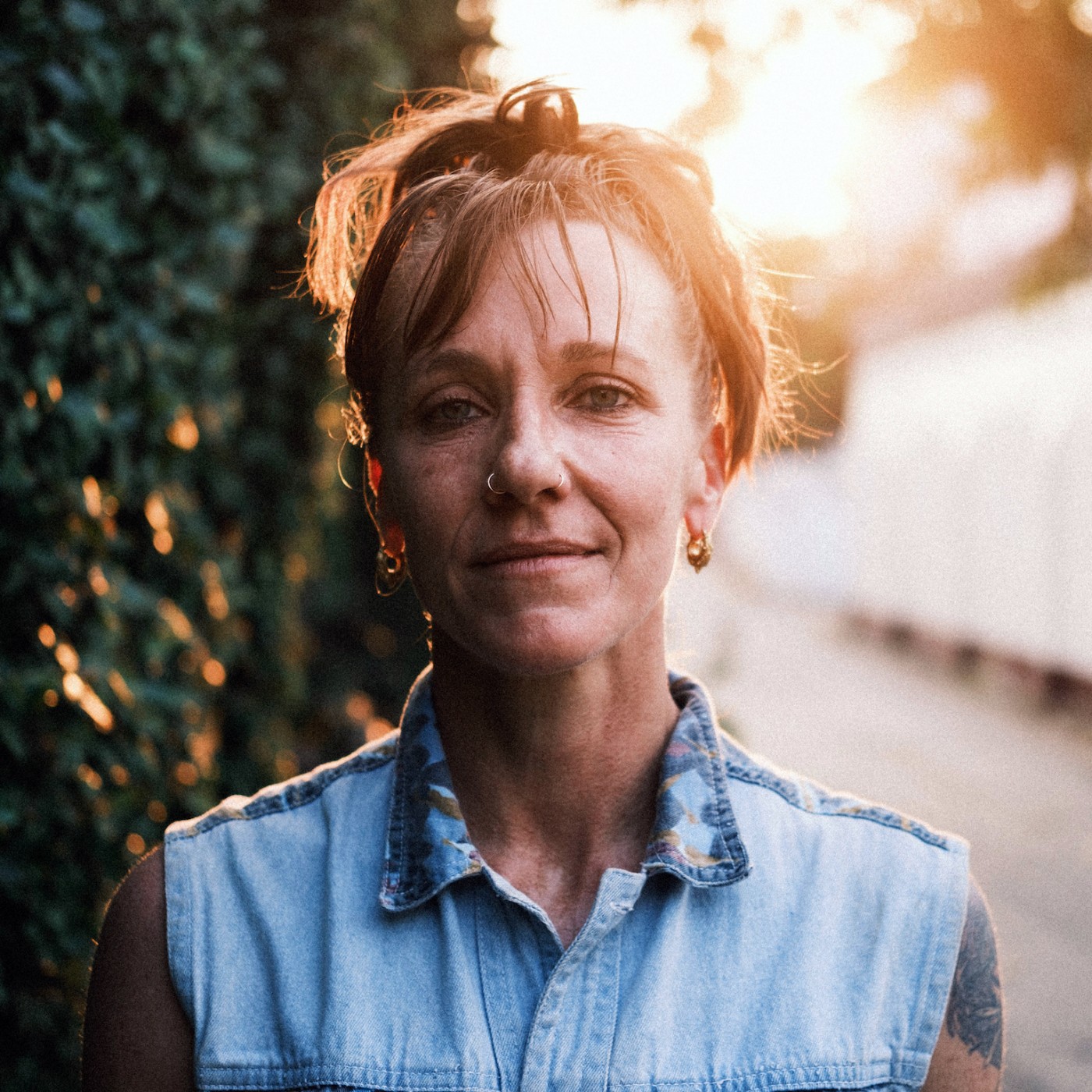
🎙 Becoming Friends with Movement (with Nuria Bowart)
📌 Save the date: early December 2026 in Boulder, Colorado — as a result of their discussion here, Til and Nuria are teaching a collaborative workshop for bodyworkers, hands-on and moving, both. Details to come at https://advanced-trainings.com
Tell Nuria you’re “not really a mover” and she won’t argue. She’ll just say: maybe you’ve forgotten.
Most of us learned to work on bodies that hold still. Nuria Bowart — dancer, movement artist, Certified Rolfer, and a Mestra in Capoeira — lives at the opposite pole, where the body is always moving, listening, and playing. Til sits down with her to explore a deceptively simple question: how can those of us who work with our hands become better friends with movement — not as one more thing we prescribe, but as listening, relationship, play, and a way of being more at home in ourselves?
Along the way they get into Fascial Intelligence, the Axis Syllabus, Contact Improvisation, and Capoeira — and what each one teaches about touch, agency, aging, and befriending the unknown.
✨ We talk about:
• Why “maybe you’ve just forgotten” is Nuria’s answer to anyone who doesn’t think of themselves as a mover
• Fascia as a constellation of intelligences — and listening as the core point of access
• What changes when we start with the body’s design and options, instead of fixing
• What Contact Improvisation reveals about weight, gravity, and arriving together in the present moment
• Capoeira as a healing art: play, risk, vulnerability, and responding creatively to danger
• Aging as a “mystery school” — and movement as the micronutrient of longevity
• A simple practice for the week: finding the moment you don’t know what to do, and staying there to listen
✨ Resources:
• Nuria’s website: https://www.nuriabowart.com
• Nuria on Instagram: https://www.instagram.com/nuriabowart
• Berkeley Capoeira Collective: https://berkeleycapoeira.com
• The Field Center, Vermont
• The Axis Syllabus: https://www.axissyllabus.net | US events: https://axissyllab.us
• Axis Syllabus literature and texts: https://www.axissyllabusforum.org/literature
• Axis Syllabus socials: https://www.instagram.com/axissyllab.us | https://www.facebook.com/AxisSyllabusResearchMeshwork
• Frey Faust, founder of the Axis Syllabus
• Bonnie Bainbridge Cohen & Body-Mind Centering; Sensing, Feeling, and Action (Contact Quarterly)
• Nita Little & the Institute for the Study of Somatic Communication — hear her in episode 140 of The Thinking Practitioner
🌱 Sponsor Offers:
• Jane – Try it free for one month with code THINKING1MO at https://a-t.tv/jane
• ABMP – Save on new membership at https://abmp.com/thinking
• Books of Discovery – Save 15% with code thinking at https://booksofdiscovery.com
• Advanced-Trainings – Try one month free of the A-T Subscription with code thinking at https://a-t.tv/subscriptions
• Academy of Clinical Massage – Grab Whitney’s free Assessment Cheat Sheet at https://academyofclinicalmassage.com/cheatsheet
✨ Watch the video / connect with us:
• YouTube: https://www.youtube.com/@AdvancedTrainings/podcasts
• Whitney Lowe – https://academyofclinicalmassage.com | https://facebook.com/WhitneyLowe | https://twitter.com/whitneylowe
• Til Luchau – https://advanced-trainings.com | https://facebook.com/advancedtrainings | https://instagram.com/til.luchau
📧 Email us: info@thethinkingpractitioner.com
The Thinking Practitioner Podcast is intended for professional practitioners of manual and movement therapies — bodywork, massage therapy, structural integration, physical therapy, osteopathy, and similar professions. It is not medical or treatment advice. Rolfing® is a registered service mark of the Dr. Ida Rolf Institute®.
Full Transcript (click me!)
The Thinking Practitioner Podcast:
Episode 176: Becoming Friends with Movement (with Nuria Bowart)
Til Luchau
Welcome to the Thinking Practitioner podcast, a podcast where we dig into the fascinating issues, conditions, and quandaries in the massage and manual therapy world today. I’m Whitney Lowe, and I’m Til Luchau. Welcome to the Thinking Practitioner. Books of Discovery’s manual therapy textbooks, e-textbooks, and digital resources help instructors achieve their instructional goals and inspire students to achieve theirs, they find the same spirit here on the Thinking Practitioner podcast, and they’re proud to support our work, knowing we share the mission of bringing the massage and body work community thought-provoking and enlivening content that advances our profession. Books of Discovery has just released the new seventh edition of Trail Guide to the Body. This million-copy bestseller takes another leap forward in empowering the next generation of manual therapists with all new palpation, video instruction, and a new primer on the nervous system. Instructors of manual therapy education programs can request complimentary review access to the new seventh edition at booksofdiscovery.com, where listeners like you can explore the publisher’s full range of titles at booksofdiscovery.com, where you can save 15% by entering Thinking at checkout. And the Thinking Practitioner podcast is proudly supported by ABMP Associated BodyWork and Massage Professionals, the premier association for dedicated massage and body work practitioners like you. When you join ABMP, you’re not just getting industry-leading liability insurance; you’re getting practical resources designed to support your career, from free top-tier continuing education and quick-reference apps like Pocket Pathology and Five Minute Muscles. Oh, by the way, my co-host Whitney has a bunch of courses in their library, as do I. ABMP equips you with the tools you need to succeed and grow in your practice. They are committed to elevating the profession with expert voices, fresh perspectives, and invaluable insights through CE courses, the ABMP Podcast, and Massage and BodyWork Magazine, featuring industry leaders like my co-host, who’s not here today, Whitney Lowe, and myself. Thinking Practitioner listeners like you can get exclusive savings on ABMP membership at abnp.com/thinking. Join the best and expect more from your professional association. And my guest today is Nuria Bowart, dancer, movement artist, certified rolfer, and a maestra in capoeiro, where she’s known as Mestra Marreta. She’s also a certifying teacher in the Axis syllabus and a co-founder of the Field Center in Vermont. For over 25 years, she’s worked at the crossroads of dance body work, martial arts, and somatic research, and the question I want to talk about with her for today: How can those of us who work with bodies with our hands be better friends with movement? And not just movement as one more thing we prescribe for our clients, but moving as listening, relationship, play, a way of being at home in ourselves, Nuria. Welcome.
Nuria Bowart
Thank you. It’s an honor to be here. Til, thank you for your thoughtfulness.
Til Luchau
Yeah, thank you for your your time. And we re-met. We probably met years ago, but we re-met recently when you came to Boulder for a big Capoeira event, and we got to hang out a little bit, dance a little bit, and this in our conversations, it just started this question: like, how do again those of us who do body work, how do we relate to moving our own bodies, and how does that translate to our clients, but especially our our enjoyment and pleasure and presence of being alive, doing that. So, what does being friends with movement mean for you?
Nuria Bowart
Being friends with movement, well, it means being a human. Yeah. So you know, it’s funny because I was always moving, and I came to body work after being a moving person, and I came to body work through wanting to learn more about anatomy. So I understand being a moving person as just being alive, being inhabiting the space and time of the body that we actually are already inhabiting, and just having access to that and enjoying it and engaging in it, and there’s so many ways. So I think that being a moving person is is you know in part like being a musical person. I also think that’s part of of of who we are as well, so I think it’s about inhabiting the the human spectrum of reality and existence. So yeah.
Til Luchau
Let’s hear some more about your journey and your path. But what would you say, just here, just out of context, to body workers who may not identify as movers? Think I’m not a big dancer or mover, commercial artist or anything, what context do you want to set for them?
Nuria Bowart
Well, I think that you know every child I meet, every single child I meet and work with, is a mover, and you know some to various degrees more coordination or not. But when you know under certain conditions of the right sound or the right feeling. There’s a kind of spontaneous expression that happens through the body that is just intuitive, and so I would say to those who don’t identify, I would say perhaps you’ve just forgotten. I think that the body is a place of joy as well as pain. It’s and so maybe sometimes we don’t always want to feel all the feelings, and that happens over time. And also, there’s social pressures culturally. There’s different practices around moving because I do a lot of traveling and teaching. I’m in a lot of different contexts. There are certain gendered restrictions around moving in certain parts of the body that are gendered and not allowed to move in certain ways in different contexts and different cultures. So you know this is layered on and it’s learned. And so what I would say to people is, you know, if there’s any part of you that wants that, it is yours. And there’s so many ways in.
Til Luchau
It’s right there for us. You’re saying, yes. Well, let’s. We mentioned a few of your modalities or things that you, the labels you use. Let maybe we should like clarify those before we get too much further into it. You’re a certified Rolfer as am I. But for those who don’t know about it, what should we tell them about that here in.
Nuria Bowart
About Rolfing?
Til Luchau
Yeah, in the context of our conversation,
Nuria Bowart
fun one to describe. You go like Rolfing. It sounds like barfing. You know, you’re getting hush. You know, everyone assumes it’s a German technique. You know, but sounds
Til Luchau
like
Nuria Bowart
a woman from Brooklyn, I I think of it as a a really bold creation from a woman who was really trusting her own intuition and study and not and experience at a time when you know women were really not encouraged to do that, and also her intelligence, and she was capable of designing a way of of working with bodies, and also teaching other people a way of of working with bodies that focused on a material that at the time or an intelligence, really. It’s the word “material” doesn’t capture it, but you know, also I can go with something between the material and an intelligence that’s a part of the body that we call fascia. And at the time when she was, she was engaging in that, as I understand it, you know, was very not very popular, and no people really thought that she was cuckoo in the mainstream sort of medical world because fascia was cut out and thrown away, but who seemed to be very interested also and motivated from the yoga traditions. At least some of the things that I’ve read, like she saw some of these some things happening and some practices occurring that she got curious about. So I think of Rolfing as a way of working with fascia that many of us have been led into from this woman Ida Rolf and her commitment to her research and willingness to be a weirdo inside of a time when nobody was looking at fascia and trust herself and then you know actually had had results that were helpful. That so people wanted to learn.
Til Luchau
So not only did she have her PhD in organic chemistry, and so some familiar with fascia, but she was part of the group that brought some yoga teachers to New York City in the 1920 s from India to start to study with them. And you, so you mentioned the a material, the idea of fascia is a material, and you mentioned the idea of it as an intelligence, and you call your work fascial intelligence. What do you mean?
Nuria Bowart
Yeah, I mean this isn’t a deep inquiry, right? And I what I mean is so one of the things that as a body worker I have become more comfortable with, and feels very actually concrete, is that there are many many forms of intelligence that make up who I am, and if I’m going to look at the different qualities that are material in me, I can look at the intelligence of the bones and the connective tissue that’s that’s wrapping around them. I can look at the intelligence of of the kind of interstitium, the kind of material between that’s that’s between everything. That’s that’s also kind of goo. I can look at the intelligence of blood as it moves. From the heart and through the body and the structures that surround it, or the lymph, all of these intelligences have a different rhythm or tempo of movement, a different speed of communication and healing, and together they are, you know. And then there’s more and more and more and more. You know, it gets it’s very elaborate. And Ida, as a biochemist, fully got the got the sense of this that had the depth of understanding, at least on the microcosmic level. But we’re we’re a sort of constellation of all of these intelligences, and I actually feel very clearly that you know our conscious mind is just one aspect of our intelligence, and and we’ve spent a lot of time focusing on that. But the it’s it’s actually connected into and receiving a lot of information from all of the rest, which is much greater, much larger, and more varied. In and so anyway, I think we have access to this through the body. We have access to these intelligences, and and listening actually is the sort of key and core point of access.
Til Luchau
Okay, so you’re making me think about my own history of diving into different tissues or different systems, and the intelligence there. Bonnie Bainbridge Cohen was my teacher in that realm, and she really had her systematic way of going through these things really inspired my thinking and my work. Still to this day, really has that kind of inspiration from the the embodied state that isn’t just the physiological description of the tissues, but something that comes from finding them inside and living them.
Nuria Bowart
Yes, I mean the work of Bonnie, you know, body mind centering, Bonnie Bainbridge Cohen. She actually wrote a lot of of she did a lot of material. She there was this book produced by Contact Quarterly, the Feeling Sensing Action, that I devoured as a teenager. You know, was sort of my first like entry point into just this whole other way of thinking. So I was heavily influenced by her. I’ve done some studies with her. I’ve had the great privilege of studying embryology with her, which I, you know, highly recommend.
Til Luchau
So cool.
Nuria Bowart
But yeah, the the I was a dancer first, so my entryway into some of these concepts is through moving and through a very particular world of dance, Contact Improvisation, which has let’s talk about
Til Luchau
that. Yeah,
Nuria Bowart
yeah. well it has a huge research bend. Like Contact Improvisation is a contemporary dance, okay. It is was created in the 70s, and it has you know Steve Paxton, it was you know Nancy Stark Smith, Nita Little, Danny Lepkof. There’s a whole crew of people who were
Til Luchau
Nita Little came as a guest on our podcast.
Nuria Bowart
Oh well, she’s I mean she’s an incredible teacher and a huge influence on me. Her her work with the ISSC, the Institute for the Study of Somatic Communications, is a perfect example of this this role of the the dancer researcher. So the the idea of being a moving body and inhabiting the body and being in practice with the conscious mind in relationship to movement, and also in community with discussion and questioning and curiosity and practice over time, the potential for gathering information from the library of the body is very real. So I was, you know, excited as a young person about that. All, you know, also having been introduced to yoga at a very young age, and so I, I, I, I thought, oh yes, of course, you know, dance practice for me was as never was never just esthetic, or you know, and of course I worked professionally as or in a performance way, but for me, the only way it could be sustained or meaningful is if the practice is also this cultivation of listening and awareness and a refinement of a kind of capacity or human potential.
Til Luchau
It’s very much based in listening, and that’s again a practice I throw myself into, or lean into, or you know sink into. So yeah, that’s I can see the Contact Improvisation as a meeting place for a lot of these things. And you said that was your original ground dance, and especially that form was the place you started. Now you teach you teach through the Axis syllabus. What’s that, and how’s that show?
Nuria Bowart
Ah, yes. So I met I met the Axis syllabus in the early 2000s and it is a book written by Frey Faust. It is a list or compilation of information about human. Motion and there’s sort of a pedagogy of teaching that’s also part of it, and it is very influenced by contact improvisation, and very influenced by this idea of being researchers with our bodies, and so yeah, the Axis Syllabus is a syllabus of information about human motion that’s taught by an international community of people who work together to refine their skills in teaching and offer an opportunity for students to inquire in and potentially you know you could see it as you know experiential anatomy training you could see it as a refinement of of skillful motion, so that you do not harm your joints in professional dance training, or an access point for complex movement that, without having having to injure yourself in the process, you know, through applying basic understanding of human design and physics and different things, so you know it can be applied in a lot of different ways. One of the things that I find really powerful about the axis syllabus, or when we’re together inside of spaces where we’re learning the Axis Syllabus, I love this practice of bringing the conscious mind, toggling between conscious mind awareness and a kind of full body expanded, less just focused conscious awareness. This toggling between is we do a lot of that in Axis Syllabus classes, and I find that practice to be very exciting, and I like bringing people into that.
Til Luchau
Could you bring us into something like that so that we have an example?
Nuria Bowart
Yeah, we could do that.
Til Luchau
Toggle a little bit.
Nuria Bowart
Toggle. We can do the toggle. Sure. Okay. So, a concept that we work with a lot in the axis syllabus is a concept of centration. So, this idea of joint centration or surfaces of the joints being in a kind of I like to say call it like a loving gaze. You know how when you’re totally in love, you never want to take your eyes off the person. He doesn’t want to be around them all the time. So it’s this idea of like joints that have this kind of relation, surfaces that have this kind of relationship to one another, and so you know, I let’s say we would be engaging in, let’s see the the range of motion of the sternal clavicular joint, or its triaxial potential, and how it is moving, you know, around three axes, and or has the potential of motion, and how us with your hands
Til Luchau
how it pivots and it rotates, it lifts, it it hinges up and down exactly,
Nuria Bowart
exactly, and that’s the place where the arms come in to receive direction from the axial body, right? So from the central main masses of the body, and so it’s the
Til Luchau
only official connection of the shoulder girdle to the axial body,
Nuria Bowart
right? Well, it’s sliding around. It’s heavily influenced and connected, but this is the sort of, you know, this loving joint surface embrace place.
Til Luchau
The one joint that has that in love with each each other, right there, right, sternal clavicular joint. Nice.
Nuria Bowart
Right. So, so this, and it’s a complicated one, right? Because the clavicle is like, you know, this whole heart is like is not in contact for for for a while, and that has the potential. You know, it’s sort of like lovers with two separate rooms, but then sometimes they sit together. You know, and that’s a good good way to keep a relationship going, actually. But in the case of this external clavicular joint, I would you know potentially go into a little more of a detailed, you know, imaging or drawing or some kind of practice of witnessing and seeing the surfaces of the joint to gain a kind of understanding of the complexity and the shape of things, and to enter into a bit to the kind of the creative mind of the way that we can see shapes. So we would, I might start there, and then maybe we’d go into palpation, where I’d guide some. You know, in partners, one person’s hand in the area of the sternaclavicular joint, while the other was be moving their arm, or perhaps the other way around. One person moving the arm of someone while a person who’s being moved touches, and then we would go into a kind of like you know how do we find these relationships, these motions? How do I move? What happens when I move my axial skeleton in and around this joint, and what happens when I focus on moving that joint? You know, moving from that joint. So the you know the differences between different areas focus. Is
Til Luchau
it closed chain, open chain? Is that simple? Are you talking about something? I’m
Nuria Bowart
talking about yes. It could be closed chain, open chain. But in an open chain situation, sort of like a mime mic, you know, you could be you know you can be moving from the axial body, right, or you could be moving this joint, or you, or like, you know, have your arm held by a friend, and you could be moving in all these different ways from the axial body, or you could be moving from the more distal place, and feeling the impact of on that joint, and then we, you know, we get into this thing of like, how are we moving in both, with both initiation points, you know, and how do I, you know, what what what comes from that. those different ways of focusing and then also activating that joint or being inhabiting that joint.
Til Luchau
So far, we’re witnessing, getting some imagery of some sort, and then we’re feeling, discovering, exploring these different options you described to
Nuria Bowart
us,
Til Luchau
yeah. And then, then what was it?
Nuria Bowart
Well, the the something about there are these like there’s a different sensation. There’s like feedback that you receive from these different focuses, valve points, and so yeah, it it it’s it’s interesting what it feels like inside is that you know you can kind of sense of like well that’s my habit I only ever move from here you know I only ever move from the axial body the arm or I only ever move my arm without moving my axial body I’m just like doing things from the distal place and and and perhaps in that feeling there’s an opportunity to find a new way, or perhaps you know, at least in this case, when I was just demonstrating, I was like, I really like the way it feels when I do, when I come from both. There’s something that happens to my consciousness, or to my whole body, or to the way I feel when I’m both activating this joint from the arm, from the distal place, and from the proximal place of the the sternum or the spine or the you know central masses. When I go from both, then I I have this different way of feeling, and and so for me that’s information. It’s just information to apply into whatever it is that we are needing to apply. So in this case, maybe there’s somebody has a shoulder issue, you know, and
the reason I’m bringing their attention, or the whole room is full of people with that, and the reason I’m bringing their attention to this is so that they can understand more about how their body one is designed, what are the options for motion, and then the habits that they’re in, and and and maybe ways of shifting them to serve their whatever their goals are, their hopes are.
Til Luchau
So that’s that’s actually really radical because what you’re saying is rather than start with a treatment or a fixing approach, you’re starting with understanding a design, exploring the different options. For you didn’t say options for movement, which is what I say in my work. You said options for
Nuria Bowart
what I said. All
Til Luchau
right, and options for something, mobility, basically options for yeah, and then awareness of and and alternatives around the habits,
Nuria Bowart
yeah,
Til Luchau
and the habits include these physiological movements, but also you’re describing different states or perspectives.
Nuria Bowart
Well, they’re they’re very woven together. That’s the point, you know. They’re very woven together. So, yeah, you want to shift a physiological state. I mean, you have a certain feeling or a certain way of feeling. If you shift the way you move, you shift the feeling. I see how it is. Yeah,
Til Luchau
beautiful. Okay, we didn’t talk about capoeira.
Nuria Bowart
No. Oh,
Til Luchau
you’re a mestra. What is capoeira, and what has it taught you, or what have you been learning in it around whatever?
Nuria Bowart
Capoeira. So I was introduced to capoeira in 1994, but I didn’t really start training until 1997, at the time when I was training rolfing, and the world of capoeira is an African Brazilian ritual art that includes martial, musical, and playful aspects. It is. You know, people like to call it a martial art, and I’m going to say that’s okay. But I, as a master di capoeira, the person that I am at this time, we will call it a healing
art. It is a ritual for survival, survival of the spirit that comes directly out of the enslaved peoples in Brazil, and it’s rooted in ritual practices from the Congo and West Africa of circling and going in the center and playing music, which is true in many inside of different spiritual traditions in Africa as a way of just being together, but also accessing power of various kinds, and it it it was born the way we know capoeira is you know it doesn’t live in that very specific same way in Africa. It it was born in Brazil in the specific way we know capoeira from those roots, influenced by indigenous peoples. Some of the instrumentation also from Spain and Portugal. So we see a combination of different cultural influences, and we see a ritual art form that was created for the survival of the spirit inside of tremendous oppression, and it is a place I like to say where you learn how to respond creatively to danger. So, in fundamentally, it is a training in adaptability and creativity, and resourcefulness, and also in community building, because the haba or the wheel, the ritual form that we make to play capoeira inside of, and we say play.
Til Luchau
Hey, it’s the verb.
Nuria Bowart
Yeah, requires, and it’s not play like play with toys. It’s a different kind of play. It’s like playing like with balls. It’s different. Oh,
Til Luchau
by the way, I’m a body worker, so I don’t know.
Nuria Bowart
I get the joke. So the the practice of the haba is only done with everyone. It’s in a circle, and all the people in the circle are clapping and singing, and giving attention. So they they’re the cauldron, and the the and the instrumentation is part of the circle. But the instrumentation is creating the rhythm and the songs and making comments, and also building the sound, the volume, the speed, conducting the energy, and then the two people that go inside, they’re in the center, and they’re receiving all of this, while they’re also going upside down, inside out, moving in every direction. It’s an omnidirectional practice through space, and it’s it’s it’s a game of you know I’m going to take your space, I’m gonna take your face. I’m gonna make you move this way. I’m gonna make you move this way. If you don’t move this way, you’re gonna get kicked. So you know you’re gonna move. Oh, but I’m gonna move here and go there. What are you gonna? It’s like chess in that way. But the the you know, some people like to say there’s always a winner and loser in the game. I, you, my teacher used to say that I really disagree. I actually think we all win by making the game. I think the winning is actually in the participation of the event because it is so precious to have a space where we are all we are all required in order to make it happen, and everyone’s energy is felt and needed and influencing the thing, not just the people in the middle, not just the people making the music. Everyone’s needed. So yeah, and it’s a place where you get witnessed falling down, and you get you know witnessed being fabulous, and you you’re in the middle of
Til Luchau
a circle. Yeah,
Nuria Bowart
exactly. It’s a whole. It’s a very you know it works with the ego in a very powerful way. So it could build you up and tear you down. There’s all kinds of songs about it too, about that very specific thing, you know. And people can get really like a macho about it, be like, “I’m the best cup. Where do you start? But they also, you know, are kept very, very wise and very, very deep, because that eventually, over time, if you stay in it, you know, the fastest can never stay the fastest. The strongest can never stay the strongest over time. So it’s a practical of of being in community and witnessing generational changes and holding each other inside of that, yeah.
Til Luchau
I did some in my 20s. I told you with Bira Almeida, Mestre Acordion, and he he inspired me a lot. I don’t remember how old he was, but he seemed old to me in my 20s at that time, and he was super playful, super athletic, but also nuanced in his drawing us out and challenging us, and that kind of enticing into the mood and spirit and practice of the the art form, the play.
Nuria Bowart
Yeah, and I
Til Luchau
remember. I don’t remember if I told you. Go ahead.
Nuria Bowart
Well, I was just going to say the art of the Mestre is that you know it’s sort of like conducting the energy and the spirit of the people and helping to guide people into more. more full capacity of themselves.
Til Luchau
This doesn’t really have a thread to our conversation, but I’m having a memory of we did a couple weeks of training with them, and then there was like a demonstration night at the Naropa University, where where these programs were going. At Naropa is a Buddhist university. There’s lots of meditation. There’s lots of poetry. There’s lots of very calm, sedate, contemplative practice. And so the capoeira night comes, and it’s a whole. That’s a big circle. People around it singing. There’s a birimbao, the music, and they do a little bit of jinga, playing around each other, and then Mestro Corynon takes like a straight razor out of his back pocket and opens it up and puts it between his toes, and the room fell silent. I mean, this is Boulder in the 80s. We’re peaceful people. What is this straight razor? We didn’t know we were coming to a knife fight. We thought we were coming to something contemplative.
Nuria Bowart
Yeah. Well, I I have to say, you know, our capoeira is like I said, its origins are in the some of the most oppressed from some of the most oppressed people who were enslaved in Brazil, and when when slavery was abolished, capoeira was made illegal, and then it was it was only practiced in in a sort of illegal way inside of environments of poverty and and situations where the police were after you and situations where also you have to do all kinds of things to survive and sometimes illegal things were chosen to to be done, like like stealing, and so cop weather was used has been used in very intense, aggressive ways, and also to to defend it against oppression, like physical physical violence from the cops or whoever is around. And there’s real fighting applications. Mestre Cordion was a mixed martial arts competitor, and he won several. And he’s, you know, he, it is, it has all of that going for it, and people like to demonstrate that. I think, particularly men, maybe, but I’m not sure. It’s, it’s, it’s an emphasis that people have and can have. But you know, I have friends, I have many friends who are mixed martial arts trainers and capuedistas. One, Tapuanbera Mar, who I work with a lot, will be teaching with in September. But he’s a he likes to. He’s also jujitsu master, and he likes to say, you know, if you want to fight, like fight, there are so many better forms to fight than capoeira. Like basically, like cop widow has so much more to offer than the fight, like on that explicit level, you know. But then at the same time, hold on one thing, because check this out: as Americans, we want every you know things to be safe and everything to be comfortable. So for me, this razor blade in the toes was a very important waking up to the reality that we we are inside of the food chain, even if you know we are actually as Americans responsible for violence all over the world on a government, a global level of our tax money, we can’t escape the realities of the impact of our choices. Even if we can feel safety and be far away from, you know, create a bubble that we we don’t necessarily receive the feedback immediately.
Nuria Bowart
Yeah, we are connected to it. So there’s something about that waking up for Americans. I think that’s very, very important. At least it was very important for me in realizing, like, oh wow, my impact and what does it feel like to be violent? And if I go into the razor blade throwing or the machete working, or the you know kicking people in the head, breaking their noses, breaking their heads, because which is all stuff I’ve done. You know how does that feel? And you know for me it was a huge education. Like I don’t want to hurt people. I don’t actually like it. I am into healing arts, but there’s something about inhabiting, going to that edge to understand what that is fully, to then be able to choose and realize, like, oh right, my choices have impact. It’s not just a punch or a kick that creates violence. There’s, you know, like I’m inside of something and I can practice skill around her.
Til Luchau
Different skill possible when there’s a relationship to violence rather than just keeping it out.
Nuria Bowart
Yes,
Til Luchau
yes, and just to connect that back to play. I mean, play is flirting with danger often, or little fight signals, or little challenges, or
Nuria Bowart
taking risks. It so like this idea of opening the body in capera is a thing, or closing the body, and like we always say, you know, if you really want to have a good game, you have to be be vulnerable. You have to entice the other, offer opportunities, be vulnerable, open up to the possibility that you will get taken down. That’s how then it gets really good. It’s just so much better
Til Luchau
opening up to that possibility. Tell me some more about aging. What you know and are learning or wondering about in terms of this process of being someone who’s like all of us, the years are going by and you’re moving a lot. And like you said, in the Capeira, there’s this witnessing of each other in that process,
Nuria Bowart
well, first I have to say, as a woman, the conversation about aging, as a as a perimenopausal woman, the the conversation about aging is heavy. I live in you know this culture and this cultural reality tells me that aging is something to avoid, something to hide, something to fear, and super.
Til Luchau
By the way, super impolite of me to even ask about.
Nuria Bowart
Oh yeah, and you’re super polite. Yeah, you don’t even talk about it. Yeah, exactly. You’re not even allowed to talk about it. So this is the ethos that I’m in, and it. I actually feel very strongly about the need for this to change. While I want to inhabit my physical capacity as much as possible throughout my entire life, I am also aware that I am in a changing phenomena, and I am in a cycle that includes dying, and that that’s built in. That’s by design. It’s not my choice. It’s my my privilege. And that if I’m go, if I you know choose to inhabit, and I said these words to you before, like the I choose to truly enroll in the mystery school of life, then I am also choosing to go into this journey of aging and dying, as much as I am choosing to, you know, rise up into growth and magnificence of of of power out, and the cycle of it all is built in. It’s older than me. I didn’t, you know, and it’s it’s. I’m just trusting it. I’m observing it, and I choose to trust it because it’s so much bigger and older than me. And what does that look like? Well, it’s a big old mystery. I mean, I’m engaging in it. You know, I’m just with it, and I’m looking for mentors, and I’m looking for all of the examples of how, because of part of my cultural reality is I don’t have a lot of healthy mentors in this regard, but I did have a mother who moved, was a was a dedicated yogi and a dedicated movement person. She was moving her entire life all the time, and she never had any surgeries, and she didn’t have chronic pain, and she moved all the way up until the end of her life. You know, 89 walking up the mountains and down, and you know, doing all of the things that people that she she loved. She had a lot of joy and moving in her life, getting in and out of the floor. You know what I mean, like all the things. So
Til Luchau
there’s a mentor. There’s an example.
Nuria Bowart
Well, and I say I think that that’s the for me. What I took away from that is that movement is the micronutrient of of of longevity. You know, and and and it is, it’s the organizing principle in our bodies. Whether we’re talking, you know, embryology or fascial hydration, you know what I mean. Where movement is the is what we need to thrive.
Til Luchau
So true, and. There’s a shift. I’m on the same quest. I love what you’re saying about opening to the you know to open to life. We need to open to all of it: pain, death, loss, all of that. All of right in there. That’s so personal to me these days and right now that I’m loving that perspective, and that’s what I’m living and looking for my own examples, mentors, and possibilities as the years go by for me, and I’m thinking about how it’s shifted for me. I’m not trying to move like a young person anymore. Yeah, I’m also not interested in moving like an old person. Person,
Nuria Bowart
it’s interesting what these things mean. Yeah.
Til Luchau
Yes.
Nuria Bowart
I mean, I really I find that fascinating. You know, I’m very you know, study bodies and I’m working with people all the time, and I’m noticing you know that one of the things that happens as we age is people lose this sort of triaxial potential at the, you know, the what in the axial syllabus we call the anatomical center, but like t8 or T 12 or the ribs open up. This sort of like rotational triaxial potential tends to go away as we age because it’s usually not inhabited. Feet, the the fluid levels in the bodies tends to drop, the tissue support on the in the feet, and just in general collagenous kind of support network tends to get less resilient
Til Luchau
with time. With time, yeah,
Nuria Bowart
like aging. So if I’m like looking at aging, skin quality changes with aging, and at least in my experience, there’s this whole other inner side of aging, which is this this capacity to hold more complex perspectives, the capacity to like. like my proprioception capacity is much much more expanded now than it was before, more refined, and the understanding of myself, where I’m coming from, and how to adjust and tune to what’s around me is much much more available now. So yeah, there’s all of these wonderful qualities that come with aging that are maybe more subtle, but they don’t feel more subtle. They feel quite powerful, quite strong, but they don’t look so big, maybe. And then when I think about youthful movement, I was just teaching a bunch of kids. You know, kids-they’re just like impulsive. They throw their bodies into every direction. They’re-you know-they they’re in some ways made out of rubber. They like fall in crazy ways. Or sure, they just look at themselves, but they’re fine. There’s a kind of wildness, or like lack of care, in some ways, and just sort of like impulsiveness that you know is a way of learning to find something in the middle or something something else. Actually, over time, hopefully, to be refined. One thing I love about the exosyllabus is that when I first started to see it, I was I was studying with a woman named Kira Kirsch. She lives in Berlin. Wonderful. And I
Til Luchau
think I mentioned to you that I just did a week with her in Thailand. Talk about yeah, talk about challenges, but is also wonderful. Sorry, go ahead.
Nuria Bowart
Well, she primarily teaches professional dancers. She loves to work at a kind of high level of complexity of movement patterning, right? And
Til Luchau
there I was, right. So
Nuria Bowart
I mean, and that’s a skill in and of itself, right? That’s one kind of whole skill set that’s cultivated over time, you know, but the the practice of the ex, what I saw in her was grace. Well, that’s and I was like, huh, and that’s also what I saw in Capoeira too. And so for me, what does that mean? What does that mean? Well, what I’ve come to understand it mean is the body is curving, All of the shapes, all of the joint surfaces, all of the pathways of the tissues are spiraling and curving. No straight lines. When we inhabit these pathways, we actually have access to that potential energy. Like we turn the potential energy to kinetic energy. We have access to a greater level of ease, because we can we can ride the energy that is stored in the body through the the directions by being in alignment or using working with the shapes of what we are. And the shapes of the planet, which in which supports spiraling as a pathway of motion up and down, a functional, efficient pathway of motion. So grace is then a kind of inhabiting of form and design, and in a kind of intelligent timing of when to add energy, when to let go, so an intelligent timing of tension, and so yeah, the act of syllabus practice, the practicing of the act of syllabus is a really helpful way to cultivate those skills. In my experience,
Til Luchau
that was in my experience too. Even in that one week I had there, and let’s let’s take that to the table, okay, to body work.
Nuria Bowart
Yes,
Til Luchau
we got. What do we have? We have discovery from the inside. We have possibly witnessing visual imagery.
Nuria Bowart
Yes,
Til Luchau
we have possibilities of movement. The options for movement there.
Nuria Bowart
Yes.
Til Luchau
Yeah, we have play. Maybe that’s like the headline in my mind. What else would you offer our body workers who are listening who don’t think of themselves as movers, perhaps, or dancers at least? What in in these in these realms we’ve been exploring would we invite them to explore?
Nuria Bowart
Well,
Nuria Bowart
I think that you know you mentioned all of the things, some many of the things that are are transferable, and you know I I guess I can just say that like when I met the exosylvisa I had already been practicing rolfing for you know I don’t know maybe eight eight or nine years 10 years 10 years and the the the my practice totally transformed because. because the person on the table was no longer like someone that was passive or that I was trying to, you know, help or do something to.
Til Luchau
Let’s stay with that. That’s really important. The passive, active role that’s built into, like getting a massage. There’s a giver and a getter. That’s very different in a movement form.
Nuria Bowart
It is very different, and but it all but and it’s also in the for me in the the sessions of the bot of body work or when I’m working with people, I I they are not asleep. They are active. I am. I’m guiding. I am asking them to guide their attention, their awareness, to be in relationship to their breath. To and I’m also sometimes asking them to move, or I’m moving them, and all of these things are informed for me by the my moving practice, and so I’m not a good person for the spa treatment. You know, like I I don’t do well in the spa. You know, but the but that’s a fine thing to do. I don’t think that’s I think that sometimes for many people that’s like very very very helpful and necessary. But there’s this other zone of of body work as a pathway into greater self awareness, larger perceptive maps of who we are, and then also the possibility of of of like also building those maps for ourselves. So by being touched through being touched, we can then perceive inside.
Til Luchau
Absolutely.
Nuria Bowart
and between you know how one thing relates to something else.
Til Luchau
I think that belongs in your kind of witnessing and discovery category. The experience of being touched skillfully or in a listening way, being contact, really brings those things to the fore. And your your point about involving your clients in movement. I just had to laugh because yesterday I was with a client working with some really strong global patterns she had, and at some point she was she giggles. She says, “You got me moving. I didn’t even expect to do that. I thought I was going to lie, but you had me moving, and it’s great. Thank you. So there, there’s a way somehow that there can be doors that open up. Sometimes, if someone I get this a lot in my classes, how do I do this movement stuff when my clients just expect to lie there? And my answer is: first, let’s not assume they expect to lie there. That does come with our assumptions, but those assumptions are meant to be broken, really. Well,
Nuria Bowart
this
Nuria Bowart
for me, what you’re speaking about is the CI practice as well.
Til Luchau
CI being contact improvisation. Contact
Nuria Bowart
improvisation, yeah. Because you know, contact in the practice of contact improvisation, at least again from my perspective, we are practicing arriving together in the present moment. And you know you don’t you don’t you can dance contact and not actually be in touch, okay? Touching each other, and there’s this this experience of gravity that is very felt that we are touching and being touched by, and that we can you know in contact improvisation we meet each other. We can meet each other’s. We can meet each other’s structure and meet each other’s form in weight and shared weight, and along the way as we go, we’re navigating together. We’re negotiating together, and there’s this profound listening. And the the for me, the best thing about contact improvisation, well, that’s maybe not the best. There’s many things that are great, but something that’s very nourishing, that and that makes it so that I can enjoy dancing with anyone. Is this is this truly attuning to the other, and listening to that place and that moment, that space and time where we are co-creating reality together, and it’s a very reduced version of reality because it’s it’s how our bodies meet, but it is still the practice of awareness of that phenomenon happening, and I do think that that phenomenon is happening at large, in a much more complex way, with many, many, many forces and many, many people. Like Nita Little, she always she always says, “We, you are a disturbance, you know, like you, you can’t help but be impacting everything around you, and also be impacted by all the other disturbances, and it’s it’s not a problem that that is happening. It is happening, and listening and tuning into that occurrence allows for choice, for lack of a better word, and that is, you know, depends on what you’re wanting together in the moment. So, in the case of a body work situation where someone’s lying on the table and they’ve come to you and given you the money and they say, “Hey, I’ve had a shoulder injury. I need. Can you help me with my shoulder injury? I’m coming still to this moment, even with all the knowledge of rotator cuffs and you know different injuries, stuff under under the scapula and the ribs and the abdominal fascia and all the things, I am still approaching this person in that moment with the huh, the curiosity of who, what is this now? Who is this now? When we touch each other, when I am here touching you and being touched by you, what is what is in this exchange? What can I discover? What is what is presenting itself? What is arising? How can I listen? And of course, at this point in time, it’s been so many years and so many hours of practice that I have an you know an under consciousness library of information that gets to surface that is related to skill and practice. It’s not coming necessarily out of the ether nowhere, but it is also in the zone of the unknown, and that that for me is where also the conversation of you know life and death comes in, because I think part of the reason why people are so against aging and dying is this terrible fear of the unknown and the need to control is so much about not having to not know, or
and for me the unknown is a sensation of falling, and that feeling of falling for me actually is quite pleasurable. Impact in a hard way in a bad angle after falling is not so great, but falling itself is a lovely feeling. And so this idea of the the unknown being inherently harmful because it’s unknown, I think, is a mistaken idea, I think. In the the the there is mostly unknown, and in fact, becoming familiar or becoming comfortable with the feeling of the unknown, and intentionally entering into it will is does a service to our capacity to be alive, and to enjoy all that is coming and arising in life, and to show up for the unexpected, and to be a part of something we that’s even better than we could have imagined.
Nuria Bowart
It is it is it is available when we can inhabit that space of the unknown, and I think healing is a part of that. You know, it has that mystery braided into it. So when we’re working with healing people, working with healing together, helping the situation, there’s that space that feels very important to to inhabit to be with, as part of how we find navigate our way in touch or in dance together.
Til Luchau
You’re describing something. It’s beautiful what you’re saying. You’re describing something that’s important. This that willingness to relate to the unknown, and to listen, and to respond, and to let the options unfold. So that is that is something that I think is common to a lot of these things we’re talking about, and maybe that beautiful
Til Luchau
capueta
Nuria Bowart
for sure. Also, yeah, yeah. And I mean, the one thing with the contact improvisation too is that it’s such a great place to practice this in a reduced way.
Nuria Bowart
Yes.
Nuria Bowart
You know, it’s like it can be like so much. It’s so scary. But even still, in contact improvisation, you have to deal with your own fears: fears of rejection, fears of violation, fears of injury. There’s still so much to navigate that would stand in the way of the unknown being enjoyable. So that’s why practice is the word, because you know you little bit at a time over time, and then the capacity expands.
Til Luchau
Let’s design a practice or two for our listeners here on the way out, like something they can try today or in the coming week. And I’m inspired just to suggest that one. Please help me with or add on. We can do another one too. It’s like just let’s look for those moments of the unknown. Let’s find a moment when I’m not sure what to do or where to go. What happens if I just hang out there and listen, and feel myself, and feel the person, and feel the room, and just see what emerges?
Nuria Bowart
I think that’s a beautiful practice. Let’s do that. Let’s practice that. Definitely,
Til Luchau
amazing.
Speaker 1
Yeah.
Til Luchau
What else? Anything else you’d like to leave our listeners with as we wrap it up,
Nuria Bowart
I think that last thing would be, you know, we’re talking about moving and we’re talking about the body as a moving body, and then the healing potential in manual therapy and virtual arts, and I want to just say this last bit about which is actually in relationship to music and sound, so we’re talking and speeching ourselves, which is sound, and there’s meaning connected. But one of the things that I think has also happened culturally in this in this environment that I’m a part of in America is a lot of people have disconnected themselves from their own relationship to their voice, and just like they’ve disconnected themselves with their relationship to their body and moving through space. So I would actually say that these two are so intimately connected and woven together that, and I would just very strongly encourage that people, as they practice their moving, you know, whatever disciplines or or experiments that they’re interested in, that they also bring in their sound and their voice as a part of their humanness,
Til Luchau
humbly, yeah. Narya, where can people find out more about you and your work? We can put some details in the show notes, but what do you want to tell people about how they can find you?
Nuria Bowart
Well, I’m sort of a nomad right now, doing a lot of traveling around, teaching in different places, so I actually go where people hire me to go, and I teach in a lot of different festivals and different environments of dance and or manual therapy or capoeira. But I have a teaching schedule that’s on my Instagram, which is nboart my name, or you can go to my website nuriaboart.com. I co-founded the field center, and I am there sometimes teaching. So that’s Vermont. You can find me there. I co-founded a capoeira school in Berkeley, California, the Berkeley Capoeira Collective, and that is also a place you can find me. And also, of course, in the world of the Axis Syllabus at large, which you can research online. Also, the AxisSyllabus.net, or there’s some other forums that. You can go to AxisSyllabus. That’s AxisSyllab.us is another one for the U.S. events. So yeah, there’s several online ways to get to know where I am or what I’m doing, or you can reach out to me directly. But be persistent because sometimes I’m I’m working in different time zones. It can get a little bit complicated.
Til Luchau
Thank you, Nuria. Thanks for being here.
Nuria Bowart
Thank you, Til. I appreciate the invitation so much. It’s a lovely chat. I love talking about this. As you can tell, I get very excited. That’s
Til Luchau
awesome. That’s great. Let’s thank our closing sponsor. Then we’ll say goodbye. This episode is brought to you by the Academy of Clinical Massage and my co-host Whitney Lowe’s newly evolved orthopedic medical massage specialist program. One of the things I love about working with Whitney is that we see things from really different perspectives sometimes, and yet we have a way of really dialoguing and finding out about each other’s point of view. This is a place he really brings his genius into his work. So he says, if you’re a soft tissue specialist, you deserve a path to become a respected clinical expert with a practice that’s both financially rewarding and physically sustainable. That’s exactly what Whitney and the Academy of Clinical Massage are here to help you build. Whitney has completely redefined advanced continuing education with a heavy focus on personalized learning, an interactive, self-paced path that adapts directly to your unique clinical background goals and interests. It’s designed to function as a complete practice accelerator system. You master evidence-informed assessment protocols, unlock their revolutionary real-time clinical reasoning tools, and build the precise skill set required to solve complex pain conditions with confidence. Visit academyofclinicalmassage.com to start your personalized learning journey, and you can do this with an easy payment plan as well. Whitney would love to have you join, and I can tell you from working alongside him, as I mentioned, that you’ll be in great hands. Thanks to you, our listeners, and to all the sponsors that make the show possible. Stop, stop by our respective sites for the video, the show notes, the transcripts, the extras. Whitney’s site, AcademyofClinicalMassage.com. My site is advanced-trainings.com.com. We want to hear from you with your ideas, your input, your feedback, your celebrations, your experiment experiments about what happens when you don’t know what’s going to come next. Email us at info@thethinkingpractitioner.com or look for us on social media and YouTube. I am at Til Luchau. Whitney is at Whitney Lowe, and we would also appreciate it if you would rate us on Spotify or Apple Podcasts, as it does help other people find the show and it lets the sponsors know their money is well spent. So please take a few seconds to do that, and thanks as always for sharing the word and telling a friend. And Nuria, thank you again for joining us today.
Nuria Bowart
Thank you, Til. My pleasure.
Til Luchau
Take care. See you later.
Huge thanks to our sponsors:



Live Workshop Schedule
Stay Up to Date
…with the Latest Episode, News & Updates
Get our free Techniques e-Letter
You’ll occasionally receive the latest schedule updates, tips, secrets, offers, resources, and more. Check out our ironclad privacy and SMS policies. You can unsubscribe/stop at any time.
This Month’s Free Online Course
Our gift to you. Includes CE, Certificate, and Extras.
Follow Us
Join us on FaceBook, Instagram, Twitter and YouTube for information, resources, videos, and upcoming courses!
0 Comments