
The Thinking Practitioner Podcast
w/ Til Luchau & Whitney Lowe
Thinking Practitioner Podcast, Ep 180: Fascial Elves and Vikings (with Heike Oellerich & Miriam Wessels)
Transcript | Subscribe | Comments | ⭑⭑⭑⭑⭑
Or, listen and subscribe on Apple Podcasts, Spotify, wherever you get your podcasts!
🎁 Scroll down for the full video and transcript!
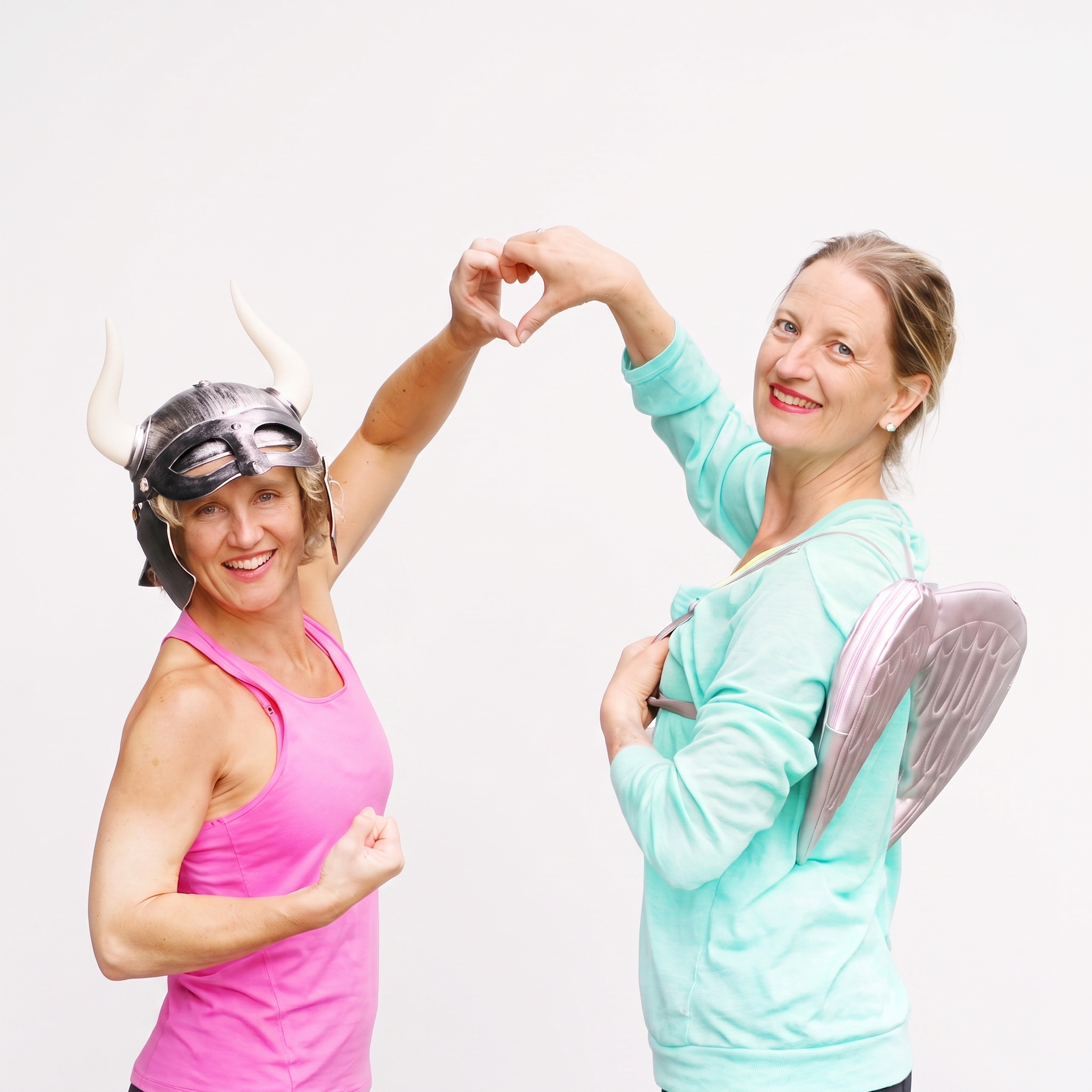
🎙 Fascial Elves and Vikings (with Heike Oellerich & Miriam Wessels)
Some people can fold themselves into almost any position but struggle to find stability; others feel strong and solid but can’t reach their toes—and the difference may start long before either of them ever trained.
Most of us were taught to read range of motion as a story about training, habit, and nervous system protection. That story is not wrong, but it may be incomplete. What if some of what we feel under our hands is a connective-tissue starting point people arrive with—one that shapes what they are good at, what injures them, and what they actually need from us?
Heike Oellerich and Miriam Wessels, founders of FASZIO in Hamburg, Germany, join Til and Whitney to lay out the model they developed with Robert Schleip: fascial elves and fascial Vikings. As they describe it, elves are loose, fluid, and stretchable, and tend to lose stability quickly; Vikings are dense, powerful, and elastic, and tend to hold. The idea grew out of the two of them arguing for years about what the same exercise was doing in the body—until they concluded they were both right, about different bodies.
Where it gets useful is the treatment room. In their account, releasing an elf who has nothing to fall back on can take a person apart; releasing everything on a Viking removes stability they are actively using; and stiffness under the hand does not automatically call for more pressure. They’re also candid about the limits: the evidence is thin, Marfan and Ehlers-Danlos syndromes sit off the scale rather than at its far end, and—as Miriam puts it—at the end, we don’t know anything. It stays what they say it is: a useful concept, not a diagnosis.
✨ We talk about:
• Where the elf and Viking idea came from: two colleagues arguing for years about what one exercise does
• What an elf is, what a Viking is, and why they frame it as a scale rather than two boxes
• Why they traded Robert Schleip’s “temple dancer” for the elf—and why temple dancers may be stiffer than we imagine
• Mixed constitutions: Viking above the waist, elf below—and what they say that changes
• Why elves may lose stability fast, and why Vikings may be the ones who need the yoga class
• Releasing an elf who has no stability to fall back on—and how that can take someone apart
• Working with a Viking without releasing the stability they’re actually using
• Why stiffness doesn’t automatically call for deeper pressure—and what happens when we assume it does
• Language that lands: clear, practical instruction for the client who thinks before feeling
• The claim that tissue type travels with temperament—the most intriguing and least established part of the model
• Hypermobility and proprioception, and where the usual stereotype may break down
• “It’s only a concept”: what the evidence supports, what remains speculation, and why pathology sits off the scale entirely
• “Love them all”—responding to the person on the table rather than to the catalog of techniques.
✨ A note on where this sits:
Elves and Vikings is a working model, not an established finding—as Heike and Miriam say themselves. Some of what they describe, including fascia as the tissue that holds emotional history, goes beyond what current research supports. We let the model be laid out whole rather than pressing each claim in the moment; take it as a lens that may sharpen what you notice, and hold the mechanisms loosely.
✨ And tell us what happened:
Are you an elf, a Viking, or neither—and how has that gone for you, in your own body and in your work? Email us—we’d love to hear it.
✨ Resources:
• FASZIO—Heike Oellerich and Miriam Wessels’ fascia training and education: https://faszio.de
• FYTT location, Hamburg—classes and trainings, with English pages: https://fytt-location.de/en/
• Miriam Wessels: https://miriamwessels.de
• FASZIO on Instagram: https://instagram.com/faszio
• Der Faszien-Code, Robert Schleip, Heike Oellerich, and Miriam Wessels (in German): https://www.amazon.de/dp/3742325132
🌱 Sponsor Offers:
• Jane – Try it free for one month with code THINKING1MO at https://a-t.tv/jane
• ABMP – Save on new membership at https://abmp.com/thinking
• Books of Discovery – Save 15% with code thinking at https://booksofdiscovery.com
• Advanced-Trainings – Try one month free of the A-T Subscription with code thinking at https://a-t.tv/subscriptions
• Academy of Clinical Massage – Grab Whitney’s free Assessment Cheat Sheet at https://academyofclinicalmassage.com/cheatsheet
✨ Watch the video / connect with us:
• YouTube: https://www.youtube.com/@AdvancedTrainings/podcasts
• Whitney Lowe – https://academyofclinicalmassage.com | https://facebook.com/WhitneyLowe | https://twitter.com/whitneylowe
• Til Luchau – https://advanced-trainings.com | https://facebook.com/advancedtrainings | https://instagram.com/til.luchau
📧 Email us: info@thethinkingpractitioner.com
The Thinking Practitioner Podcast is intended for professional practitioners of manual and movement therapies — bodywork, massage therapy, structural integration, physical therapy, osteopathy, and similar professions. It is not medical or treatment advice. Rolfing® is a registered service mark of the Dr. Ida Rolf Institute®.
Full Transcript (click me!)
The Thinking Practitioner Podcast:
Episode 180: Fascial Elves and Vikings (with Heike Oellerich & Miriam Wessels)
Miriam Wessels 00:00
I always say, then, if there’s a fire in a kindergarten, send the Vikings in because if they have fire on their body, they just brush it off, and then they bring it outside to the elves, and the elves take care of the children.
Whitney Lowe 00:18
Welcome to the Thinking Practitioner Podcast,
Til Luchau 00:20
a podcast where we dig into the fascinating issues, conditions, and quandaries in the massage and manual therapy world today.
Whitney Lowe 00:27
I’m Whitney Lowe,
Til Luchau 00:28
and I’m Til Luchau. Welcome
Whitney Lowe 00:30
to the Thinking Practitioner. Hello, everyone, and thanks for joining us. Where Books of Discovery’s manual theory textbooks, e-textbooks, and digital resources help instructors achieve their instructional goals and inspire students to achieve theirs as well. They find that same spirit here on the Thinking Practitioner podcast, and they’re proud to support our work, knowing that we share the mission of bringing the massage and bodywork community thought-provoking and enlivening content that advances our profession.
Til Luchau 01:01
Books of Discovery has just released the new seventh edition of Trail Guide to the Body. This million-copy bestseller takes another leap forward in empowering the next generation of manual therapists with all new palpation video instruction and a new primer on the nervous system. Instructors of manual therapy education programs can request complimentary review access to the new seventh edition at booksofdiscovery.com, and listeners can explore the publisher’s full collection of titles at that same website, where thinking practitioner listeners can save 15% by entering thinking at checkout. And this episode is also brought to you by the Academy of Clinical Massage and my co-host Whitney Lowe’s newly evolved orthopedic medical massage specialist program. If you’re a soft tissue specialist, you deserve a path to becoming a respected clinical expert with a practice that’s both financially rewarding and physically sustainable. That’s exactly what Whitney and the Academy
Whitney Lowe 02:03
There we have completely redefined advanced continuing education with a heavy focus on personalized learning, on an instructive, interactive, self-paced path that adapts directly to your unique clinical background goals and interests. It’s designed to function as a complete practice accelerator system, and you’ll master evidence-informed assessment protocols, unlock their revolutionary real-time clinical reasoning tools, and build your precise skill set required to solve complex conditions with confidence. Join us over there at the Academy of Clinical Massage and start your personalized learning journey today. We’d love to have you join us.
Til Luchau 02:44
And Whitney, I got to come see you in action. I got to assist you at the AMTA National Conference just last week, and what a pleasure! You know, it’s been a long time since I had any time at all with you in a classroom, which has been very little. But to really see you do your magic was a pleasure to observe, and how your clarity, but also your pacing, humor, warmth, graciousness, and all that, really created a learning environment that I really enjoyed, and I know people do too. So I’m glad to hear you offering that in the ways you do.
Whitney Lowe 03:15
Well, thank you so much. It was an absolute delight to have you there and sharing stuff with us. We get to so infrequently have time to be in the same space with each other. So that was wonderful to have you there and and be able to have the thinking practitioner team there in the room with everybody. So thanks again, and tell us about our guests today. Til who’s with us today.
Til Luchau 03:33
Yeah, well, I’m going to give you the opening hook and then I’m going to introduce them to you. Some people can fold themselves into almost any position, but have difficulty finding stability. Others feel naturally strong and solid, but struggle to reach their toes. Are these simply differences in training, habit, and nervous system protection, or do our genes give each of us a different kind of connective tissue starting point? Today, we’re exploring a memorable model for those differences: fascial elves and Vikings. We’ll look at what signs support, what remains a useful metaphor, and most importantly, whether body workers might assess or work with these clients differently. So, welcome to the Thinking Practitioner podcast, where I’m Til Luchau. We’re going to explore these ideas, research, and clinical questions. Today’s guests, Heike Oellerich and Miriam Wessels, the founders of Fascio in Germany. Welcome, Heike and Miriam.
Heike Oellerich 04:27
Yeah, thank you. Thank you for introducing. My name is Heike. I’m a Viking.
Miriam Wessels 04:33
Yes, and my name is Miriam, and I’m an elf.
Til Luchau 04:38
You are Miriam. You’re also a sports scientist, fascia therapist, yoga educator, osteopath, body-oriented gestalt therapist. Ika, you’re a movement therapist, as I understand it. Personal trainer, health sports educator, and instructor for movement professionals and therapists. And together, the two of you have spent decades developing and teaching approaches for movement, fascia, fitness. Yoga therapy, your Fascio system, yeah, includes movement strategies and fascial pathways. And you’ve worked with Robert Schleip together. You’ve developed and written about the fascial code, the idea that inherited connective tissue differences may influence our mobility, strengths, vulnerabilities, and training needs.
Miriam Wessels 05:21
Yeah, so it is interesting. We write we wrote a lot of books in German, so we we wrote already 13 books, and The Fascia Code is the last one. And before we found out with Robert that there are people with more loose connective tissue and with more stable connective tissue. When we wrote those books, not all of them, because some are about breast cancer and cupping and all of that, but the movement and books we wrote, and we were arguing about how an exercise influences the body, and I said the the exercise blah blah blah, and does that for me, and it it I need to stabilize myself as an elf, and when I go back with my arm, and that is so important, and then Heike as a Viking said, no, and it’s exactly like that. She just, as a Viking, said no. And then I said, “Well, then please, can what what does it do to your body? And then she said, “It’s stretching me. And I said, “Well, no, that’s that’s not. And it was blah blah blah blah blah blah. And then she started talking, and then we were starting arguing, and then we had a big problem, soit was always like that. Well, as always,
Heike Oellerich 06:45
as an elf, always said, “But I feel, I feel, and I said, “But but but your feelings explain it and bring an argument.
Miriam Wessels 06:55
Yeah,
Heike Oellerich 06:56
I feel.
Miriam Wessels 06:57
Yeah, so I felt everything. It was a sensation in my body, and I couldn’t put words to it. And she was like a Viking, always saying, “Okay, it’s like that, and then you do the move, and like this, and so, so yeah, and and so
Til Luchau 07:14
these models are more than just connective tissue stiffness. It sounds like you’re you’re unfolding all kinds of implications, in really simple terms, can you tell us what is a fascial elf and what’s a fascial Viking? What are we talking about
Miriam Wessels 07:28
in simple in simple words? Okay, I’m me, Miriam. I’m an elf, and I’m very stretchable. I’m very fluid. It’s I move with a lot of grace, I would say, and it is very fluid. So I don’t have edges in what I do. I’m I’m coming from dance, but that’s not the point. The point is that I’m born the way I am, and because that was my m talent or my inherited way of moving, and that’s why I probably went into dance because that was yeah that was what went very well in my life. A
Til Luchau 08:14
lot of people go into dance from that with that skill set with those propensities. Yeah, yeah.
Miriam Wessels 08:20
And what they don’t have, and what, for example, Pilates tried to bring into dance was stability in the core, and stability in the ankles. My father was an orthopedic, and he was working with a ballet dancer, very famous from Hamburg, Germany, and they always strained their ankles and their wrists and everything, or their knees or hips, every and the spine. So they had always a lot of issues, and because they weren’t stable enough, so they needed to work on their stability, which they didn’t have. And if they didn’t work on it for a couple of days. Then they lost it again. So that I would say is a very typical elf.
Til Luchau 09:08
What about Vikings?
Heike Oellerich 09:11
So my movement is strong and full of elasticity, and I do my movement was a lot of fun, so it’s not so oh I think into my body and what I can feel. So I I do it, yeah.
Til Luchau 09:31
It’s doing itself is the fun more than the feeling. It’s the doing that’s suffine part.
Heike Oellerich 09:36
The doing, I do it with a lot of power. Everything I do is with a lot of power. Even when I want to make something elegant movements, it’s elegance with power. I train my elegance very good, but it’s a powerful elegant. And my character, I’m. In my opinion, it’s um I think about it and I say okay or not okay, yeah it’s not so ah maybe maybe yeah so yeah and if I think it’s not okay I say no no she says no no yeah like this yeah but I’m also a leader. If something to do or is there a lost group, I’m there and I say I’m your leader. I I can
Miriam Wessels 10:33
I know where to go.
Heike Oellerich 10:34
Yeah, I know where to go. So
Miriam Wessels 10:36
even though she if she doesn’t, she knows where to go. Yeah, yeah. And so we have a lot of fun with each other, but there’s also conflicts because we’re so different from each other, and and it’s also what what Heike said. Well, we found out that that elves. I’m a pretty strong elf, but I worked on my strengths, but there were times where when Heike was like this, I considered it is at rude or at at hurtful, painful, and then I started crying, and then and then I said, “Okay, why do you don’t do you bark at me? And she was like, “I’m not. Well, I didn’t. I didn’t say anything, and I said, “Wow, you said this, and this fear, my feet. So, what we think or what we experience in our practice is that people who tend to be elves are more sensitive to atmospheres more vulnerable, and but they sense if something is wrong. Sometimes they hold back a little, and then they then they kind of they they they don’t they don’t maybe even don’t have any words to it, and and on the other hand, I always say then if there’s a fire in a kindergarten, send the Vikings in because if they have fire on their body, they just brush it off, and then they bring it outside to the elves, and the elves take care, take care of the children, and then, but well, the the the elf would run in also if there wouldn’t be a Viking. But then it would take years to recover from it because it would have been too traumatic. And I mean, we we all we are all on one scale, so it’s not there are only Vikings and only elves. We’re all on the scale, and if I go to a circus, I’m a Viking because they can like bend wherever they want. But but it’s good to know that’s
Til Luchau 12:53
the that’s the complication of talking about these polarities is it makes it sound like it’s one or the other. No, but can a person be both? Do people move around? How do you think about that?
Miriam Wessels 13:04
Well, I think everything is then more in the middle. So they’re they’re good. They have a good stretchability, a good movement practice, very agile. But this is
Til Luchau 13:19
somebody who might be, you might be both. Would be more middle years,
Heike Oellerich 13:22
but has a good strength also. But is not very far into one end. I would say, yeah. And and in the the world we live now, we don’t need absolutely elves and absolutely Vikings. So we don’t need the archetypes. Yeah, yeah. When the people in the middle are for this century are, I think, better in in yeah for their constitution. Yeah, for
Miriam Wessels 13:54
for their normal
Heike Oellerich 13:55
life. Yeah, for the normal life. But and sometimes they are
Miriam Wessels 14:02
in old days.
Heike Oellerich 14:03
No, no, no. Now they are. So I don’t want to say boring. What is political correct?
Miriam Wessels 14:09
Very, very equal. Very they’re they’re nothing. You know, nothing, not nothing, nothing. But we we don’t know a word in English. Maybe you can help us by finding a good word for us. It’s they
Heike Oellerich 14:23
don’t polarize.
Miriam Wessels 14:25
They not at all now.
Heike Oellerich 14:27
So and I think they have a better health condition. Condition. Oh, they have the the potential. Yeah, yeah. The potential for a better health and for all the anfather run for all the challenges. Yeah, in a normal life, but maybe
Til Luchau 14:50
saying people people that are maybe both or for the middle of this continuum are less less polarizing, but maybe. Fewer health challenges.
Miriam Wessels 15:02
Yeah, maybe they have fewer health challenges, and if they are, if only if they are trained well, you know, it’s you have to move. If you don’t move, you will get sick. But that’s what we think. Yeah,
Heike Oellerich 15:16
but so not important on which point on the scale you are. You have to move as an. You can be an elf, and you can be very kind, very very sick. Very sick. So yeah, yeah. When you’re not trained, and if you’re a Viking, you can be so stiff that everything in your body went to an illness because you’re so stiff, so you have to move.
Miriam Wessels 15:44
Anyhow, it doesn’t matter where you’re on the scale. People have to move to stay healthy.
Til Luchau 15:51
Movement’s the answer, no matter where you are. And you both you both described it as a developmental process. You said, “I’m a Viking who’s very elegant. I’m an elf who’s very strong. So you see it as a way that you develop too from that place and find the qualities from the rest of the scale.
Heike Oellerich 16:11
Sorry, I want to say something about the people in the middle. We talk about the people in the middle from the from the scale who are and not so much elf and not so much Viking, but in the middle you can be. And part of you are very Viking, and parts of you are very elf. And then you, as both parts are in the in
Miriam Wessels 16:37
in in the edge of the scale. So you can be a Viking upward from from your waist, and then downward you an elf, and you can lip edema. That is and more a sickness of an elf, but then people sometimes have lip edema only in one leg, and the other leg is totally stiff. So it it can be that you are a mixture, that you have, you don’t polarize your your tissue doesn’t polarize, but it also can be that part of your body is elf type and part is more Viking, and that’s important to know. So there are different middles,
Til Luchau 17:16
both yeah, and you’re describing it could be both a state of state of being, but also a trait, some way that we are. It could be either one. You can go back and forth. Yeah. Okay. Robert Schleip, Robert Schleip originally compared Vikings with temple dancers, temple dancers, and you use elves. Why did you change the name, and what does the elf add to this picture?
Heike Oellerich 17:39
Because for us in the north of Germany, we don’t have a image, a picture for for a temple dancer. What is a temple dancer? I have no idea in my head about a temple dancer. But if I think to elves, I I saw the Tinkerbells flying around.
Miriam Wessels 18:03
So Peter Pan, you know Peter Pan probably. Tinkers. Yes.
Heike Oellerich 18:08
Yes. We have a very funny talk with Tom Myers. Tom Myers always say elf. The elf. It’s not. It’s a Orlando Bloom. It’s not an elf. So they say no, not Orlando Bloom. It’s Tinker Bell.
Speaker 1 18:08
Yeah.
Heike Oellerich 18:08
So
Miriam Wessels 18:08
the yeah. It’s then and then you have the Elves, and this is from a movie. And yeah, the
Heike Oellerich 18:20
Bloom. Yeah,
Miriam Wessels 18:20
Orlando Bloom. That’s not the
Til Luchau 18:20
Orlando Bloom. Orlando Bloom’s the guy that played the elf in The Lord of the Rings
Miriam Wessels 18:20
with a B at the end. At the end.
Heike Oellerich 18:20
So it’s in German. In Germany, it’s called
Miriam Wessels 18:20
Elf. Yeah, yeah. So and so we’re thinking about tinkerballs and little wings and very fragile. So more of that fairies like that. And so, so and temple dancers. Yeah, I don’t know.
Heike Oellerich 18:20
We don’t like the word. We don’t like yeah, an idea after that
Miriam Wessels 18:20
yeah, and also I I think about temple dancers are not very they’re sometimes not so elf like not so fragile they are more strong and to do all that movement they’re stiff more stiff than we think but but they need to be stiff to do that movement, and then from this stiffness or this power, then they can then they work on their fluidity. So yeah, this is how we came up with those words. And in Germany, it calls tempel dancer, and temple dancer. It’s not good to. It sounds. It doesn’t sound good.
Til Luchau 19:44
Nice. All right. Well, are there animal? I mean, I got a lot of questions, but my imagination kept growing. Go ahead. Are there animal animal archetypes? Would if there were animals, would that fit?
Miriam Wessels 19:57
Well,
Til Luchau 19:58
I’ll send Tinker Tinker Bell with. Is it a butterfly? Is it a bird?
Miriam Wessels 20:02
I would say a bear. Is it more a Viking? Yeah.
Til Luchau 20:05
A bear. A
Miriam Wessels 20:06
bear. A bear. Bear is a more Viking, and that would would would be an elf. Bears are good. Yeah, but what would be an elf? I don’t know. Also, well, Evan. Oh, oh yes. He he said butterfly. I don’t know if a butterfly because the the no then it’s more the butterfly. the The body of the butterfly is stiff. Yeah, the the body needs to be stiff that the wings can can do their work, and so maybe it’s more of a spider. I don’t know because the spider. Well, I don’t know. I don’t know. So yeah, and what I wanted to say also is, since I’m born as an elf, and I I always had problems with my stiffness, so I wasn’t stiff enough, I wasn’t strong enough, and so like had these chicken wings, you know, those with the arms on on this. These are we call them chicken wings. This wobbly part of your upper arm, where you how do you call that in English? Do you know this tilt? Oh, the the lower. That’s a tricep under the tricep. It is a is a is a wing. If you are an elf and you are over 50, but you, as a Viking, it’s not wobbly. So you know this. We call them chicken wings, like you say, love handles. Yeah, so they’re also very, very, very wobbly, very elfy with elves. You know. So the the thing is that I’m now working on my strength for five years now, and I’m doing like strengthening exercises twice a week. I’m a yoga teacher. I do fluidity, and I have a lot of Vikings in my class. And
Til Luchau 21:54
but you are an elf, Miriam. Just to be clear, you’re saying this as an elf. So
Miriam Wessels 21:57
hey, I’m an elf. Yes, I’m an elf, and I’m working twice a week on my strength, on my stability, in my private training, and I’m a yoga teacher, and I teach yoga, and I’m very flexible, and I teach a lot of Vikings yoga to a lot of Vikings, and they’re not capable of doing what I do. I have like only I would say 20% of elves in my class. I have like I would say like 30% people in the middle, and then 50% I Vikings in my class because the Vikings need yoga. I don’t need yoga. If I don’t do yoga for four weeks, then I can do yoga once or twice, and then I’m in my flexibility. But what I really need is stiffness to hold my body up upward to be in my posture to be in a balanced position, and so yeah. So that’s what I do. When I don’t do that for like three weeks because I’m on vacation, well, I’m on vacation. I do train because I know if I don’t, then I get a problem. But if in any case I’m sick or whatever and I don’t train for three or four weeks, then my strength goes away very fast. I really need to. I have to really go and start very low again to build it up. On the other hand,
Til Luchau 23:11
the
Miriam Wessels 23:11
Viking
Til Luchau 23:12
version. Yeah, what’s the Viking?
Heike Oellerich 23:13
The Viking version is in my childhood. Has this? Yeah, in my in my childhood, nobody say, “Oh, you are very sporty. So they say you can’t do any sports because the people who teach me are elves, and they don’t have an an idea to teach Vikings. And so my life was very good, but without sports.
Miriam Wessels 23:40
Yeah, yeah, in in your in your until you were an adult.
Heike Oellerich 23:45
Yeah, yeah, yeah, and the same as as I was a young adult. Yeah, and then was no nearly 30 years. My body is broke down. Yeah, yeah, and I my doctor said you have to do sport, and then I met Miriam. That was neat. Yeah, and Miriam has a very good arm sprinkle way of of approaching yeah of merging me because I’m a very logical yeah person, and if somebody say, “Oh, it’s it’s so and so, I say, “Okay, why? How do you can explain it? Why it is so? And Miriam are very very good and explain why it is good for me. So, and then I tried to do it, and it’s the first time somebody said to me, “Oh, your your movement is good. It’s a good base, and so and protect me, protect me, and protege.
Miriam Wessels 24:56
Oh no, I yeah, I, I am. How do you say that?” Support
Speaker 2 25:00
me.
Miriam Wessels 25:00
Yeah, I supported her the way she moved. So I gave her yeah,
Speaker 3 25:04
yeah,
Speaker 4 25:05
and
Heike Oellerich 25:06
and then I think okay, all my all what I want is to be like Miriam, and as she’s she’s an elf, and but I don’t know something anything about elf and Vikings, and I say a dark line.
Heike Oellerich 25:20
The the she is a very good role model. Role model, yeah. And then it takes a few years. I want to be Miriam’s movement and performance. Yeah. And but yeah, it’s not.
Miriam Wessels 25:38
It happened. She tried. She gave her best. Really, she gave her best, and she was still not moving like. No, but I was always very me, Miriam, as an elf. I was jealous because whatever, whenever she hiked as a Viking, lifted a weight, and I did something with a weight, like moving the weight around, we don’t like do normal weight lifting. So just move the weight around. She always took two kilos more than I did, you know. So I was like, how can that be? She’s my student, and she can move heavier weights through the movement, and I’m not capable of of it,
Heike Oellerich 26:22
and I’m full of enthusiasm, yeah. So I do it, and and it’s not so important for me to do it exactly. I do it with with with energy. And then I talk. I heard from Robert Schleib, and he said something about temple dancers and Vikings, and I said, “Just a second, I think I’m a Viking, and it’s not wrong that I can’t flex my leg to the hell to the sky, because My constitution. Nehr meine Stäcken. Your strengths. Yeah, not strength. Yeah, my talents. My talents are in flex in elasticity, in strength, and so in power. And then I I learned to laugh myself with these things in my life before. Often people said, “Oh, you’re too loud. You’re too yeah, too full of energy. Too you’re too too too.
Miriam Wessels 27:36
When you walk and the neighbors kiss hear you, and when I laugh, you laugh too loud. Yeah, too
Heike Oellerich 27:43
loud. Yeah. And then I say, okay, I’m a Viking, and all this is my personality, and I I love it. I’m an instructor for for people, and if there’s no microphone, doesn’t matter. So I can talk loud, and if there’s a group and we have to, they hold the energy. I can do it because my energy is enough for the other people. And so, and then that’s now I came to the point. Then when it starts that I love myself. I love my constitution. I can do as a plus. Yeah, yeah, more elegant as I ever thought about. So and now I’m not Miriam at all, but
Miriam Wessels 28:36
you have a very elegant Viking. Yeah, yeah, who now takes care of the lights?
Til Luchau 28:43
Well, take a second to fix your light, but I, I’m, I, I tend to want to say, well, boss, it’s it could be a continuum more than these things, but I recognize myself in your examples, and I recognize dynamics and relationships, and I got a smile. What do you think, Whitney? Are are you an elf or a Viking, and am I the opposite? Who’s who in our partnership?
Whitney Lowe 29:08
Yeah, I was trying to kind of get a sense of this, and and I’m curious about you know there seem to be two dimensions here. We’re talking about the sort of like the physical dimension of you know your body’s constitution and the way you operate, but also a psychological and behavioral kind of dimension to that, and I’m curious about like where those things kind of fit in there. I think you know certainly from a physical standpoint, I’m a whole lot more elf-like. Mainly that’s because of you know Ehlers Danlos and my genetic history, and just you know the flexibility and things like that, and much more adaptable kind of thing. So I’m definitely, I think, elfish there. So,
Til Luchau 29:49
yeah, yeah. I think maybe in partnership I could tend. No, I don’t know. Honestly, I don’t know because I’m thinking of a partnership where I was. Definitely the elf. I was the sensitive one. I was very much about gradations and not black and white. So I don’t know, but I think maybe I’m a little more mixed. I definitely go to an elf.
Miriam Wessels 30:12
Yeah, it could be that also two elves are together, and two Vikings because they’re so and they understand each other. And then I’m I’m married to a Viking, and it is really tough. I tell you, I’m married for 35 years now. I think so, and we struggle always because we’re so far apart from each other, like like with our characters, but the way we see the world, the way we move, what what we like, blah blah blah. So yeah, so that’s what
Til Luchau 30:45
you talk. That’s curious to me. That’s why I laugh. But yeah, your questions were: How does this work? These physical qualities into these relationship dynamics or or styles around processing. I think
Heike Oellerich 30:56
it’s very good if in a partnership you are a Viking and an Elf, but you have to work on it, absolutely. So it’s not a gift to come together; it’s a gift to stay together. Yeah,
Miriam Wessels 31:12
and to be honest, we we are the two Haikan. I we have still a lot of difficulties with the difference, the longer we are together, the more we can see the differences. But the more we maybe also can see the gifts of being so different because we have so different talents. But we did a lot of coaching and we talk things over, and now we don’t talk about it anymore because we don’t understand each other on a on a certain yeah it is on a certain level we don’t understand each other I don’t get it I don’t get it and but what so one thing is this this training thing and this is what we do with Fascio and and I think everybody needs to move and is good to move in your talents to to promote your talents, but is also to to promote those things you’re not so capable of. But what I also think as a osteopath or a body worker, or I do stuff like structural integration, some stuff like rolfing. It is not called rolfing, but it’s deep tissue work. It is we are very all very good in releasing things, and if you release the restriction of an elf, then and the elf is not ready for it, and the elf is all in all not stable and didn’t stabilize itself. Then the elf will fall apart.
Til Luchau 32:50
Let’s talk about what we do in that case. But first, can we unfold the body work question a little bit? Do you think we can actually feel this difference with our hands. I
Heike Oellerich 33:02
can see it with. Yes, I can feel it with my hand, and sometimes I can smell it. It’s true. Absolutely, yeah. So we are very trained in it. We are very trained in find out which type the person is, and
Til Luchau 33:20
like how specific, I can let me get specific. Then, what would you say? You can do it. Your this is your lexicon. But what do body workers? How would body work? Other body workers recognize this in their coins.
Miriam Wessels 33:33
I think when you when you touch a Viking, everything has like a tension, and and the question is: Is the does the tension feel normal for the person who’s in front of me? So it it it doesn’t mean that there if there is tension that it is an over tension. So I need to decide as as the the person who’s in relationship to the patient, I I call we call them patient or client. I have to have so much experience that I I immediately recognize is that a normal tension for this body, or is it an over or under tension for that body, and it could be that I have a very very then tension, and then there is stiffness. I would say, then we and if if tissue is stiff, then there is not much fluid running through it and no stuff excellent circulation. How do you care? What is stuff excellent? No. Okay. The the circulatory system, all the blood vessels and all the the liquids in the tissue. All the gliding which needs to happen, all the well, I wouldn’t even call it layers. I would call it continuums, because they’re all connected to each other. And how much fluid goes through those and in between, and then the pe the person is stiff, and that could be a Viking or an elf. It depends, and then me. then me, as a practitioner, I I I um I take the feet or the the heels or the lowest part of the body, and then I my my system runs through the the that well. We are only everybody is only one fascia, so we one network, and then I can like run through. It gives me immediately and a feedback where is the restriction, which is an over restriction or a stiffness, which is the the the point or the area which is the the source of the pain, or yeah? So
Til Luchau 36:06
this is this is helpful. So there’s a lot of things that can influence the way things feel to our hands and influence range of motion. It could be like you said, stiffness. It could be tension. It could be nervous system. Could be the context. Does it matter? Do you think like, oh, I need to know which part is the fascia. I’m going to work with that, or do you take it all as a integrated whole and work with the Viking as a composite of all these things? For example,
Miriam Wessels 36:34
well, it depends because some people are not pure Vikings, and some people are a mixture, and some are Vikings on the lower part and the up. So that’s very individual.
Til Luchau 36:46
Does it matter which part is the fascia? Is my question.
Speaker 5 36:48
Part is not the fascia. Is my question. Yeah. Which part of the body is not fascial?
Til Luchau 36:54
No, I mean in terms of your strategy. When you’re thinking strategy, does it matter to think oh it’s fascial quality or it’s more. Does that matter to you?
Miriam Wessels 37:02
What is more? What do you mean by more?
Til Luchau 37:06
Personal dynamics, muscle tightness.
Speaker 5 37:09
Well, what muscle tightness is fascia? It’s all fascia. It’s all fascia.
Til Luchau 37:13
Contractibility, nervous system contractability.
Miriam Wessels 37:16
Is as in nerve, sir.
Til Luchau 37:18
How so?
Miriam Wessels 37:19
Yeah, but because the the the nerve the nerve endings they they are in the fascia. There’s would have six to 10 more nerve endings in the fascia than in the muscle cell. So the tension in the muscle is done by the fascia, which is interwoven in around and and in between all the muscle cells, so the tightness of a muscle is fascial.
Til Luchau 37:49
Well, is the firing of a nerve fascial? Do you think about it that way too? Like a trauma state, you’re more reactive. Is that a fascial too, or is that something that influences your?
Miriam Wessels 37:58
Well, it’s if I if I do this Now, yeah, it’s not loud enough for you. But if I do something, ha, like this, then it goes like this, and it goes directly to the fascia, and the fascia takes the tension, and then it gets stiffer, and it is done by the nervous system. But the tightness is in the fascia. We we I I don’t know body armoring or this is fascia and is the fascia holds it. Or if you if you know like there are sadhus in India, they bring up the arm and they hold the arm up for their lifelong mission, and in the beginning they do it with muscle, but then the the fascia is being a cast, and it’s not a problem to hold the arm up. So the fascia is containing every trauma, every everything I ever experienced, my personality, and how I feel emotionally can be measured by the pH level of my fascia.
Til Luchau 39:09
I thank you. I think you’ve answered. Yeah, the question is for you. The fascia is the unifying material, but also principle and integrating substance that it’s nothing that you’re thinking of. That you don’t consider fascia. That’s that’s great. Okay, so what kind of how can we miss our clients? You described like if we work on an elf, like they need more mobility, we can help take them apart. What are some other ways that we could miss this important factor in working with our clients?
Miriam Wessels 39:38
You you mean like make them stiffer?
Til Luchau 39:42
How do how do how does my type cause me to miss my clients and do something that’s not helpful?
Heike Oellerich 39:51
He he asked what is helpful for for him.
Speaker 5 39:54
If I don’t petition, don’t get.
Til Luchau 39:57
Let me try it again. You have an example. Where if we just ask a elf to have more mobility, if we release things with our fascia, you said we can take them apart. Is is the opposite true? The
Miriam Wessels 40:15
opposite would be that I stiffen the elf. If
Til Luchau 40:20
we ask a Viking to have more body awareness, for example, I don’t know. I’m making it. It’s up.
Miriam Wessels 40:28
Yeah. Okay. So one thing that I I think we we have to be very careful to release stiffness as in an elf. We as a practitioner, we have to see where need needs to be more stiffness, and how can we bring more or not stiffness? I would say stability is a better word. We still have the language barrier, and but to make tissue more stable, so that the elf is in better performance, state of health, whatever. On the other hand, and when I work on a on a Viking, I have a very very stable person, and also I have to find the areas where it’s too stiff. I I don’t want to release all the stability? It doesn’t need to be released. I only have to find those areas which is too much of something, and that is as equal as with an elf because I also put my hands on the body and through the I don’t know Piezoelectricity, and is it the right word?
Whitney Lowe 41:44
Piezoelectricity.
Miriam Wessels 41:45
Yeah, and I can feel where where it’s not running through, where the the energy, where the the electricity is not going through. So blocked is good. Yeah, loft or slower, and then I I feel like oh it’s there and then oh okay this this is and then also if if she works on someone it can be something else which comes up another area because she’s another person talking to that patient or client so if I talk to that tissue of a client person and then they might something else coming up, yeah.
Heike Oellerich 42:24
If I work with elves, most of the elves are very flexible in their ankles. Yeah, yeah, in their joints, in their joints. Sorry, in their joints. But they have stiffness in some parts of their body because the flexibility has to fix somewhere, because they have often lost their connections between the extreme,
Miriam Wessels 42:53
yeah, the extremities,
Heike Oellerich 42:54
extremities. So they only do something with with the arm, and not with the arm through the core and go to the leg, so they they separate their movement, yeah, their movement and their extremity as they
Miriam Wessels 43:11
extrude,
Heike Oellerich 43:11
yeah. And I have to bring it together as one movement, and it’s very difficult for them because they’re very flexible and they say, “Oh, I don’t need another and continuity’s movement. I don’t need a continuity in my movement because I can put my arm very far behind. Behind. So why I should make the movement more the negative, more connective,
Miriam Wessels 43:42
and yeah, and then we’re coming to the anatomy trains by Thomas Myers, which we use, but we put
Heike Oellerich 43:51
them together. Yeah, we don’t have 12. We have five.
Miriam Wessels 43:53
Yeah, and we have the the whole one whole line through the whole body. It’s not only body and then arms. We have them because we’re movers, so we’re and the the yeah and so the continuity of movement needs to be going through the whole body four and else yeah.
Til Luchau 44:11
Okay, so let’s imagine a Viking type client or patient who feels really stiff. Are there mistakes we could make with that person?
Heike Oellerich 44:20
Yes, you can say to the Viking, please feel in your body.
Miriam Wessels 44:28
Have to
Heike Oellerich 44:29
talk to him something practical, and most of the Vikings are cough hat paper. Yeah, they are they very logical. Yeah, and explain them the exercises or what you do. What we do with clear words, and not I feel an energy, and the energy is going. So say, okay, I take your tissue, and I want to make it more flexible, more yeah, more more shear, more shearable, more so. Say clear words, explain it to them, and then you can go over their head in their body.
Til Luchau 45:11
Great. So, is it a mistake to assume that stiffness just calls for stronger, deeper pressure?
Miriam Wessels 45:20
Oh, yes. did you understand the Milton? And that stiffness is calling for deeper and stronger pressure. No, no, I think it it varies. It varies in the L’s, in the mixture people, and in the Vikings. I have people Viking types, and they I well with hiker, I I can’t push her much. She’s always saying not too not too strong, and I can take very strong pressure. But I also have Viking types who like the pressure, and I have also elf types who don’t like the pressure. So I we
Heike Oellerich 46:01
if if um you do um so much pressure on a Viking, um he fight against it, some…
Heike Oellerich 46:11
most
Miriam Wessels 46:12
well
Heike Oellerich 46:13
see
Miriam Wessels 46:14
again
Heike Oellerich 46:15
in the beginning in the beginning of treatment um you push too much the Viking is fight again, and against it, and you can go inside of the tissue.
Miriam Wessels 46:27
Yeah,
Heike Oellerich 46:27
and maybe in the beginning of an elf treatment, you push too much, and the the elf is protectless. Yeah, protectless because she she don’t avoid it. She doesn’t expect the credit or the pressure. Is
Miriam Wessels 46:46
that understandable?
Whitney Lowe 46:47
Yeah, curious too. You know, we talked earlier about saying that there was you know both a a physical component to this and also a kind of psychological behavior component to it. If if you have an individual who is, let’s say, very physically what you would categorize as the Viking dominant, but psychologically, behaviorally very elf dominant, is that person a Viking or an elf? Or I mean, how do you sort of characterize that if if those things are really divided and split up like that?
Miriam Wessels 47:19
Well, the thing is that it’s only a concept. It’s not that you can put that on everybody. We will always have people behaving more like an elf, and the the the body is more of a Viking type. And the why we did this concept is more that we understood each other or ourselves, and then could say, “Okay, I’m okay the way I am, but I see my well. In my case, I would say it’s my weakness. My my stability is my weakness. I really have to work on that to be more in balance, And and as all concepts is only a concept, you know. And I see people. Well, we had that that we were talking about clients. They were looking like Vikings and they were behaving like elves. But when it came down to treatment, they were armoring the elf tissue, and they were very strong and very stiff. But behind that, there were even on a tissue level elves. But again, it’s only a concept, and you can’t rinse it over everybody.
Til Luchau 48:43
Have you found parts of your model or your thinking that are supported by research or science, or is it still metaphor at this point?
Miriam Wessels 48:52
Well, we have little evidence. We’re still working on it, research, and and the thing also is well, I think, and personally, it is super important for for for surgery, for treatment, for training, also for gender, for transgender. I have dancers who were men and are no no women. They take estrogen. They they they hurt themselves with their training because they’re so more into this L form. So I think it it is super important in the medical field all over in every medical field to to realize that we have different kinds of tissue, and that we have to address it differently. Yeah. So and research is is expensive, so we don’t have enough yet.
Heike Oellerich 50:00
I would say, but there’s a lot of research with Dan Danlos Sanlos Ilos Sanlos, and their Viking hand was a yeah Viking hand is called I don’t know if it debutron hand
Til Luchau 50:12
pictures.
Heike Oellerich 50:14
so them these are extremes and they’re not healthy extremes. They are there. Yeah, there’s yeah six sexual
Til Luchau 50:25
magical. But
Heike Oellerich 50:26
But there’s a reason for the researcher to make research about it because it’s yeah yeah. Then then
Miriam Wessels 50:39
you can treat people. Then it’s an illness, and I
Heike Oellerich 50:41
know somebody’s paying for it. Yeah, so you can do research only when somebody pays paid for it. And there, this is illnesses. Illnesses. If these illnesses are part of interesting, of interest, yeah, of interesting. Somebody pay for it, yeah. And nobody wants to pay for it when two crazy women from German say, “Oh, we have a very good concept from elves and Vikings.
Miriam Wessels 51:08
And then it is interesting because normally when there’s a a lot of elves are are more in the dance and yoga kind of way moving, and you say, okay, the finger needs to be a little higher, a little lower, so they have a vanimong. What is that? And they have very good awareness of their body, but then when they go over to the illness part and they have marfan or ilos danlos, then they have less proprioception. So what you find out in research with those illnesses, you can’t adapt to the normal elves who are just elves, normal tissue, healthy.
Til Luchau 51:53
Okay, you see the less body awareness as the pathological extreme of the elf type.
Miriam Wessels 52:00
No, no. I mean, Marfan and Ehlers Danloss. They have less, less awareness.
Til Luchau 52:09
Yeah, and you see that as the extreme. You don’t think elves in general have less accurate?
Miriam Wessels 52:14
More. They absolutely not. Yeah, they have more, and it and is not. And and Marfan and Ellos Dunlos are not extremes; they’re over the extremes.
Til Luchau 52:26
Yeah, that’s that’s interesting because that there is that stereotype that stiffer tissue means more accurate proprioception, less stiff tissue means there’s more play before you get a single. But I don’t know if that really fits with my experience, and it’s interesting to say you don’t see it that way either.
Miriam Wessels 52:44
Yeah. So, and actually, we don’t know. And I’m as researcher. It’s very, very interesting. People ask me even about research, which is done wherever, whenever, and and then people say, “Oh, is it like this? And what did the research? And I always say we don’t know, because the we don’t know. Even there’s research. Maybe there’s you know there’s tons of research on stretching. So explain stretching to me. What is stretching? Nobody knows what stretching is. Is stretching long, slow, fast? So yeah. So we don’t know. We don’t know anything. At the end, we don’t know anything.
Til Luchau 53:23
We’re we’re coming toward the end of our time, so if body workers were to remember only one thing about Elves and Vikings, what would you like it to be?
Miriam Wessels 53:36
I would say love them all.
Heike Oellerich 53:38
I think if if you are a good body worker. You work with the the person in your upper side, and you you go in a connection with this person and with the tissue of this person, and then you are every time fine with with it because then the connection is there, and you you know intuitive yeah intuitive what to do, but if you come from school and you and there’s a catalog of neon techniques, then you can do a lot of also good stuff with Earth and Vikings,
Speaker 5 54:17
yeah, more with people
Til Luchau 54:18
listening to the client in front of us rather than
Miriam Wessels 54:21
yeah, yeah. And this is what I mean with love them all.
Speaker 5 54:24
Yeah.
Til Luchau 54:25
Okay. So, anything else you want to say on our way out? How can people find out more about you, etc. What else do you want to say?
Miriam Wessels 54:32
Yeah. Yeah. We have the website as fasciofas z i o.com. It’s in English, and we also have some YouTube things and yeah, Instagram, Instagram, yes, follow us on Instagram. Even though it’s in German, some stuff. But if you are a mover, you find a lot of funny exercises you can try out. Then we have fascia.mover.mu. Which is me on Instagram or MiriamWessels.de, but it will be also in English. My website will be soon remodeled, but I have one right now. So if you are in Hamburg, Germany, you can also come to our studio, which is Fit Fascia Yoga Training Therapy Location.de, and train with us. Yeah, I’m very yeah. And if you’re interested, we already have a German book, and we’re working on. Yeah, we would like to write one in English so that we have another audience, a broader audience, not only in America but also where people speak English, and we’re very open to teach wherever you book us. And we are part of the Fascia Research Society,
Heike Oellerich 55:47
so if
Heike Oellerich 55:47
there’s
Heike Oellerich 55:48
something like the Fascia Research Congress, we are there, and you can meet us in person.
Til Luchau 55:55
Whitney, think it’s time for our closing sponsor.
Whitney Lowe 55:59
Yeah, I think so. Yeah, thank you all very much for joining us here and diving into this. This was indeed very interesting. There,
Til Luchau 56:09
so the Thinking Practitioner Podcast is proudly supported by ABMP Associated Body Work and Massage Professionals, the premier association for dedicated massage and bodywWork practitioners like you,. When you join ABMP, you’re not just getting industry-leading liability insurance. You’re gaining practical resources designed to support your career, from free top-tier continuing education and quick reference apps like Pocket Pathology and Five Minute Muscles. ABMP equips you with the tools you need to succeed and grow your practice.
Whitney Lowe 56:40
And ABMP is committed to elevating the profession with expert voices, fresh perspectives, and invaluable insights through CE courses, the ABMP podcast, and Massage and Body Work Magazine, featuring industry leaders like my co-host Til and myself, and thinking practitioner listeners like you can get exclusive savings on ABMP membership at abmp.com/thinking. So join the best and expect more from your professional association. We would like again to say thank you to all of our listeners and to our guests for joining us here today, and of course to our sponsors. As always, you can stop by our sites for the video show notes, transcripts, and any extras. You can find that over on my site at academyofclinicalmassage.com. And Til, where can they find that for you?
Til Luchau 57:29
My website advanced-trainings.com. We want to hear from you with your ideas or input about this show. We want to hear if you think you’re a Viking or an elf or no one, and how that goes for you? Email us at info@thethinkingpractition.com or look for us on social media and YouTube. I am at my name Til Luchau. Whitney. What’s your name?
Whitney Lowe 57:51
Today my name will be Whitney Lowe. You can find me over there on socials under that as well. We would really appreciate it if you would rate us on Spotify or Apple Podcast or wherever you happen to listen to the show, it actually does help other people find the show and helps keep us going here. So please take a few seconds to do that. And thanks again, as always, for sharing the word and telling a friend. We’ll see you in the next one.
Til Luchau 58:14
Heike and Miriam, Thanks for taking the time and joining us today. It was fun to talk to you.
Miriam Wessels 58:18
Thank you. Yeah, thank you. Great.
Til Luchau 58:21
Bye, everybody.
Whitney Lowe 58:22
Bye, bye.
Huge thanks to our sponsors:
Live Workshop Schedule
Stay Up to Date
…with the Latest Episode, News & Updates
Get our free Techniques e-Letter
You’ll occasionally receive the latest schedule updates, tips, secrets, offers, resources, and more. Check out our ironclad privacy and SMS policies. You can unsubscribe/stop at any time.
This Month’s Free Online Course
Our gift to you. Includes CE, Certificate, and Extras.
Follow Us
Join us on FaceBook, Instagram, Twitter and YouTube for information, resources, videos, and upcoming courses!
0 Comments