
The Thinking Practitioner Podcast
w/ Til Luchau & Whitney Lowe
Thinking Practitioner Podcast, Ep 184: What A Poet Can Teach Us About Touch (with Rosemerry Wahtola Trommer)
Transcript | Subscribe | Comments | ⭑⭑⭑⭑⭑
Or, listen and subscribe on Apple Podcasts, Spotify, wherever you get your podcasts!
🎁 Scroll down for the full video and transcript!
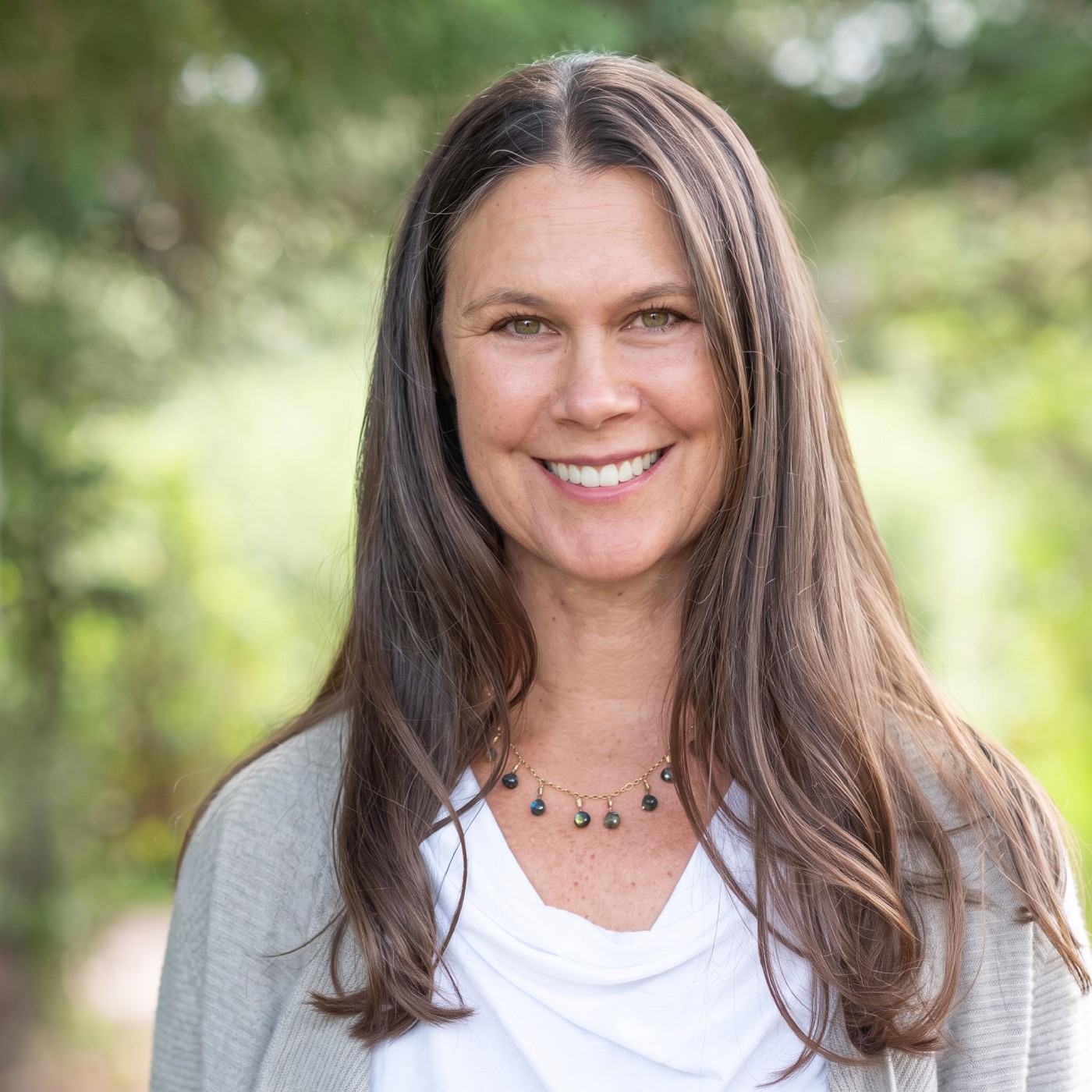
🎙 184: What a Poet Can Teach Us About Touch (with Rosemerry Wahtola Trommer)
Every session, like every poem, reaches a point where our plan runs out—and that may be where our real work begins.
We bring training and technique to the table. Then a session takes an unexpected turn. Poet Rosemerry Wahtola Trommer, who has written a poem a day since 2006, knows that moment very well. She and Til explore what poetry and bodywork share: close attention, new directions, and letting the next step emerge.
Through poems, humor, and her new book The Wonderment, Rosemerry invites curiosity about the familiar and shows how daily practice makes room for spontaneity. Grief and gratitude appear, right alongside the wonder of embodying each moment.
✨ We talk about:
• Moving from a familiar recipe into responsive touch
• Getting stuck as an opening into something new
• Recognizing what resonates without forcing an outcome
• Four gateways to wonder: The Opening, The Noticing, The Deepening, and The Belonging
• Meeting a familiar body as if for the first time
• Writing a letter to your body—and playing with metaphor
✨ And tell us what happened: In one session this week, ask yourself, “What is here? What else is here?” …and then see what you notice. Email us—we’d love to hear it.
✨ Resources:
• The Wonderment, her new book: https://www.wordwoman.com/books/the-wonderment/
• Rosemerry’s poems, classes, and The Poetic Path: https://www.wordwoman.com/
• Emerging Form, her podcast with Christie Aschwanden: https://emergingform.substack.com/
🌱 Sponsor Offers:
• Jane – One-month grace period on a new account with code THINKING1MO at https://a-t.tv/jane
• ABMP – Save on new membership at https://abmp.com/thinking
• Books of Discovery – Save 15% with code thinking at https://booksofdiscovery.com
• Ruth Werner – Register for Practical Pathology and mention The Thinking Practitioner for bonus access to A Doctor’s Note Is Not Good Enough at https://ruthwerner.com
• Academy of Clinical Massage – Grab Whitney’s free Assessment Cheat Sheet at https://academyofclinicalmassage.com/cheatsheet
• Advanced-Trainings – Try one month free of the A-T Subscription with code thinking at https://a-t.tv/subscriptions
✨ Watch the video / connect with us:
• YouTube: https://www.youtube.com/@AdvancedTrainings/podcasts
• Whitney Lowe – https://academyofclinicalmassage.com | https://facebook.com/WhitneyLowe | https://twitter.com/whitneylowe
• Til Luchau – https://advanced-trainings.com | https://facebook.com/advancedtrainings | https://instagram.com/til.luchau
📧 Email us: info@thethinkingpractitioner.com
The Thinking Practitioner Podcast is intended for professional practitioners of manual and movement therapies — bodywork, massage therapy, structural integration, physical therapy, osteopathy, and similar professions. It is not medical or treatment advice. Episode image ©Joanie Schwarz.


Full Transcript (click me!)
The Thinking Practitioner Podcast:
Episode 184: What A Poet Can Teach Us About Touch (with Rosemerry Wahtola Trommer)
Til Luchau 00:00
We take our hands off the client and they go wow…
Rosemerry Trommer 00:02
You want that. That’s how you stick the landing!
Til Luchau 00:06
Welcome to the Thinking Practitioner podcast, a podcast where we dig into the fascinating issues, conditions, and quandaries in the massage and manual therapy world today. I’m Whitney Lowe and I’m Til Luchau. Welcome to the Thinking Practitioner. Think. Practitioner Podcast is proudly supported by ABMP Associated Bodywork and Massage Professionals, the premier association for dedicated massage and bodywork practitioners like you. When you join ABMP, you’re not just getting industry-leading liability insurance; you’re getting practical resources designed to support your career, from free top-tier continuing education and quick reference apps like Pocket Pathology and Five Minute Muscles, ABMP equips you with the tools you need to succeed and grow your practice. ABMP is committed to elevating the profession with expert voices, fresh perspectives, and invaluable insights through CE courses, the ABMP podcast and Massage and Bodywork Magazine, featuring industry leaders like my co-host Whitney Low, who will be back next episode, and myself. Thinking practitioner listeners like you can get exclusive savings on ABMP membership at abnp.com/thinking. Join the best and expect more from your professional association. And I’m pleased that we have a second sponsor today, a new sponsor, Ruth Werner, a friend Ruth Werner, who has joined us on the podcast several times. She knows that Thinking Practitioner listeners love clear, practical answers to hard questions. That’s why we think you’ll want to know about practical pathology, real questions, real answers. A series of 10 live webinars with our friend Ruth Werner, author of A Massage Therapist’s Guide to Pathology and a leading voice in the zone where bodywork and pathology meet. Here’s what makes it different: every 90-minute class is built around questions you submit. Ruth takes a common but complex client pathology, breaks it down, and shows you how to apply it directly to work with your clients. Sign up for the whole series or pick just the classes you need most. Enrollment is limited to just 25 people, so register early to reserve your spot. Plus, mention the Thinking Practitioner when you register and get a bonus access to Ruth’s popular ‘Doctor’s Note is Not Good Enough” course. Find all the details@ruthwerner.com. That’s r u t h w e r n e r.com. And my guest today, Rosemerry Watola Trommer, is an award-winning poet, teacher, and author whose work explores attention, grief, wonder, and ordinary moments of meaning. She’s written a poem every day since 2006, a practice she says has given her unusually long apprenticeship in showing up, listening, and allowing language to surprise her. She’s the author of All the Honey, The Unfolding, and a new collection, The Wonderment, which I hope we talk about today. And she cohosts Emerging Forum, a podcast about the creative process with science writer Christie Aschwanden. Her collection Hush won the Halcyon Prize, and here in Colorado, she has served as San Miguel’s first poet laureate and as a Western Slope poet laureate. I also want to say before I let you talk, Rosemerry, I want to say that I’m I’m especially glad to be having this conversation with you, a poet on this body work podcast, because I’m interested in what poetry might teach those of us who work with our hands about the attention, how we how we can listen without rushing to interpret, how to stay present. We don’t know what comes next, and how to respond to what’s actually unfolding in another person. Because bodywork and poetry are different practices, of course, but both ask us to bring skill and intention while remaining open to surprise. Rosemary, we’ll hope to talk about all that. But your work, I just want to say, your work has given me another way to think about that kind of listening. Welcome,
Rosemerry Trommer 04:05
and I want to say how sweet it is that that you’ve already opened the realm of metaphor by saying, “What do these two very unlikely things have to say to each other? How do they open each other up?” So, thank you. Thanks for inviting me.
Til Luchau 04:20
Thanks for taking the time. I gotta say, I’ve really looked forward to talking with you, and I want to tell you how I first came across your work after my wife Loretta passed away after her journey with cancer, which was pretty prolonged. I found a photocopy of your poem, The Grand Quilt on her reading table. It was the only thing that was there. It was just sitting there, face down, and I hadn’t heard your poem poetry before. I hadn’t heard this poem, but it was almost like a time capsule back into what she was thinking about and reading there. Towards the end, I wonder if you’d be willing to read that for us.
Rosemerry Trommer 05:08
Thank you. Would you say your wife’s full name for me?
Til Luchau 05:12
Loretta, Loretta Luchau, Loretta Luchau,
Rosemerry Trommer 05:16
Loretta Luchau, Loretta Luchau. This poem is The Grand Quilt: I don’t believe we can stitch together only scraps of beauty, squares of light. I don’t believe in a quilt that doesn’t also have patches of sorrow, blocks of ache. Such pieces are, of course, much harder to want to stitch in. But it matters that we do not exclude them. It matters right now that we don’t pretend they do not exist. It matters that we sew every piece into the grand cloth. It matters too how we sew these pieces in. Perhaps using our finest silk thread, perhaps with an elaborate stitch our grandmother taught us, or perhaps we must use a stitch we make up because no one ever taught us how to do this most difficult task. To meet what at first seems unwanted, wrong, and to incorporate it into the whole, and to do this for as long as we can stitch. That’s how long.
Til Luchau 06:48
Thank you. Yes.
Rosemerry Trommer 06:51
How do we stitch what we don’t want in? How do we incorporate the difficult parts? It’s such. I mean, we all learn how to do this. Well, life insists that we do, and and I think that that poem brings in a propo of of your podcast. It’s interested not just in the what, but the how. How do we do? How do we do this? I feel like not just the what, but the how is is. I I probably say that to myself three times a day, you know. I’m thinking about something. Well, let’s let’s get more curious about it. Not just what it is, but how does it work, or how do I meet it, or you know how how else could it be? So it’s a yeah. How how do I stitch it in with grace as opposed to bludgeoning it,
Til Luchau 07:43
and that poem coming at that time gave me a picture for that, a metaphor or a map, a craft to stitch together all the beautiful things and really sad things, and to appreciate how life it is like a quilt in that way. It has all those pieces in there, and it’s the assembling ,and the stitching and being warmed by maybe.
Rosemerry Trommer 08:13
Yeah, and even the be all. That’s a lovely. That’s that’s beautiful pulling that in. You know, it’s it that poem is the lead poem in a chapter. This is from the book The Unfolding, and it’s the lead poem in a chapter called Samunion, which I spell S A M U N I O N. Samunion. It’s a word I made up, and in this book, is the chapters are all words that I made up. But the word I made up is from the proto European root to sing psalm, and then union, as in so some union kind of rhymes with come union. But the idea of it, the praise that’s inspired by our connection with others, the world, and the divine, and the many parts of ourselves, a sense of being cooperation with the whole, and the elation that arises then when we trust that everything belongs and transforms together, even the people, things, and circumstances that we dislike or resist, and we’re in service. We’re in service to that transformation. So that idea of some union, I think, is maybe part of what we’ll keep looking at today too. Just how how do we stitch it all in? Such a different picture.
Til Luchau 09:20
Uh huh. Such a different picture of how to live. It’s not about what we leave out, but how we incorporate it, what we welcome in. This question of grief, wonder, loss, beauty, existing side by side. Can you say something about them not about them coexisting without necessarily canceling each other out?
Rosemerry Trommer 09:52
Well, I think you, I, and probably most people listening have gone through times of deep. Grief. If sorry, spoiler alert: that if you haven’t yet, you will. And and so, I think one of the strange gifts of this for me has been that I keep learning again and again how I could not have chosen it. I could not have chosen it, and yet there is so much beauty that rises out of it. Again, another another word I made up in in the unfolding was sorrow, which is sorrow plus Om, Om being the original sound of ascent. And how do we say? How do we fall in love with the world even in these most difficult moments? We do. I guess one reason I know it’s possible is because I have, and I’m guessing Til maybe you have too, have have been in these moments of absolute devastation, and looked up to see the heron flying down the river, and had that moment where your heart leaped up, this heart that you thought was incapable of of doing anything but beating, and and then it leaps up, and and so at this moment you’re like, oh, okay, all right, you know, there’s this the horror that this awful news, this incredible news that life goes on. Poetry helps us meet this, I think, because it’s a practice of showing up to wonder what is here and what else is here. It’s really at the core of my new book, *The Wonderment*. Those two questions: What is here? What else is here? And this practice of showing up with wonder allows us to go from that small story that we’re telling ourselves. I’m devastated. It doesn’t feel like a small story. It feels like the Entire story, but then when we sit down to wonder what else is here, it invites us to see beyond that story into the larger story of of all around us. What’s still happening?
Til Luchau 11:53
What is what is that? What can that teach us about the limits of trying to fix it and of simply being with what is, because that’s the that’s one of our central paradoxes or paradigms in the body work realm too.
Rosemerry Trommer 12:10
Yeah, I mean, there’s no better teacher for surrender than than deep grief, right? Your your your wife is not physically coming back. My son, my father, my beloved friends who have died, they’re not coming back in a physical way. So, so there is this incredible humbling that happens, and and the lack of control that no one wants this. No one, no one wants to know I can’t fix it. No one wants to know that. And then for me, Til, the freedom when I trust that I can’t control it invites such relief. Also, so that and that that relief, this trust that I can say yes to the world as it is, even when it’s difficult, even when it isn’t the way I want it to be. There there is there’s no better perfume in the world. There is no greater ease in the body than knowing I am in alignment with what is here. Um, I’d love to read you a poem about a moment like this, and and again, this one comes from the unfolding, and it’s about being with my daughter, and this is the poem was written maybe a year or two after my son Finn, her brother, her older brother, chose to take his own life. The poem is called “The Choosing.” Perhaps I no longer believe in happiness as the goal. Not that I am against happiness, but being in this very uncomfortable moment, with little light and a vicious chill, my arms wrapped around my growing girl, both our hearts breaking from sorrow and fear, both of us too well aware of what can be lost. Well, I would not trade this moment for any wide-grinned hour of beach and sun. I wouldn’t rather be anywhere else with anyone. I would choose again and again to be here, on the dark sidewalk with my girl and my arms, our hearts so raw. The space between us so warm. There is an a beauty of being in the world that goes. It transcends what we think of as the world being the way we want it. When we can show. Up, open-hearted, with someone else in a broken, open moment. The tenderness of that, the honesty of that. There is nothing more magic in the world.
Til Luchau 15:13
Beautiful, and that shows up all the time in my life, but also in my practice, where the client that just wants the pain to stop, understandably, and so and it’s amazing when we can, and then when we can’t is when it gets interesting.
Rosemerry Trommer 15:33
Yeah. Well, of course,
Til Luchau 15:35
sometimes it unfolds into this process you’re describing of understanding that this is life, this is how things are.
Rosemerry Trommer 15:44
Yeah, who wants who wants to know that? Of course, we want to fix it. I just led a a long retreat on on letting go of the fixer, and what was what was interesting? I have another poem, and and the and the story of the poem talks about this. How this impulse to fix is so strong in us, Til. It’s so, especially in someone whose whose whole whose whole career is around helping people. Right? We want to fix. Yes, this is what we do. The poem is called “Come What May.” There she is, sitting at my inner desk, surrounded by spreadsheets and pink eraser rubbings. She’s scrubbing at her temples, running the numbers, planning, preparing, making projections. I just want to know things are going to be okay. She says, “She’s worried. She’s always worried.” I do not try to stop her. Her heart is golden, and her longing to help is born out of love that is twisted into fear. Instead, I sit beside her. I do not hum a soothing song. I don’t tell her a story that ends happily ever after. Nor do I chastise her. I don’t tell her she’s doing it wrong or there’s a way to do it more right. I don’t tell her she’s supposed to be grateful for whatever she gets. I simply show up and breathe beside her and feel how much she belongs. My love for her does not make her stop worrying. There is plenty to worry about. We go on that way for a day, for a life. The wind always messing her hair. The chair never right. The world too fast, too broken, too painful. She doesn’t have to face it alone. There will always be a part of us that wants to fix. There will always be a part of us that wants to control, always. And then again, the invitation to see there she is, or there he is, that part of me who wants to fix. And then the invitation to open the lens wider to see that that’s not the only part of us, and that there is some part of us that’s just able to witness that part who wants to fix, who thinks they’re a failure if they can’t, and that that witnessing part, I feel like that’s what poetry really has to offer us is access to that witness, the self, the witness who sees that that small self who’s like must fix, must make it better. I’m a failure if I can’t. And the funny part of this poem was that the witnessing part, when I brought it in, and she’s like, “Oh, look at that part of you that just wants to fix things,” and she’s so fussy. And I wrote down, you know, I actually wrote the first version. Instead, I sit beside her. I hum her a smooth a soothing song. I sat down to try to fix her. I was like, “Oh my gosh!” When I I could not believe the how meta that was. Like how and how quickly and insidiously it comes in the longing to fix instead of simply to be with. Of course it does. Of course it does.
Til Luchau 19:00
Being, I’m just thinking back to our audience. Being really practical people, we want to know what to do. Yeah, like what’s the map? If it’s not about fixing, then what do I do? And your it just makes me think of your podcast and the name you chose, Emerging Form. That I mean, as I understand, that came from the idea about following a poem’s emergent form, so I’d love to hear about how that idea has shaped your work.
Rosemerry Trommer 19:25
Yeah, so this idea of how do you how do you be with what is and continue to be in service to whatever is unfolding, and I have I have a lot of ideas about this. Idea one is that you you don’t start with a blank, right? You well, we come to a blank. You come to a a body, right? To a person. But there, but then immediately, there’s more than that. You know, I know this from listening to your podcast in the past til that that you are reading a person long before you know they’ve come in, and you have all these questions and all this information that you’ve. So, so when we’re meeting this, and and with a poem, what happens is something starts to happen, and now you realize how many different ways it could go. One way this plays out for me, by the way, is like I’ll I’ll be writing a poem, and I start with what I know, and then I allow myself to. There’s a leap into the unknown. That leap, which I feel like is part of what you were talking about a few times ago with Whitney. You were talking about how how do you go from the the foundation that you have into that trust that you’ve started to build with your own sense of your own capacity, and this is what you. This is how you’ve learned to trust. What this is what’s rising up in me, and I’m going to do this because. How do I take the
Til Luchau 20:51
leap from the recipe into the trust?
Rosemerry Trommer 20:53
How do I do that? And I feel like this is this is such an exciting thing. You you do need a foundation, of course you do, but trust that I can meet this because I’ve done it before, right? It’s something that we build over time, and also the this this sense of how now anything can happen in poetry. It’s a leap into pure potential. So I think of how we start with the known. Okay, this is the story I know, but if I just write the story I know, that’s boring. That’s reporting, as opposed to I write the story I know, and then I wonder what does it have to teach me, or what do I know now that I couldn’t know then, or how does that story serve what’s happening next? Then, from that known point, I will often invite myself to write four into four directions. So I write, I write what I know, and then I write another part, and then I cut it off, and I write another part. I cut it off, I write another part, and this becomes play. And I feel like play is such an important part in emergent process, because first of all, it just it allows us to relax. This in poetry, anyway. You don’t have to stick the well. You do have. You want to stick the landing, of course you do. But if you the second you try to do it right away, like go straight straight to sticking the landing, you you I clench up, I stop, I get stuck. I’m like, oh no, how do I do? And I go into the perfectionist rosemary who wants to to do it right,
Til Luchau 22:22
say something about sticking the landing. That’s such an interesting metaphor. What is that?
Rosemerry Trommer 22:25
Well, so like in a poem, that would be in a poem that would be I I get to the end and and you and I’m like yes that like that worked for whatever reason right it because it felt so true or it felt uh you know like I, I, it has this kind of round resonance or something. There’s a sense of completion, but it’s also like you’re just walking through an open door at the end. So we
Til Luchau 22:49
take our hands off the clay and they go, “Wow,
Rosemerry Trommer 22:51
you want that? That’s how you stick the landing.” And so to know then that there are many, many, many ways to get there, not just one, and I trust this so deeply. So, oh, what if? And the the way to get there in poetry, and I’m guessing it’s the same with your hands. What if? What if? What if I do this? What if I do this? And then I start creating my own little rules. What if I, you know, in poetry, I’m like sometimes they’re they’re kind of silly and arbitrary. Like, what if I just make forward lines? What if I what if I take all the e’s out and I don’t use the letter e and I just give myself some kind of a constraint, right? What if I take this idea that I had before and I play it out again and again and again, you know? So I can imagine that that that that would be true. You know, if I do this in one part of the body, what if I extend that to another part? What if I try what I did on on the on the neck? What if I try something like that? Try a
Til Luchau 23:47
different direction. What if I literally go four different directions? And what if I went
Rosemerry Trommer 23:51
exactly, exactly? And now, and then with that information, now you know one of them will feel most right. So you don’t have to get it right the first time, the first attempt. There’s something so generous to the self in this because it just allows us to play and to wonder, knowing any one of these directions might work. And then I’m getting freaked out. You don’t get stressed.
Til Luchau 24:20
Yeah, I’m excited to think about that moment when we’re trying our four different directions or whatever, and then there’s the process of recognizing, or listening, or attuning, or hearing to what works, to what is happening.
Rosemerry Trommer 24:34
And I’m guessing it’s going to be the same for you. So there’s a moment in writing the poem, and I’m guessing it’s this way with a client too, where you’re stuck, you’re like I have no idea what to do next. And in a poem, what usually has happened is that means I have gone through the known. I have gone through everything I already knew, and and I used to think it was a problem. Oh no! Now what happened? And I was in a flow state. And now I’m not.
Til Luchau 25:01
All right.
Rosemerry Trommer 25:02
What’s wrong with me? I used to think it was a problem, and now Til, I think, yeah, it’s difficult. But this is the exact moment when we move into the realm of pure potential. This is the moment when we go past what we know into trust, into intuition, into whatever that channeling is that happens, where we we begin to take on some knowledge that’s beyond ourselves, or a wisdom beyond ourselves, or a magic that magic, that magic, and it doesn’t happen often until you hit that stuck spot. That is how we know to open up to that, and so it’s a. It used to be my least favorite, and now it might still be my least favorite. But it’s also my favorite because it. It. I know this is when the opening happens, the epiphany, the surprise, the, the elation. The oh this. Um. So it. Yeah. It’s. It’s gone from least to most. Well, it’s gone from least to least and most favorite part, least and
Til Luchau 26:02
most favorite favorite moments. Those moments when we’re not sure what’s going to come next. Yeah, and it’s it’s hard with anything. It’s hard with poetry. Yeah, I’ve been working a little with your book, exploring the poetry of presence, number two, and I’ve it has little exercises or drills or prompts, and it’s really I’m finding it really hard to write anything that I want to even think about sharing. So just that ability to practice, it’s putting me right into the beginner place for sure.
Rosemerry Trommer 26:38
Oh, totally! What a gift you gave yourself to go to beginner.
Til Luchau 26:45
So, how is any thoughts about working with that that desire to make something worth sharing without let it taking over? You know, it it’s like the pre. Am I thinking about the audience, or am I being with myself? And I got to think about myself, and yet there’s some there’s some gap there that I’m trying to find words for.
Rosemerry Trommer 27:10
Well, in creative practice, this is this is what I would say. You know, when I’m writing originally, I am not thinking one bit about a reader. I do think this is some of the worst advice we’ve ever given people about writing. Is you know write for your reader. This is the worst idea. If you’re doing that, you’re you’re like you’re trying to please, which means you’re stepping outside of whatever is most true for you. The the the invitation I give myself each time I sit down til is it doesn’t have to be good. It just has to be true, and the reason I do this for myself is if I write the moment I write something to be good, the moment I’m trying to write something great, I’m stuck. I’ve put way too much pressure on it. So when I and when I come in and I say, can I write the next true thing? What’s the next true thing? This I can always do, knowing that often whatever is most true, if you write the opposite, it’s also probably equally true, which is paradox, which helps open us up to this wider realm of of potential and spaciousness and truth. So just just that invitation to to bring honesty, authenticity to every moment, and to trust that more than I trust a longing to impress someone else. The irony is, if you can write something true,
Til Luchau 28:38
yes, then it
Rosemerry Trommer 28:39
will touch someone else, and then they will say to you, “Oh, that’s good,” because it touched their humanness. But but no one cares about clever. This is what I know. No one cares about clever. They we care about touching our humanness. We we care about honesty, integrity. We want to know what does it mean to be alive? I want to know you’re telling me what it’s really like instead of trying to impress me, which doesn’t impress me at all.
Til Luchau 29:08
Thank you. So you’re can we talk about your book?
Rosemerry Trommer 29:12
Oh yeah, the
Til Luchau 29:13
Wonderment.
Rosemerry Trommer 29:14
It’s called The Wonderment, and it has well. I’ll say this: it came out of something my dad said as he was dying. This was five years ago, and I was beside him, and he opened his eyes, but not so much to me, more just to the room. Maybe he was whatever he was seeing, I couldn’t see, and he said very haltingly, “Til, from our birth to our death, the wonderment. He wasn’t a philosophical person or a poetic person. My dad was a very practical scientist. He was a fisheries studies biologist, and so it was a very unusual thing for my dad to. From our birth to our death, the wonderment, and I got the sense til that he was seeing his whole life, not just the beautiful parts, but every part of it, realizing every bit of it was worthy of wonder. I think about it every day, and I think about how poetry, in particular, but it invites us into that kind of curiosity. the The most important part of it, I suppose, is not judging it, whatever the moment is, right off the bat. Oh, this is bad. Oh, this is good. But allowing ourselves to meet that moment newly. What is here? What else is here? Right? How do we open ourselves to those kinds of questions so that we can have that kind of lens opening opportunity we were talking about earlier? And that’s part of when
Til Luchau 30:50
we what happens when we approach from wonderment as opposed to certainty or trying to impress.
Rosemerry Trommer 30:58
Yeah, I’d love to read you a poem about about what happens when we meet a difficult moment with wonder. Is this time?
Til Luchau 31:07
Oh yeah, always time for a poem or two.
Rosemerry Trommer 31:11
So alive. Finn, the larkspur are nearly done blooming now. The tall stalks are scruffy with seed pods where dark blue petals used to be. Is it strange to give you the garden report? Today is four years since you chose to leave this world of bindweed and deep red dahlia, this world of millipedes of green beans dangling on their vines. The sky is thick with smoke from a wildfire not so far away. It was a relief when it began to rain. While I was picking snapdragons and sunflowers, zinnias and lavender, I didn’t mind getting drenched, while I filled five vases with flowers, four vases for our home, and one, your father and I took to your grave, I felt so alive in the middle of the storm, arranging the blooms and vases just so, while the water dripped from my hair, my nose. I felt so alive as I smelled the air and spoke to you in the flowers and sky. Today, my friend Winnie told me one way to keep life sacred is to ask the holy to come. Please, I said as I stood in the rose. Please, come. Is it possible the asking itself is the bridge from the everyday to the holy? Because I felt it there in the rain, with my grief-bent heart. There beside the calendula, aphids and all, hair plastered to my head, tears hot on my face. Memory of you writing, I love you, in the carrot bed. Me making bouquets for a difficult day, even when it hurts. The holy
Rosemerry Trommer 33:18
one way to keep life sacred is to ask the holy to come
Til Luchau 33:38
so much that asking,
Rosemerry Trommer 33:40
Yeah,
Til Luchau 33:41
inviting the
Rosemerry Trommer 33:42
inviting to not just think, “Oh, it’s a terrible day,” but to wonder what else is here. To open the self, right? To be willing to show up, to be present for whatever it is that’s here, the awful and the beautiful, the unfixable and the miraculous.
Til Luchau 34:06
You asked. You mentioned this in the beginning, but you asked a pair of questions. You said, “What is here in the book?” and you also said, “What else is here? Why two?”
Rosemerry Trommer 34:19
Oh, the book actually has four. There’s four chapters, and then the fourth chapter, the four questions that kind of guide the chapters are: How do I open? What is here? What else is here? How do I belong to all that is? And those four questions, I believe, are the four gateways to wonder. They are the ways that we meet any moment, any moment, and open ourselves to the possibility that that one element is possible.
Til Luchau 34:54
That that almost the middle two, the almost repeating question: What is here, and what else is here? Made me think about taking time to deepen in my own inquiry, or to let even more emerge.
Rosemerry Trommer 35:09
This is it. That in fact, the chapters are called the notice. Those two chapters: the noticing and the deepening. And that question of what else is here is how we deepen. Is how we. There’s that invitation for paradox, for metaphor, for answers, questions we couldn’t possibly answer. I know, I know that people just want to know the answers. I know we do, of course we do, and I also think that there is something so profoundly honest about continuing to let ourselves be curious, to continue to ask questions that that trouble us, and to ask them again and again, and to ask them together, and and not necessarily to find an answer, because I don’t always believe we can, but to to for the for the joy of the asking, for the joy of the struggle, especially when we do it together.
Til Luchau 36:04
Lovely. I um. I’m pretty nervous about this question, and if it’s like I don’t know the etiquette of asking a poet if I can read one of hers in her presence.
Rosemerry Trommer 36:20
What a joy! It’s a delight for me to have you read a poem. Okay,
Til Luchau 36:24
I’m prepared to let that go. No, there’s no way. No, no,
Rosemerry Trommer 36:26
no! Please do because
Til Luchau 36:28
because it’s so different. Every, I mean, there’s there’s many recordings of people reading your poems. There’s many recordings of you reading your poems out there in the world. My friends read your poems to each other, so everybody that reads it, it’s a different poem.
Rosemerry Trommer 36:46
It’s
Til Luchau 36:46
the same poem.
Rosemerry Trommer 36:50
Absolutely true.
Til Luchau 36:52
Yeah, and so to discover these myself, they had a particular voice that again I just wanted to share. And there’s so many that I would love to start with, but I opened it, and here we go. And this is actually a good one because it does include the body. The body. This one’s called Crickets. When they sing, it’s a kind of love, a pure-toned, full-bodied ringing, born of friction. You could say it’s just a wing stroke that makes a sound, a pulse of sound, that joins with all the other pulses to form a river of music. And you would be right. But there are many ways to face the dark. One is to hide. One is to prowl. One is to bring the bright music of your body and offer it to the night. So that poem was just like a wow. Okay, so there’s pain here, and there’s the bright beauty of the body as well, and it could have a wonder reading. It could have a reading that’s grounded in arrows, they’re all in there, and I remember sending that poem to somebody in our learning community, who was toward the end of her road, had been dealing with her own health process that was wrapping up, and just her gratitude for being with the wonder of our bodies, even in those times.
Rosemerry Trommer 38:49
Yeah, even in those most difficult times, the wonder of having a body. How many ways there are to sing. It was lovely to hear you read it. Til thank you, I could feel it. You you gave a full transmission with it of of meeting dark. Thank you.
Til Luchau 39:11
What an honor for me to that with you.
Rosemerry Trommer 39:15
And I don’t know if you heard, but there it was. The what is here, what else is here was in there, right? And the what else is here often comes after a but in poems. I say I say but is the most important word in a poem. You know who would think that a little conjunction could do such heavy lifting, but there it is. The but the moment you say but, the whole poem will turn on itself so that everything you’ve just said, you’re yes okay. and also this other thing. So it, but but will always be your friend. It invites tension, and all poems want tension because real life is full of tension. So it, I like how that poem really modeled that what is here, what else is here.
Til Luchau 40:01
That is so great. Do you, as we wind down, do you have something for our listeners? Do you have something that maybe they could try a specific practice?
Rosemerry Trommer 40:14
Yes, what a good idea! I have a couple of thoughts. Here’s idea one, and thinking of it, because if you aren’t used to writing poems, if you haven’t written a lot of poems, and if for some reason the word poem scares you because you had a teacher who told you you were doing it wrong, probably one of my favorite ways to write a poem is just to write a letter, because a letter, we all know how to write a letter, so it just makes a little easier. In poetry, we call it an epistle, but it’s a letter poem. And a letter poem, you could write a letter, for instance, to your own body. What if you wrote a letter to your own body, or even to just a part of your body? Write letter to my hands, or a letter to my feet. It could be a thank you letter. It could be a complaint. It could be, you know, a love letter or an apology. But all of these ways, and and I think to write a letter is already there’s a certain intimacy in it, and well, unless you write a formal letter, like you know, dear appendix, to whom are they concerned? Right, right. Yeah, it’s a very different kind of letter. So that’s one idea. Another idea is just to write a poem in which you can take a phrase, and I like to take a sentence stem, and then I just play around with it a lot. And here’s one that allows us to continually see something new over and over. And I’ll kind of read a poem, and then give you an idea for how it can shift. So how do we how do we allow ourselves to keep meeting the same world in a new way? This is, I think, my primary delight with poetry. I think you might have the same thing. How do I allow myself to meet this same body in a new way, both your own body and the bodies of the clients you’re working with? So this poem is called “Never the Same.” Sometimes a person wakes believing they’re a storm. It’s hard to deny it, what with all the rain pouring out of the gutters of the mind, all the gusts blowing through, all the squalls, all the gray. But by afternoon, it seems obvious they are a garden about to sprout. By night, it’s clear they are a moon, luminous, radiant, faithful. Well, that’s the danger, I suppose, of believing any frame. Let me believe then in curiosity, in wonder, in change. Let me trust how essential it is to stumble into the trough of the unknown. Marvel how trough becomes wings, becomes faith, becomes dawn. Let me trust. Uncertainty is a sacred path. So, what if you took this sentence stem? This morning I was a. You just fill it in with anything, really. This morning I was a cliff. I’m just looking out the window. I see a cliff. This morning I was a cliff, but now there’s the but. But now I am a seed. Then you can just let yourself wonder about that, right? You choose. I swear. I promise. You can choose any noun you want, and fill in those blanks with any noun. It’s like it’s like making a little Mad Lib, but then let yourself wonder about it. This morning, this morning I was a shirt, but now I am a sky.
Rosemerry Trommer 43:54
How did that
Til Luchau 43:55
first? I just the Ron just wrote in my head. The this morning I was a grub emerging from a rock, and now, but now,
Rosemerry Trommer 44:10
either one, they both.
Til Luchau 44:11
I’m a smile.
Rosemerry Trommer 44:12
Oh, beautiful! This morning I was a grub, but now I’m a smile. Yeah, yeah, yeah. Beautiful Til, say it there. You just shared a poem.
Til Luchau 44:24
Wow, Rosemerry, thank you. Where would you most like people to go to find it? Find your poems, the Wonderment, the Emerging Forum, etc. Where can people go?
Rosemerry Trommer 44:39
Yes, you can find links to everything on my website, which is wordwoman.com, that you’ll find all the classes, you’ll find all the books, and you’ll find a link to the podcast and a link to my app. If I have a phone app called the Poetic Path, I’ll read you a poem every day, so you could find you. Find all those things on my website.
Til Luchau 45:04
We’ll link that in the show notes, of course. And I just wanted to say too, your books are beautiful. The covers, but they’ve also been just for the video listeners. This is your newest one. If I can get it to focus, but they’ve also consistently been, no matter what mood I’m in or where I’m at, I can pick it up at the end of the day and find something that meets me, speaks to me there. It’s it’s not true with any other genre, but somehow that voice that you share with us has given me a place to come back to again and again.
Rosemerry Trommer 45:42
Thank you, Til. Thank you, thank you for meeting me on those pages. Thank you.
Til Luchau 45:47
This episode is supported by Jane Practice Management Software for Health and Wellness Practitioners. If you’re still catching up on notes and paperwork after your last client leaves, Jane can help lighten that load so that you can write poetry to your foot or whatever other body part you want. It brings online booking, automated email reminders, digital intake forms, charting, and payments together in one place. And when you need help, you can reach a real person by phone, email, or chat, including Saturdays. That support comes with every plan, along with help getting set up and importing your data. Learn more at a dash t.tv/jane for a one month grace period on your new account. Enter Thinking1m0. That’s Thinking the number 1 and mo when you sign up, thanks, Jane, for supporting Thinking Practitioner, and thanks you, our listeners. Stop by our sites for the video show notes, transcripts, and extras. Whitney Lowe’s site is academyofclinicalmassage.com, and mine is advanced-trainings.com. We want to hear from you with your ideas or input about the show, email us at info@thethinkingpractitioner.com or look for us on social media and YouTube under our names. I am Til Luchau, my co-host Whitney Lowe. We’d really appreciate it if you would rate us on Spotify or on the podcast. It does help other people find the show. Please take a few seconds to go do that now. And thanks, as always, for sharing the word and telling a friend. And Rosemerry Wahtola Trommer, thank you for taking time to be with me today.
Rosemerry Trommer 47:33
Thank you, thank you, Til.
Huge thanks to our sponsors:


Live Workshop Schedule
Stay Up to Date
…with the Latest Episode, News & Updates
Get our free Techniques e-Letter
You’ll occasionally receive the latest schedule updates, tips, secrets, offers, resources, and more. Check out our ironclad privacy and SMS policies. You can unsubscribe/stop at any time.
This Month’s Free Online Course
Our gift to you. Includes CE, Certificate, and Extras.
Follow Us
Join us on FaceBook, Instagram, Twitter and YouTube for information, resources, videos, and upcoming courses!
0 Comments